
For anyone curious about drinks
Bar
A cocktail course and a shelf of my own drinks, on one site.
2025 to 2026
Next.js, TypeScript, Cloudflare Workers, Bar Assistant API
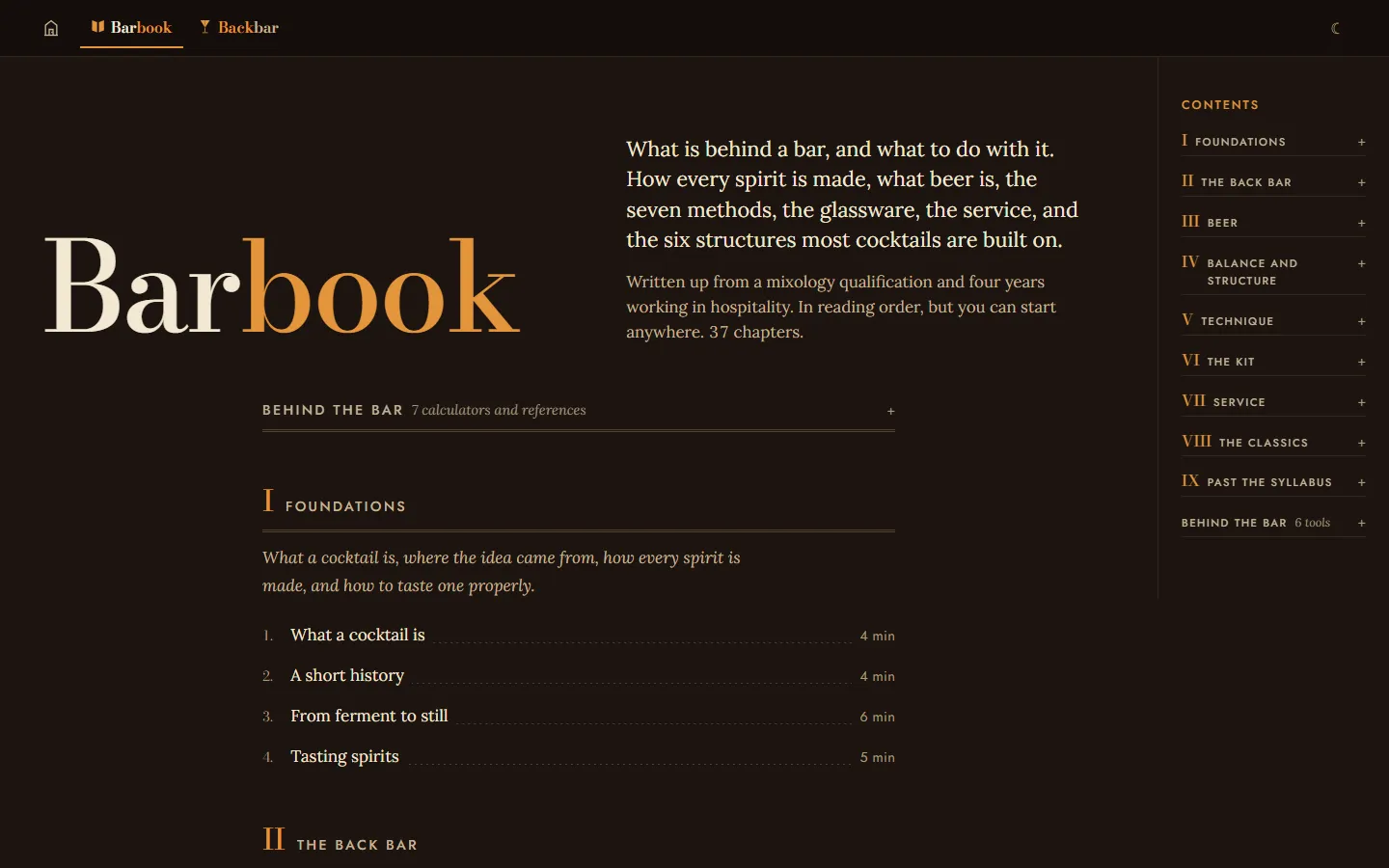
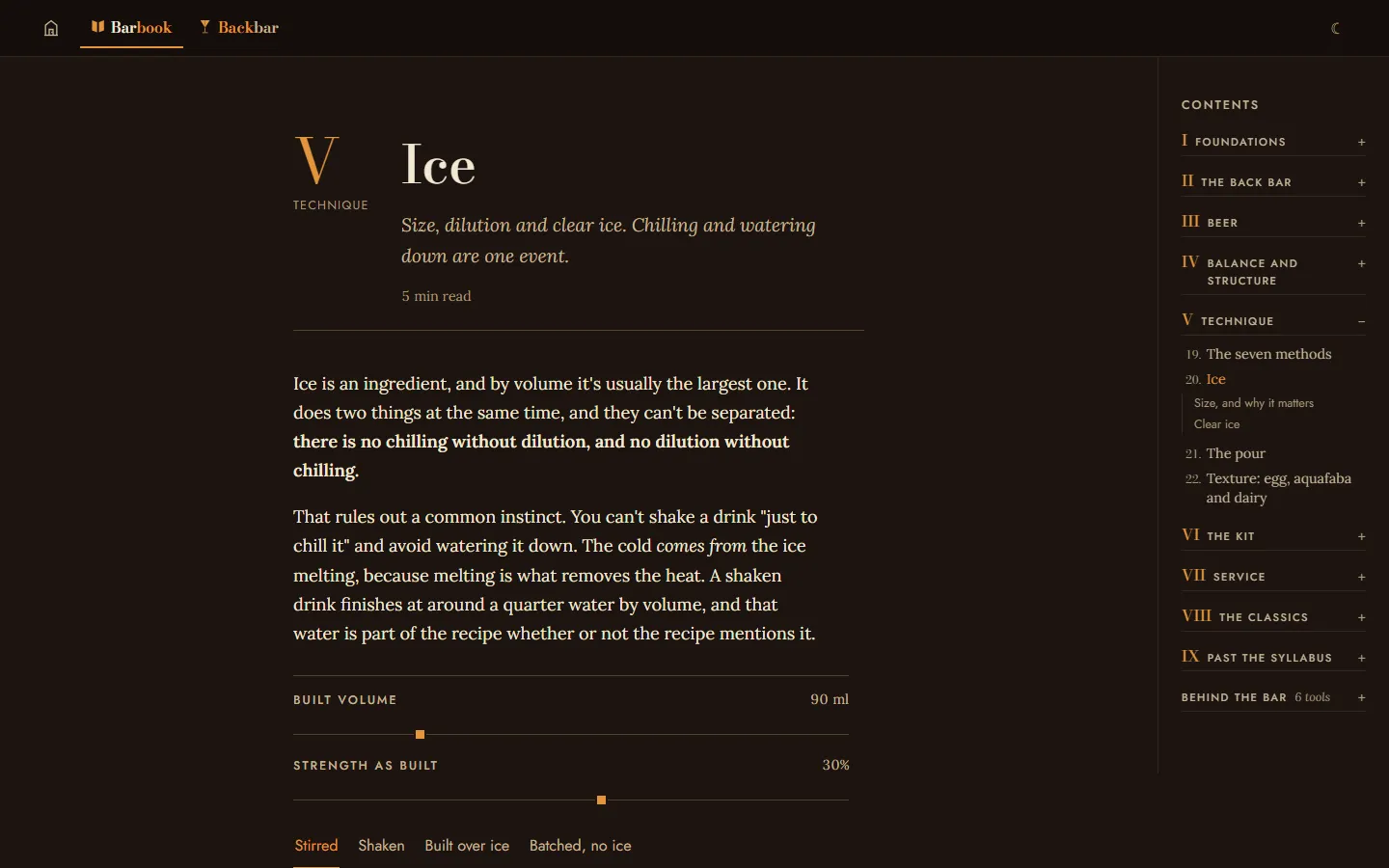
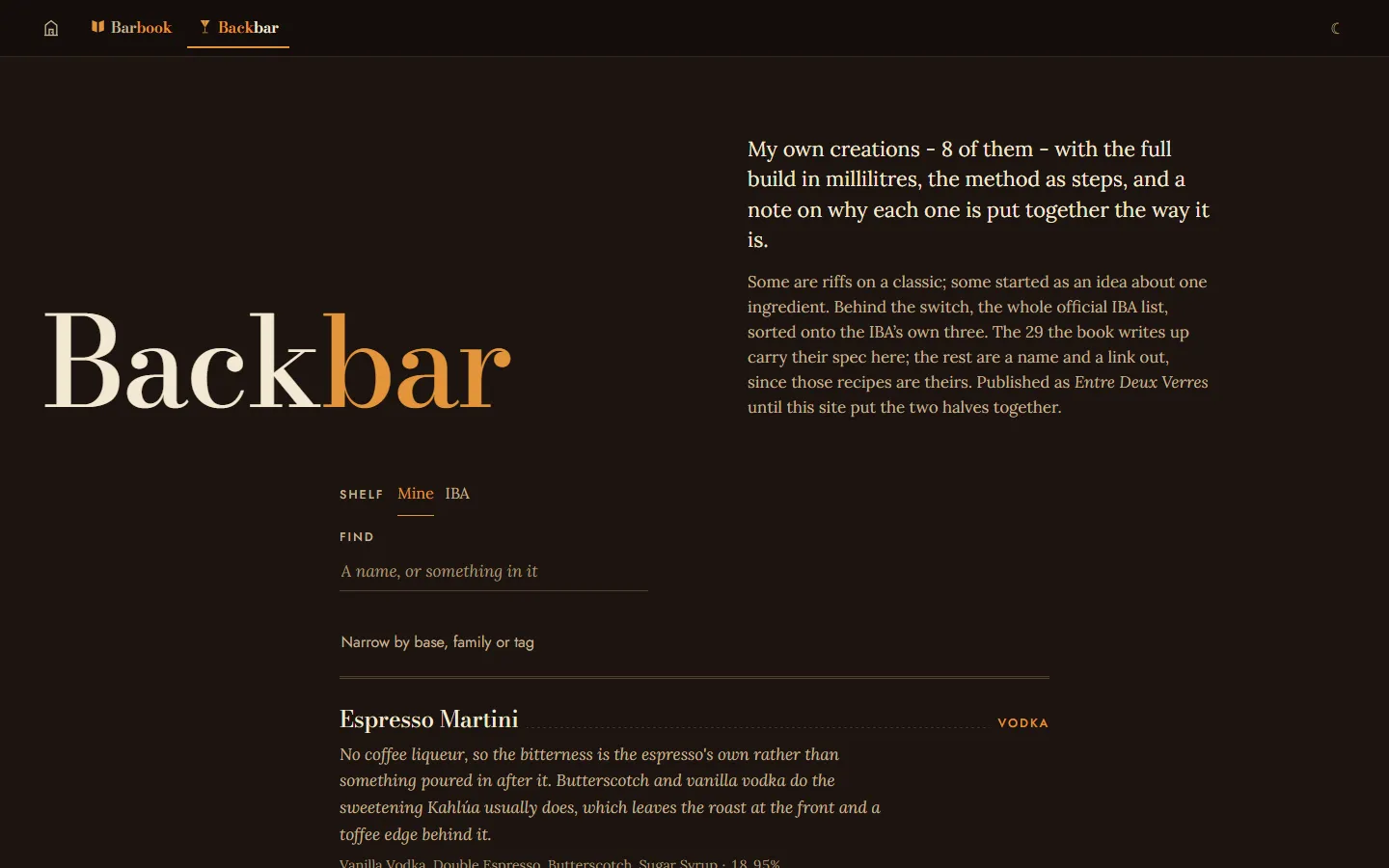
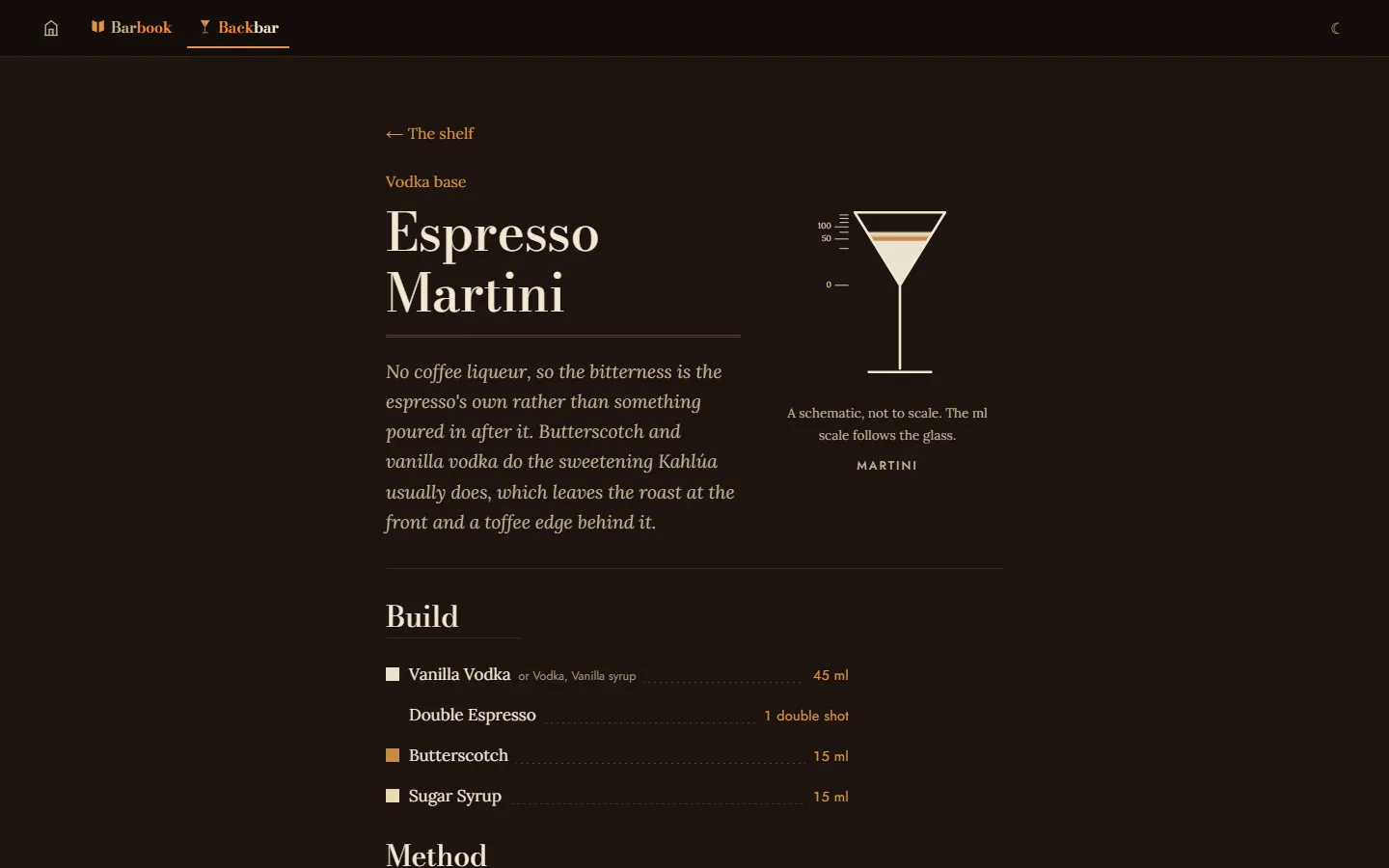
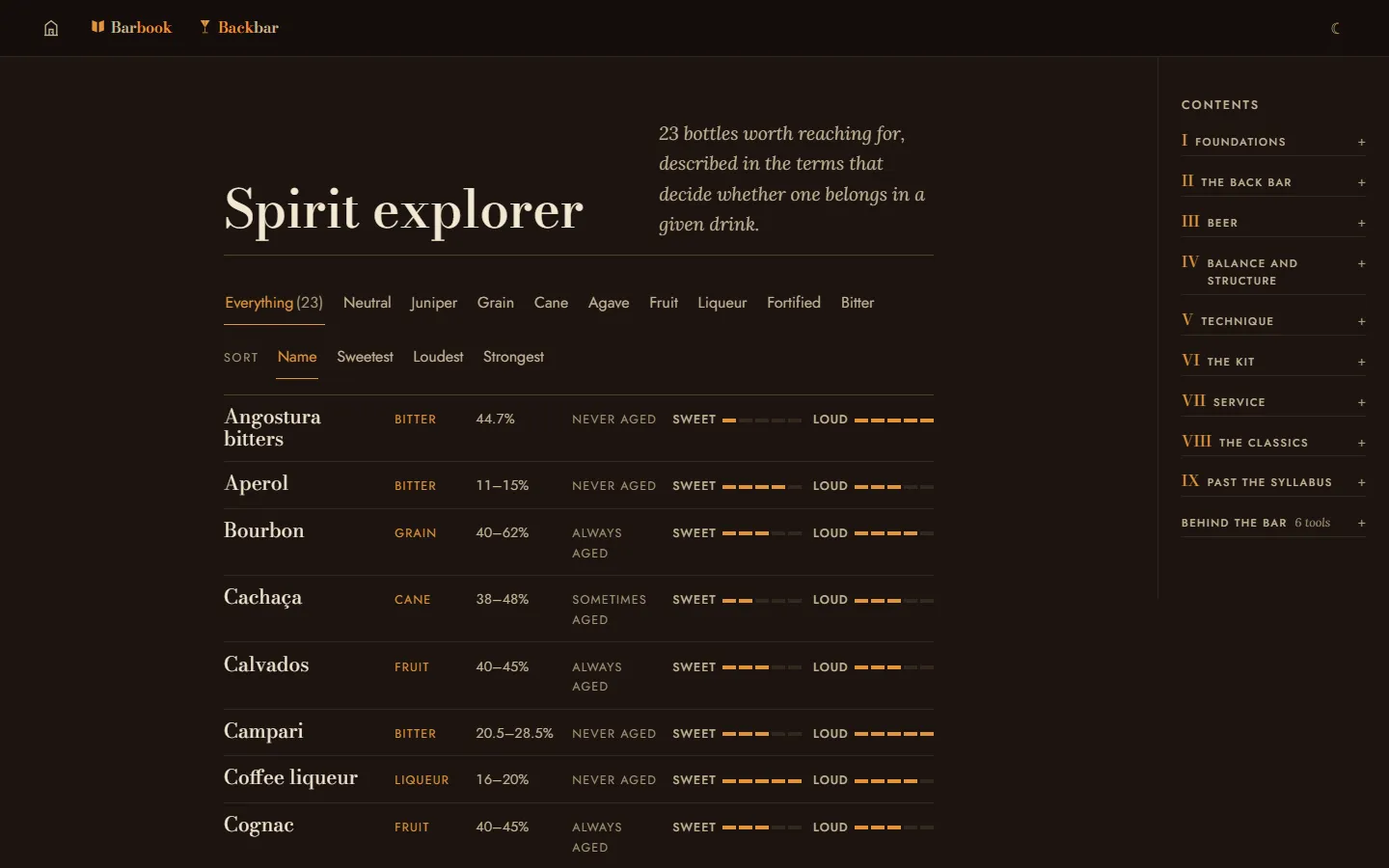
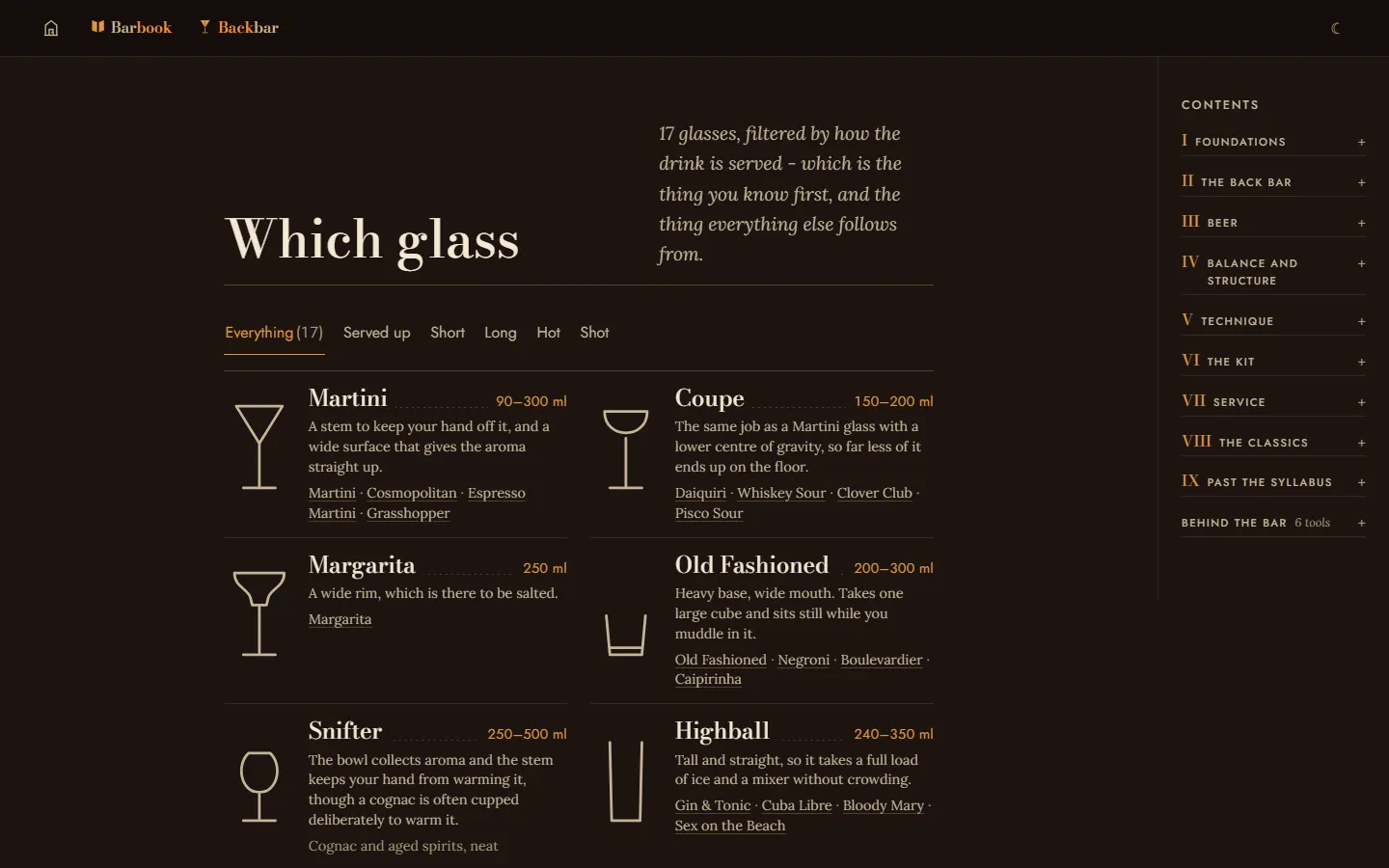
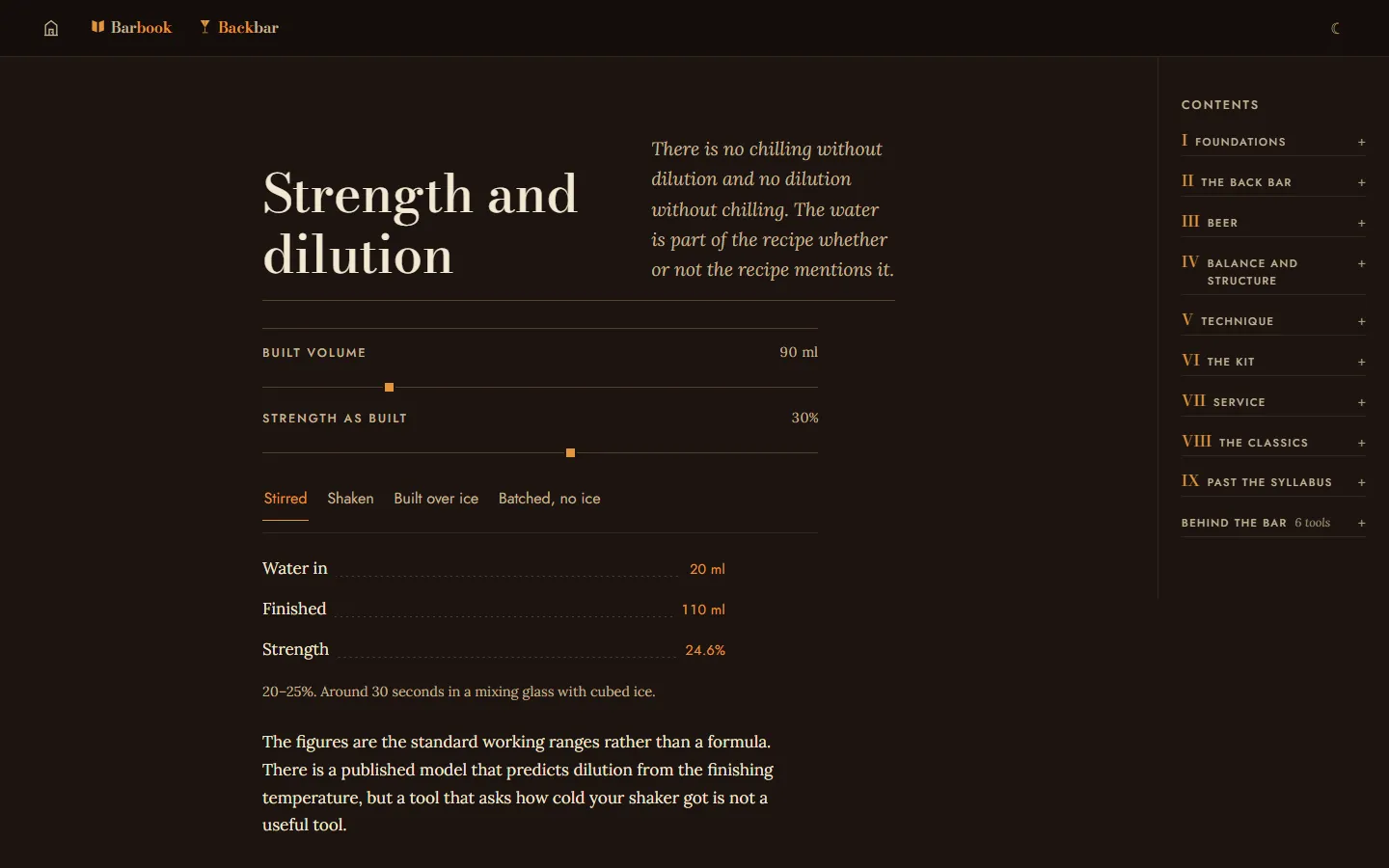
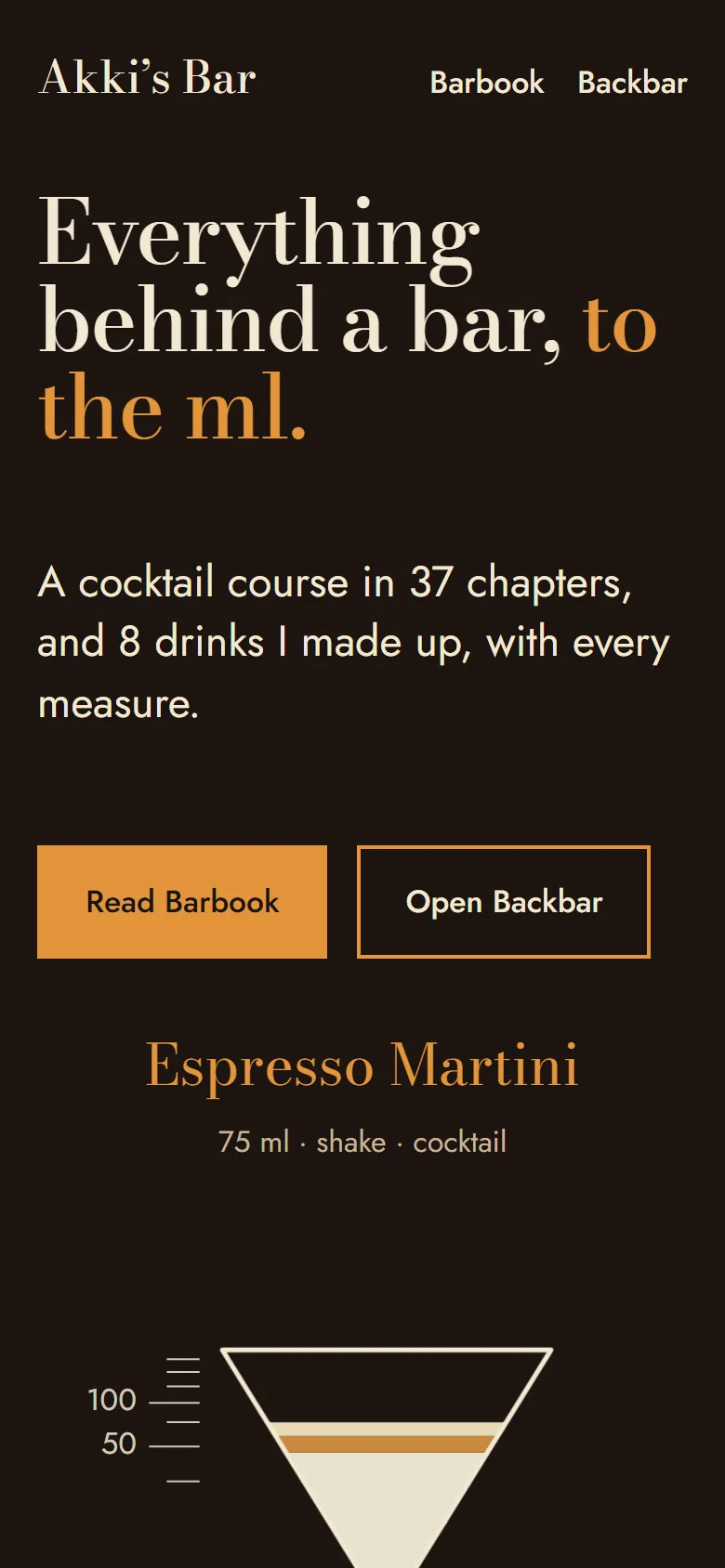
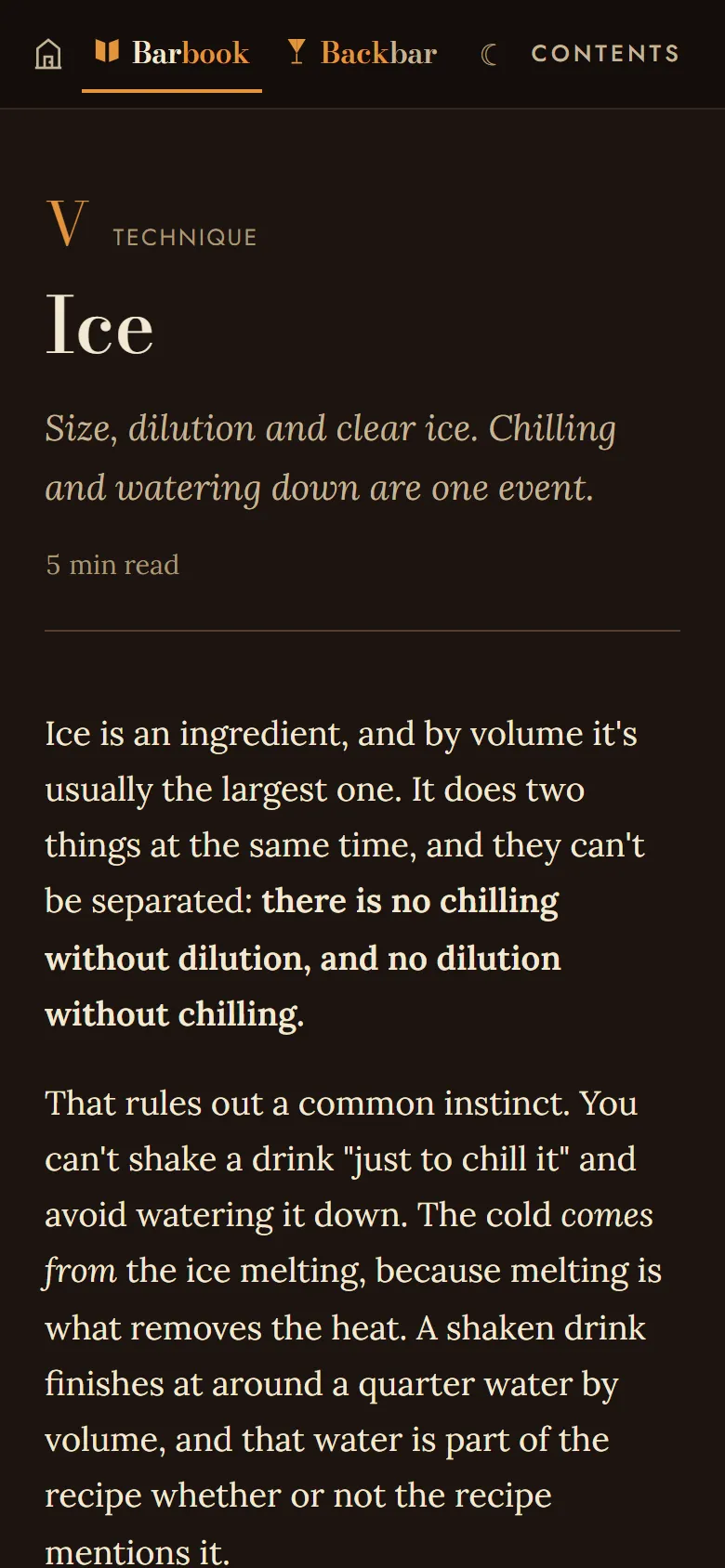
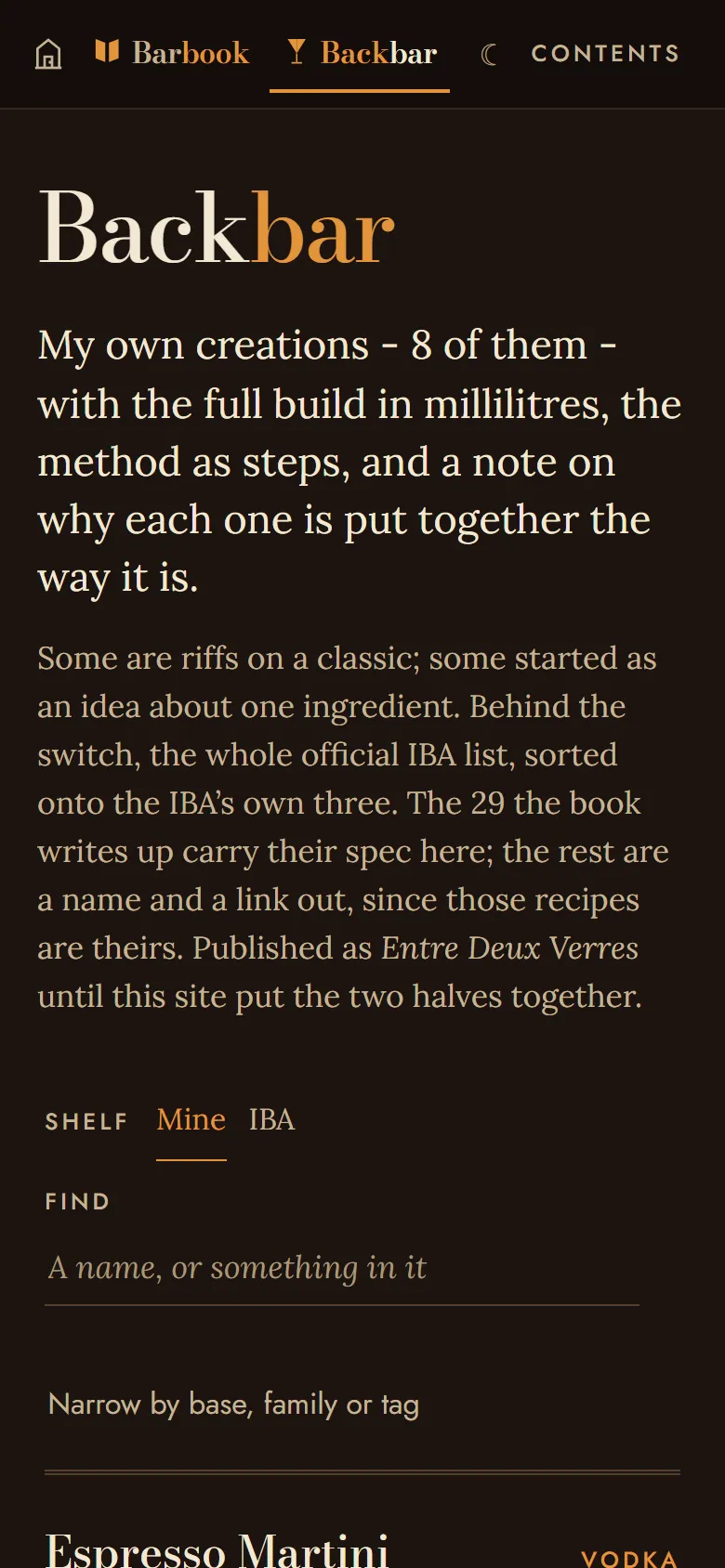
A cocktail site in two halves, built with Next.js and TypeScript and served from Cloudflare Workers. Barbook is thirty-seven chapters on what sits behind a bar and what to do with it: how each spirit is made, what beer is, the seven methods, ice, glassware, tools, service, and the small set of structures most cocktails share. Backbar is the drinks I've made up, each with the build in millilitres, the method as steps, and a note on why it's put together that way. It's laid out like a printed menu, with Bodoni for the names, wide small caps for the labels, and measures running to the right edge behind dot leaders. Every page is prerendered, there's no server, and nothing a reader types is uploaded.

The problem
I worked my way up from front of house to general manager. Along the way I wanted to take what I’ve learned in hospitality and as a cocktail bartender and share it with anyone curious, and to show the cocktails I’ve created myself.
How it works
The drinks live in a Bar Assistant instance that requires a personal API token, and a static public build can’t hold one. A script on my machine reads the API and writes the results into a committed TypeScript file, so the deployed site makes no API calls at runtime and the token never leaves my laptop. An earlier version proxied every request through its own server routes, which only works for as long as something is running.
Chapters are written and edited in Markdown and imported back into the site. The importer replaces one string literal at a time and checks each appears exactly once, stopping rather than guessing when it doesn’t. That round trip exists because chapters aren’t stored as HTML: they’re an ordered list of typed blocks, which lets a spec sheet or a working dilution calculator render inline between two paragraphs with no markup parsing. The structure suits the site and makes prose awkward to write directly.