
Why I built each one
Some of these run quietly at home, so there's nothing to click. Where there are no screens to show, there's a drawing of how it works.
For friends
We always go out, we all take photos, and then we forget to share them.

Recap
Everyone adds a frame. Everyone gets the roll.
2026
Next.js, TypeScript, FirebaseRead how it worksHide how it works
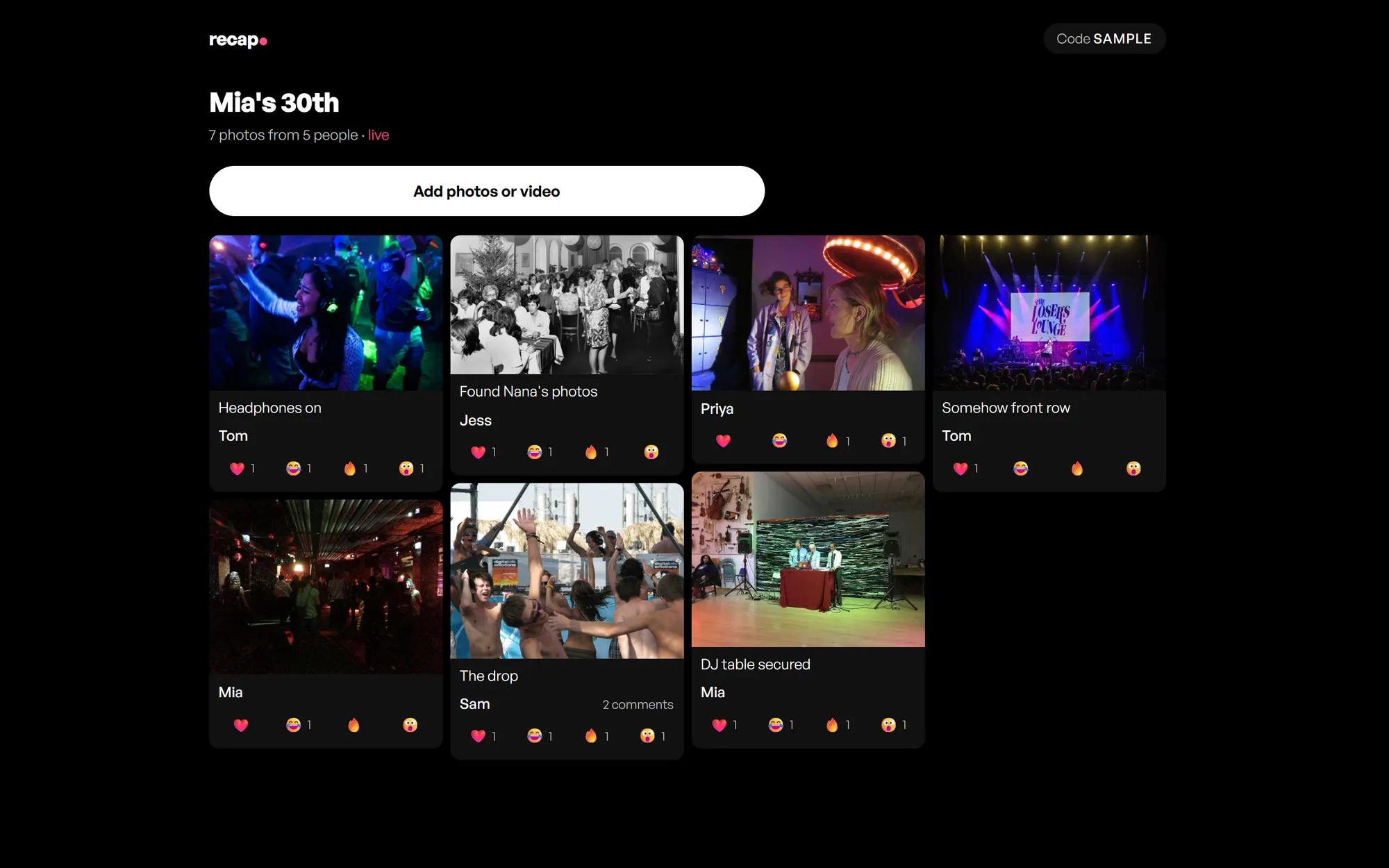
The best shots stay on whoever took them, and a week later nobody's sent anything. Now the night gets one board that everyone adds to from their own phone as it happens, no app or account needed. By the end, the whole group has the whole night.
Built with Next.js and Firebase: Next.js draws the board, and Firebase holds the photos and checks who's allowed to change them. Every photo goes up at full size, and each phone also makes a small preview so the board loads fast, even on busy party wifi. At the end, everyone gets the originals.
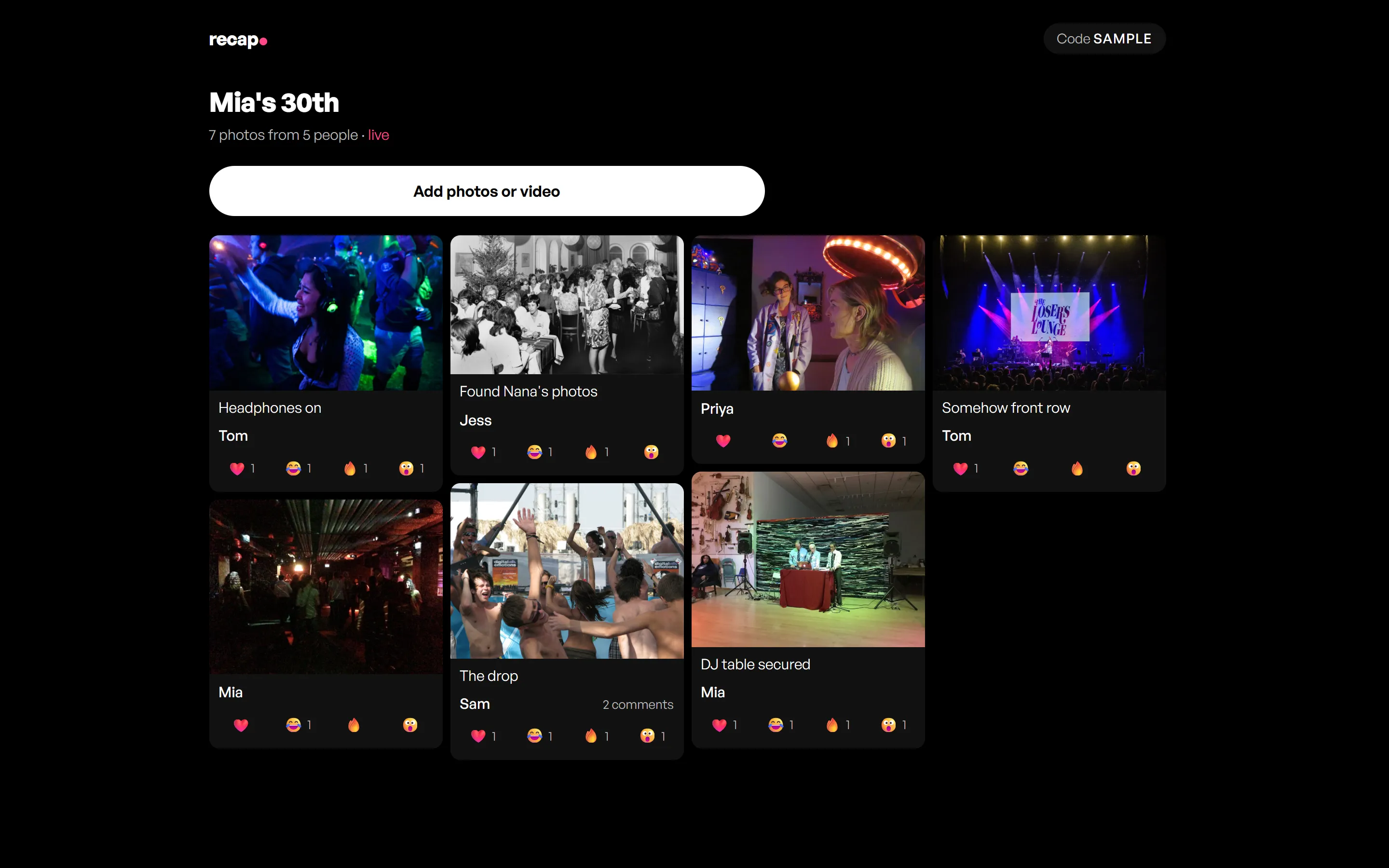
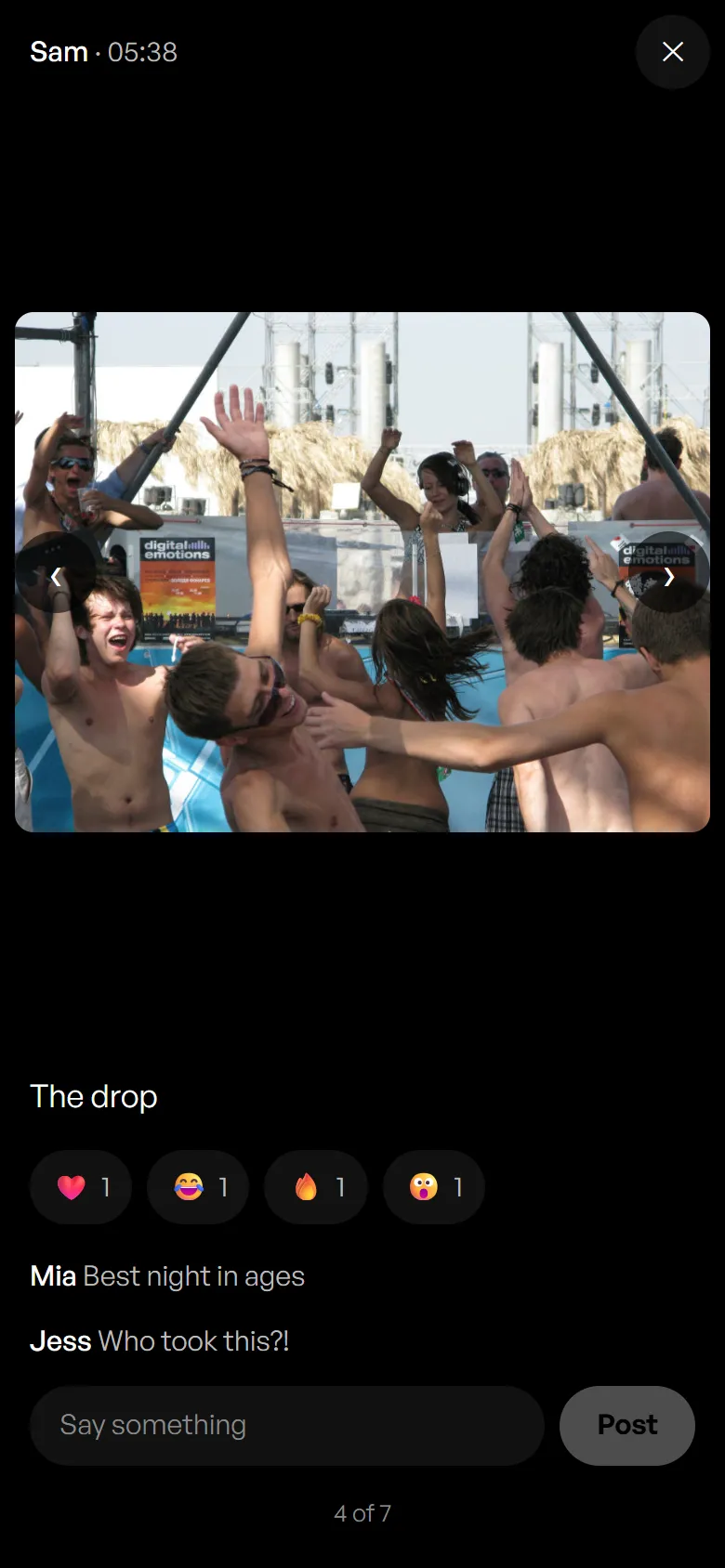
A board on a laptop: every photo keeps its own shape, with captions, names and reactions underneath. On a phone, a photo opened with its comments. Shown with sample photos. For road trips and parties
On road trips and at house parties, one person always ends up in charge of the music, and everyone else either puts up with it or keeps reaching for the phone.

Jukebox Republic
The people's queue.
2018 to 2026
Node.js, Spotify Web API, FirestoreRead how it worksHide how it works
Whoever's holding the aux decides the music, and everyone else puts up with it. Now everyone in the car or the room adds songs from their own phone and votes on what plays next, so everyone gets a fair say. My regular drives lose signal for a while, so it keeps playing and picks up where it left off.
Built with Node.js, Spotify and Firestore: Spotify plays the music, Firestore keeps everyone's phone showing the same queue, and a small Node.js server keeps the next song lined up even when phones drop out.
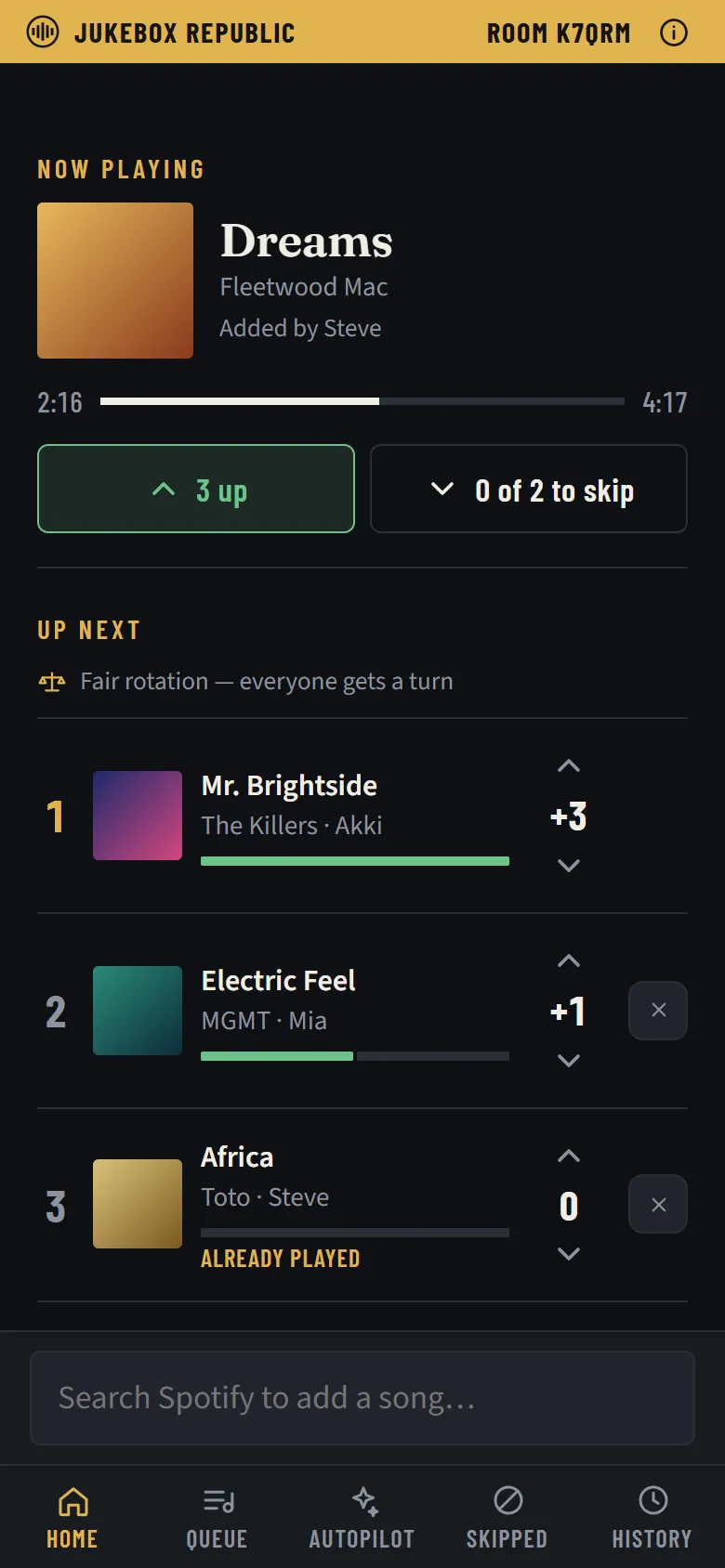
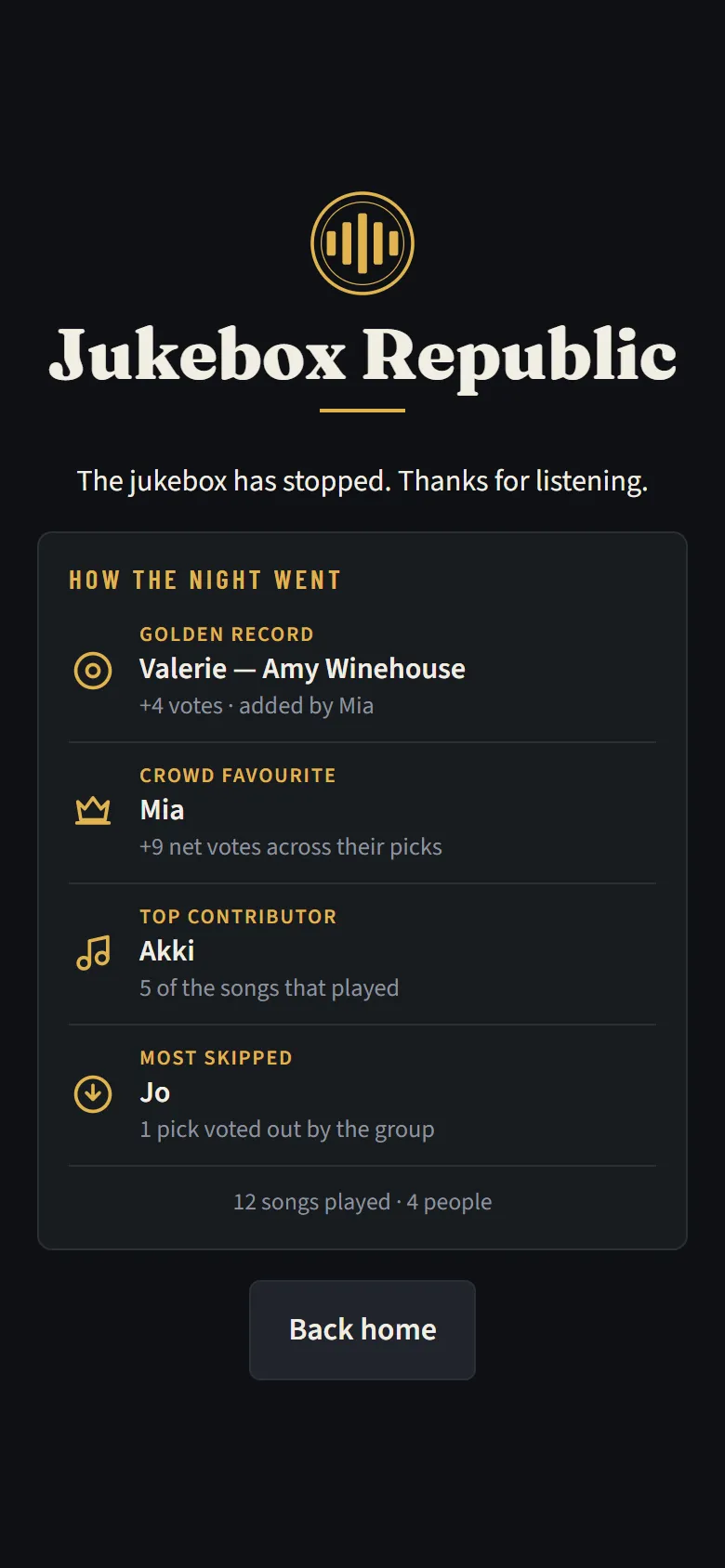
A guest's view, and the card that closes the night. Screens from a sample session. For friends
When I was moving, I didn't want the admin of Facebook Marketplace, Trade Me and everywhere else, or 600 different emails and messages.

Sell Your Stuff
A sale site you run yourself.
2026
Cloudflare Workers, D1, R2Sellers need an invite. Anyone can browse a sale.
Read how it worksHide how it works
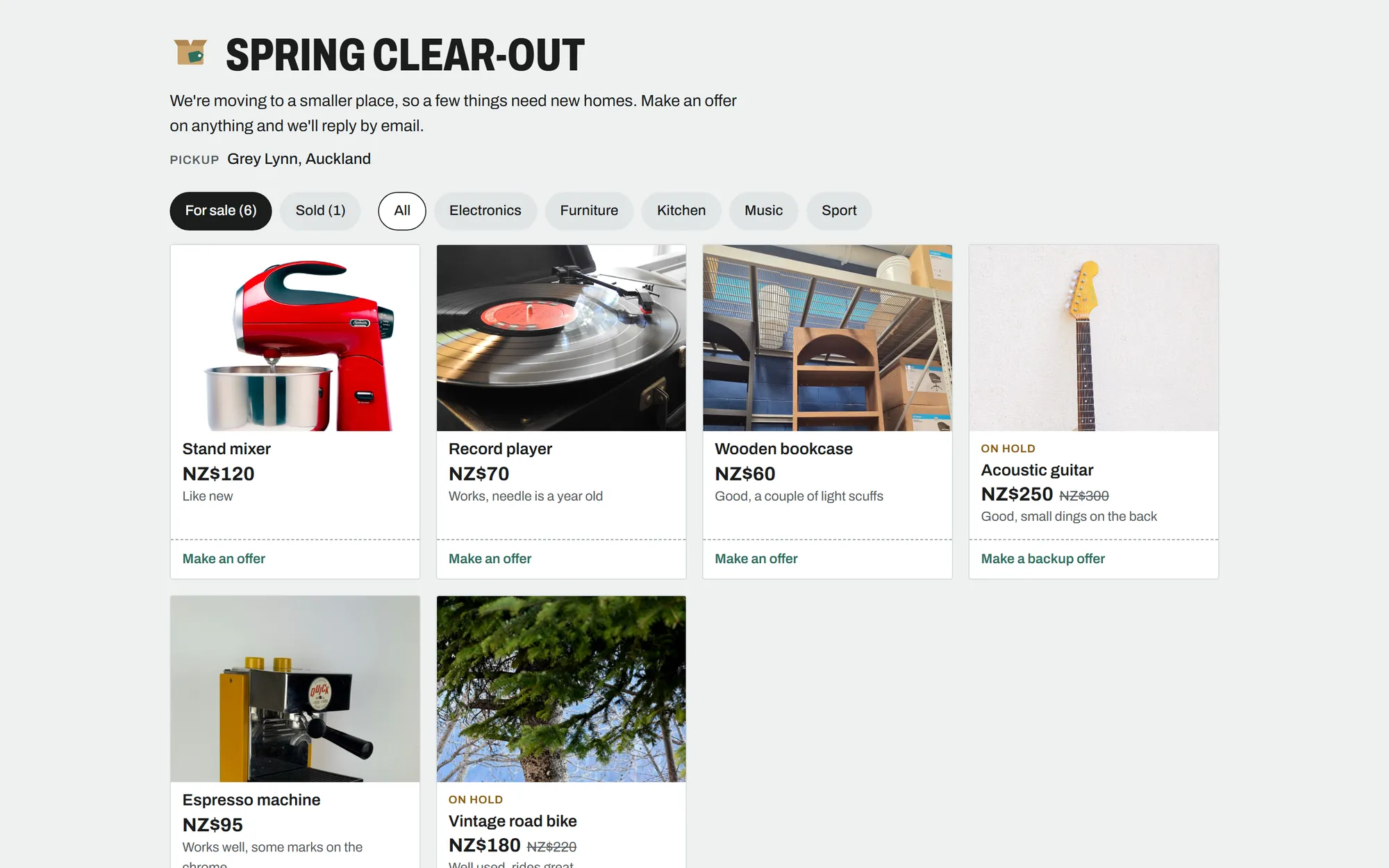
Selling everything before a move usually means listings on every site and hundreds of messages. So I built one site and sent everyone to the same place. Each item showed its photo, price and condition, and I marked things sold with one tap. Friends asked where I'd sold my stuff, so now they can run their own sale too, on my site with an invite or on their own Cloudflare account.
Built on Cloudflare Workers: Workers runs the site, D1 keeps each seller's items and offers so a sale updates in seconds, and R2 holds the photos. Photos shrink before uploading, which also strips out where they were taken.
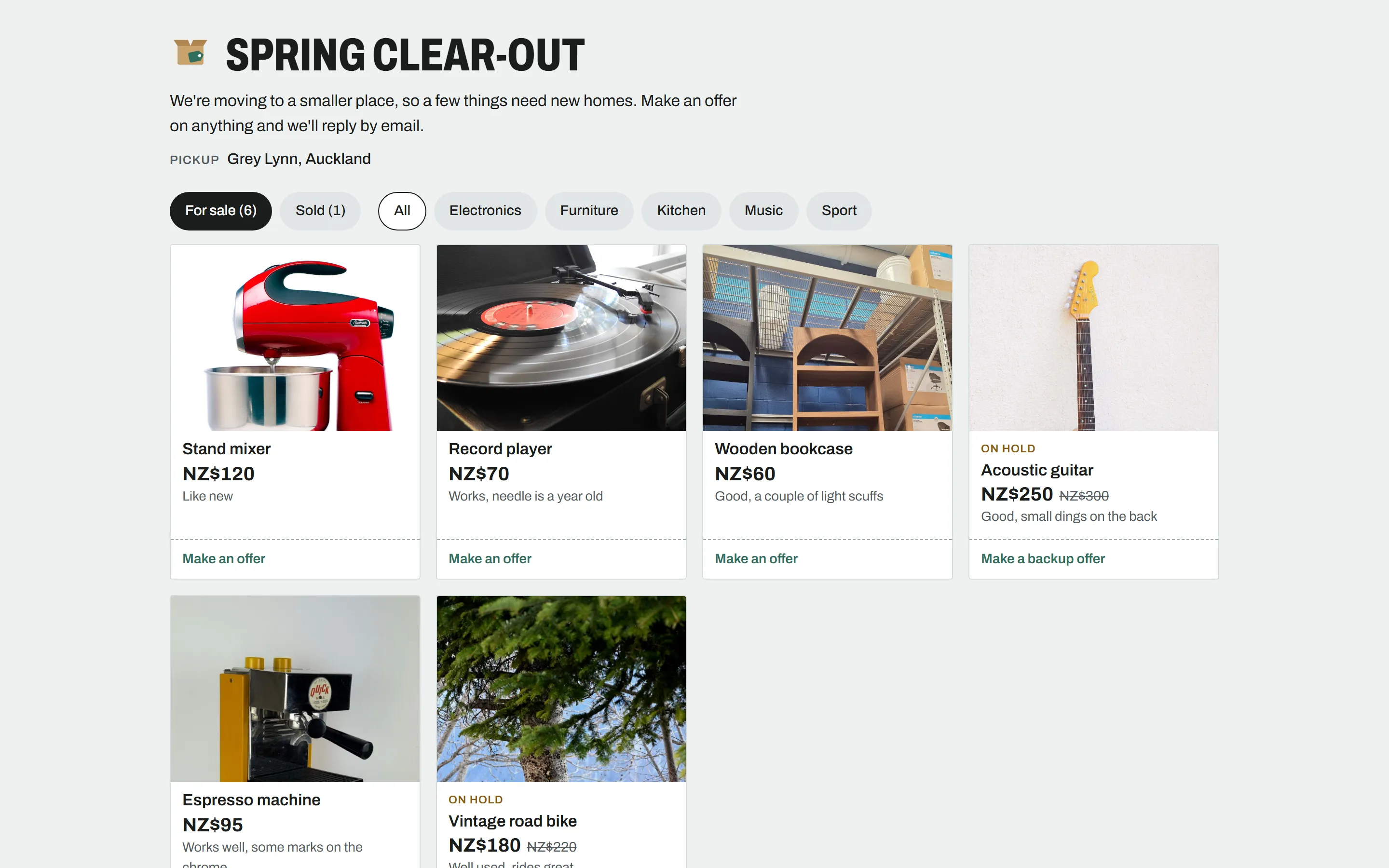
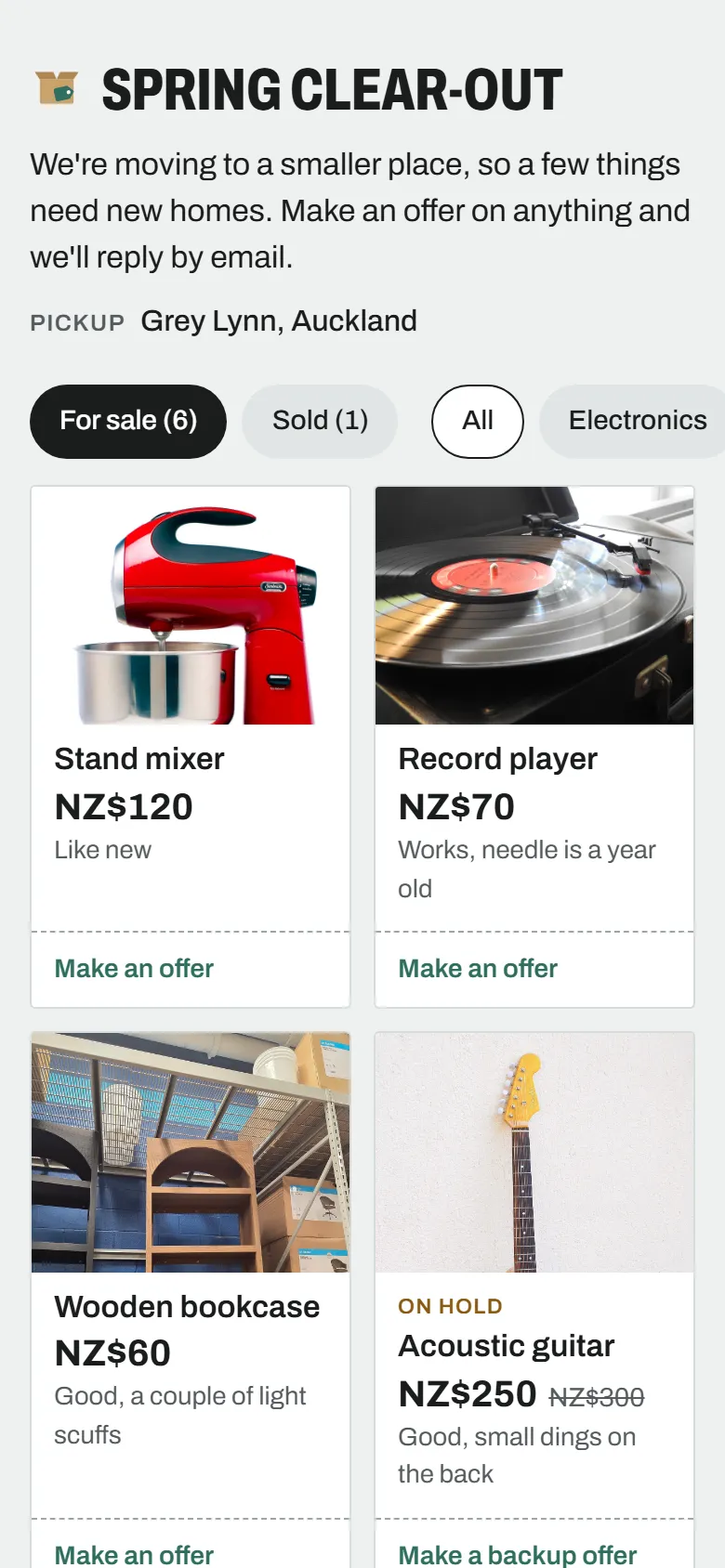
The sale page: every item with its photo, price and condition. On a phone, the same page. Shown with a sample sale. For me
Watching a show together from two countries meant the show on the laptop and a call on the phone next to it.

CouchSync
Watch a film together from two countries.
2026
Astro, Firebase, hls.js, WebRTCRead how it worksHide how it works
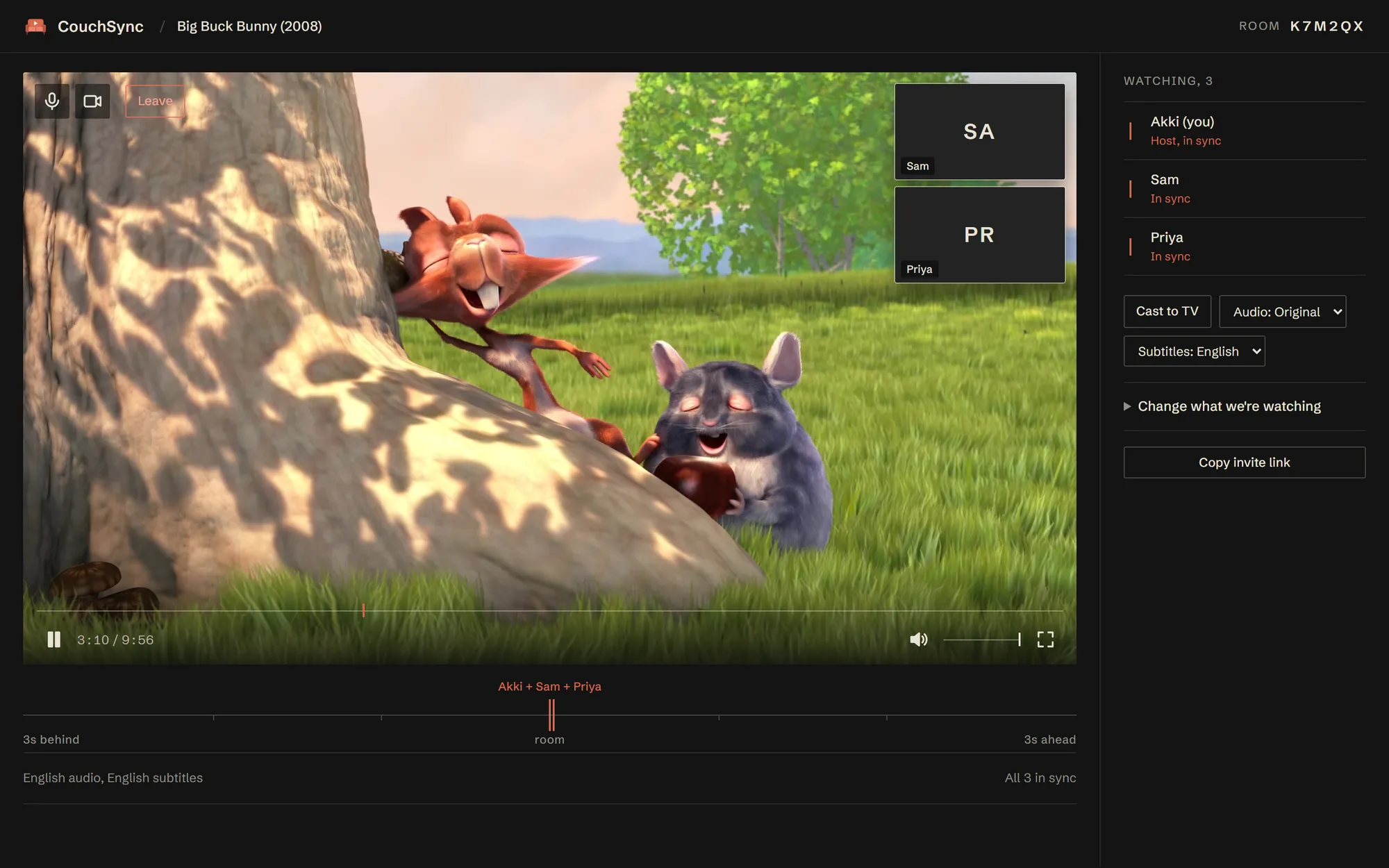
The sound from the show fed back into the call, and your headphones can only connect to one device, so you had to pick which one went in your ears. Now the show and the call are in one place, in sync, through one pair of headphones, and either of you can pause it for both.
Built with Astro and Firebase: Firebase keeps both screens on the same moment, so play, pause and skip happen for both of you, and WebRTC carries the video call right there over the film.
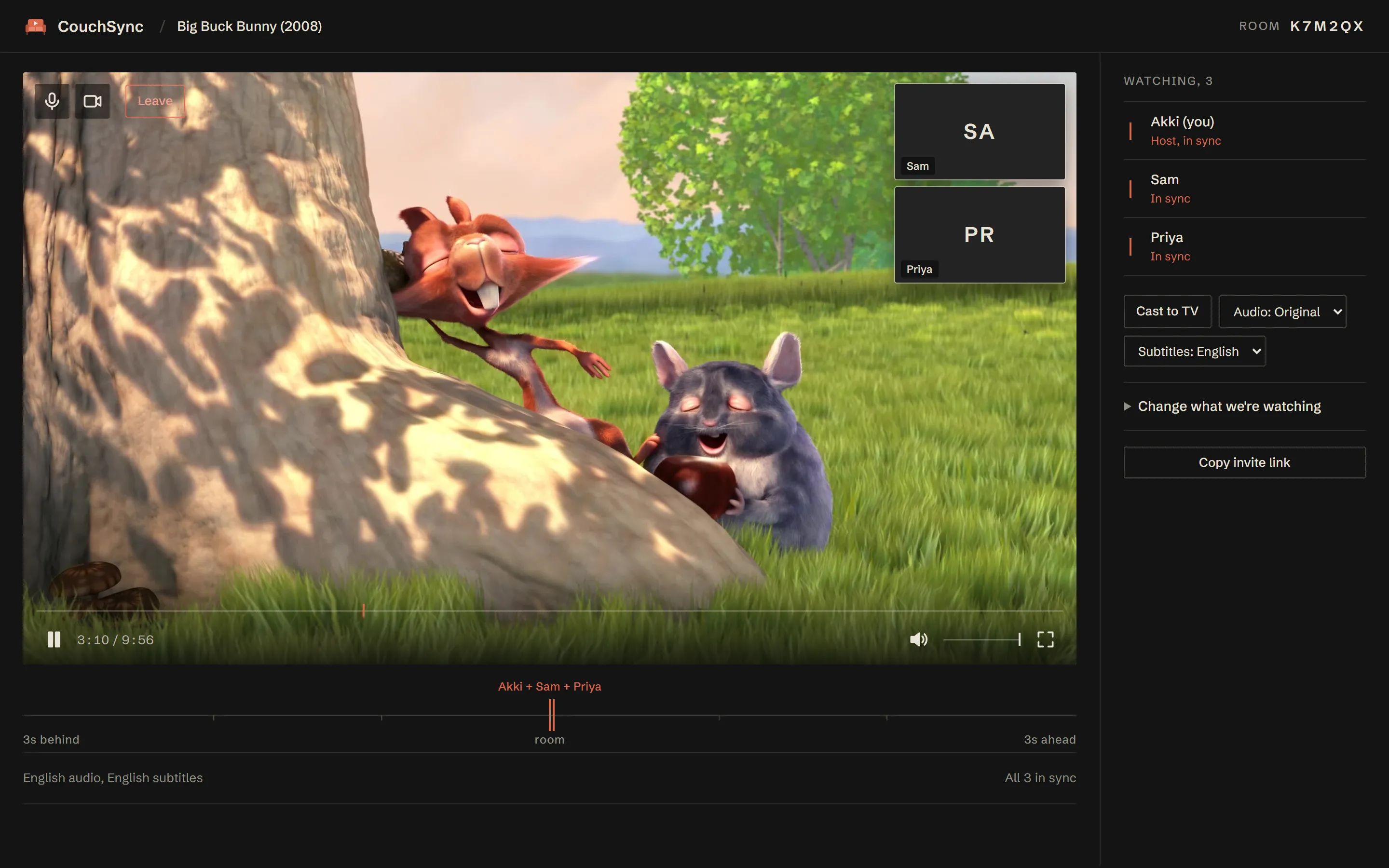
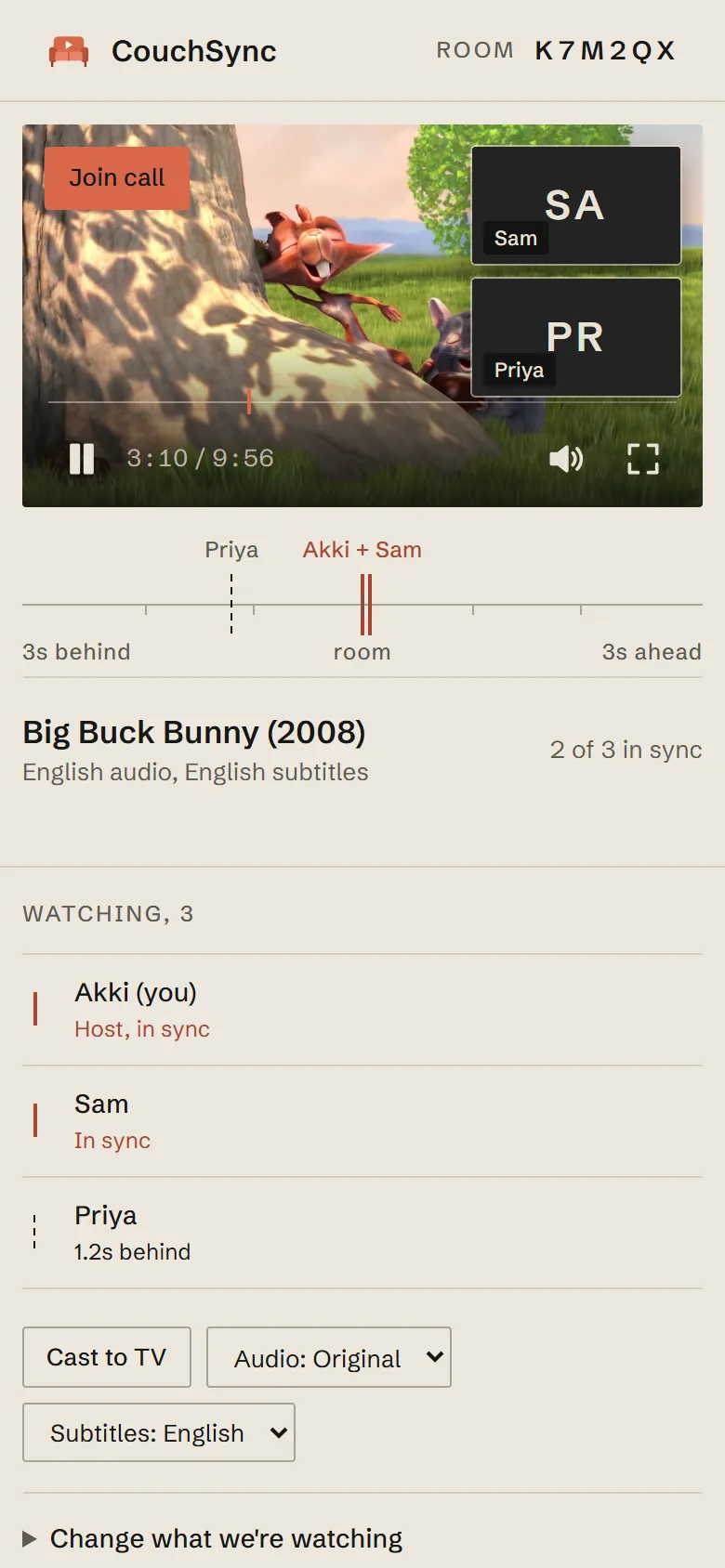
A room mid-film: the call floats over the picture, and the line under it shows everyone on the same moment. On a phone, the same room. For anyone curious about drinks
I wanted to take what I've learned in hospitality and as a cocktail bartender and share it with anyone curious.

Bar
A cocktail course and a shelf of my own drinks, on one site.
2025 to 2026
Next.js, TypeScript, Cloudflare WorkersRead how it worksHide how it works
I worked my way up from front of house to general manager, and picked up a lot behind the bar along the way. Bar is a cocktail course you can read at your own pace, next to a shelf of the drinks I've created myself, each one written up like a spec sheet.
Built with Next.js on Cloudflare Workers: Next.js builds the pages and Cloudflare serves them quickly from close to wherever you are.
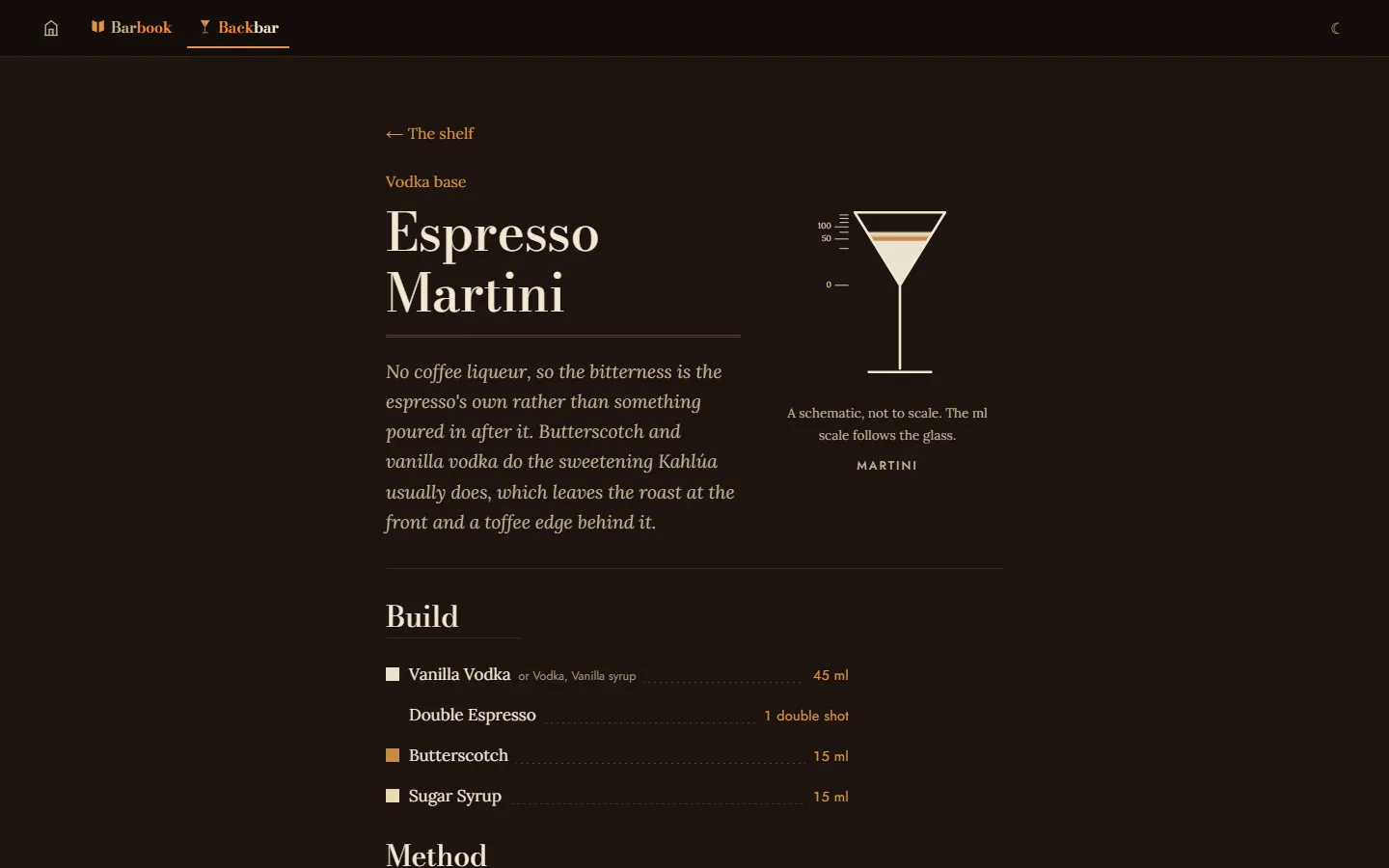
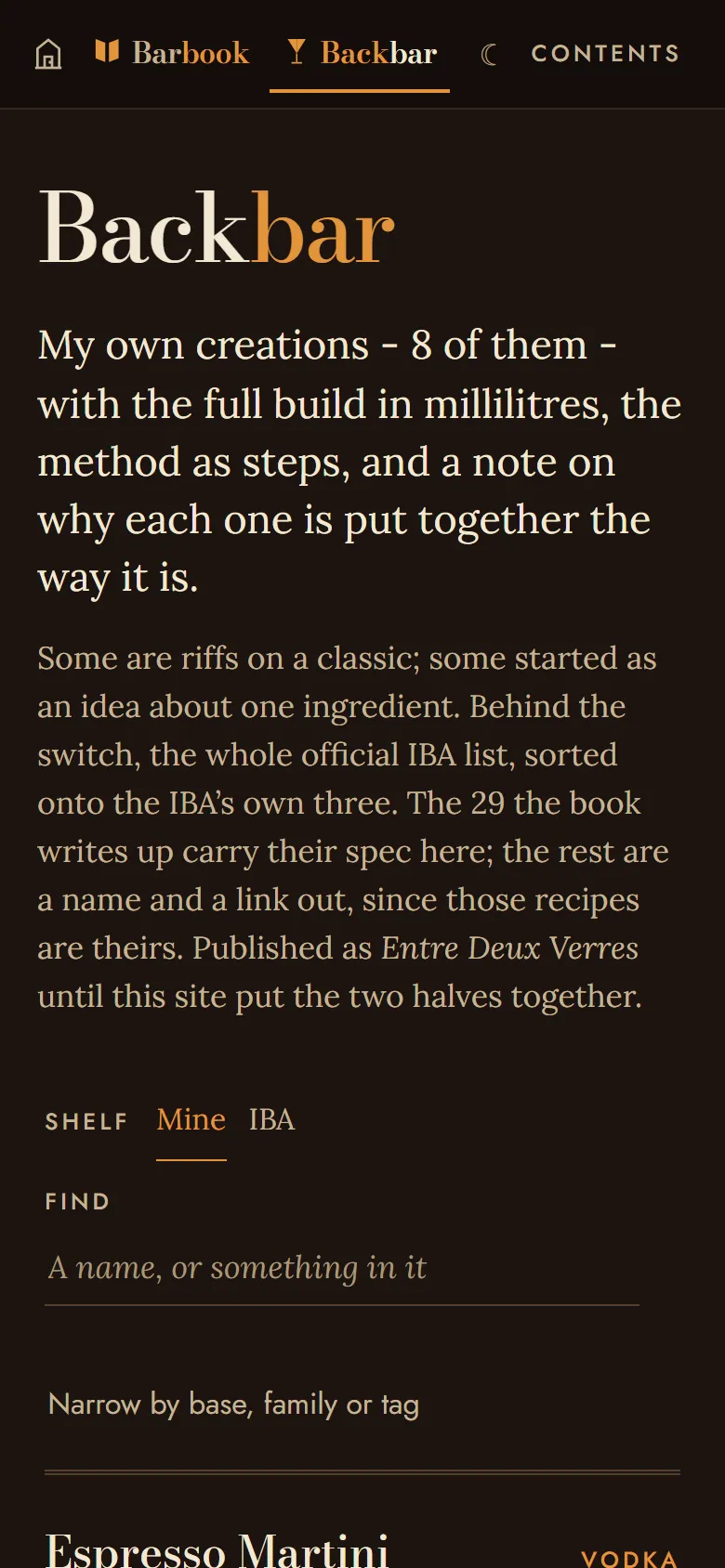
A drink page, built as a spec sheet with the method and a drawing of the glass. On a phone, the Backbar shelf. For anyone curious about drinks
I'm from New Zealand, and I've spent time in Bordeaux, both known for their wine, and the two do things very differently.

Cellar
Learning wine properly, and writing down what I found.
2025 to 2026
Next.js, TypeScript, Cloudflare WorkersRead how it worksHide how it works
Working in hospitality, I've had to understand wine, and the more I read, the more the sources disagreed. Cellar is me learning as I go and writing down what I find, alongside a record of the bottles I've actually opened. You can keep your own tasting notes as you read, no sign-up needed.
Built with Next.js on Cloudflare Workers: Next.js builds the book and Cloudflare serves it quickly. Your notes are saved in your own browser, so there's no account to make.
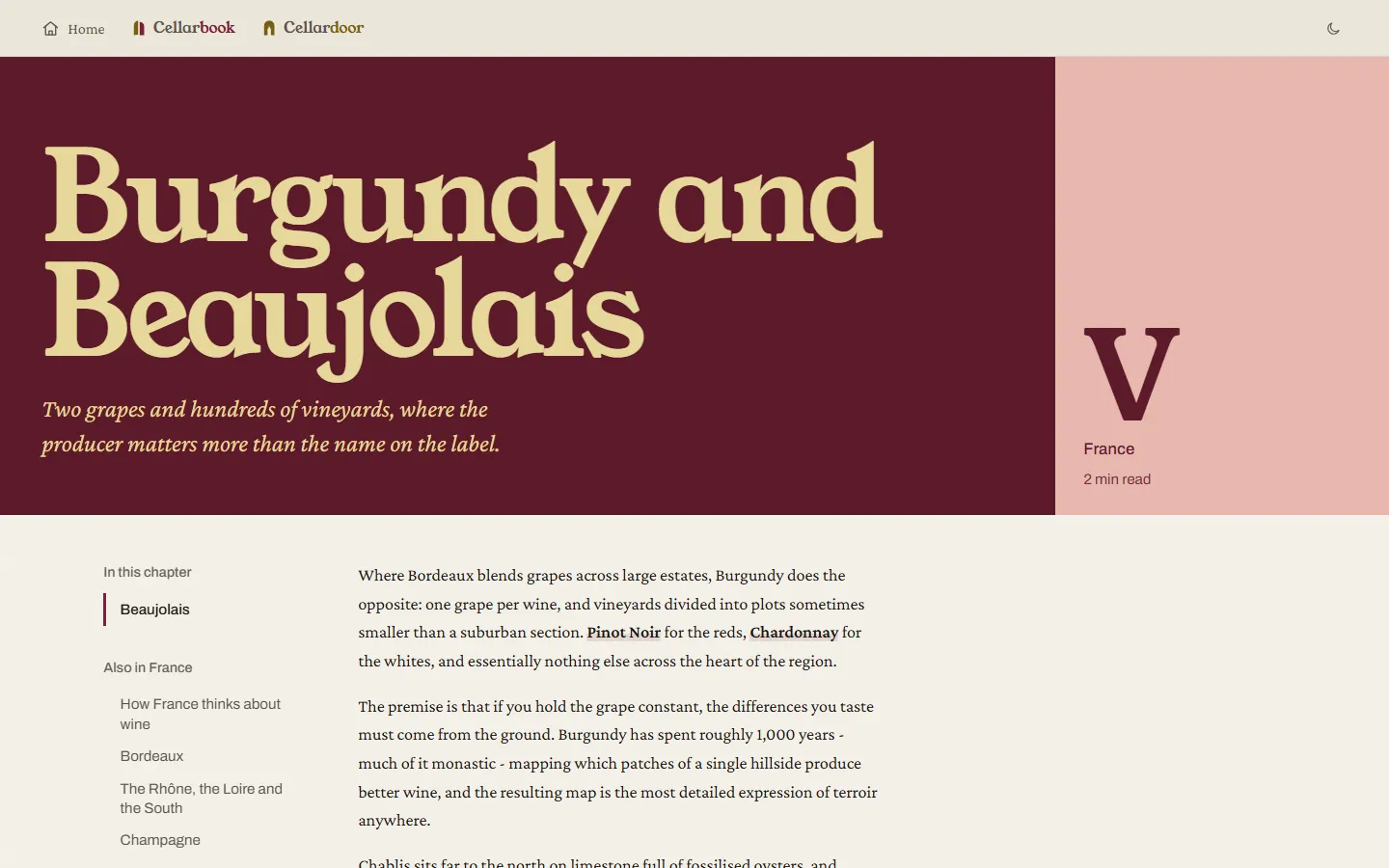
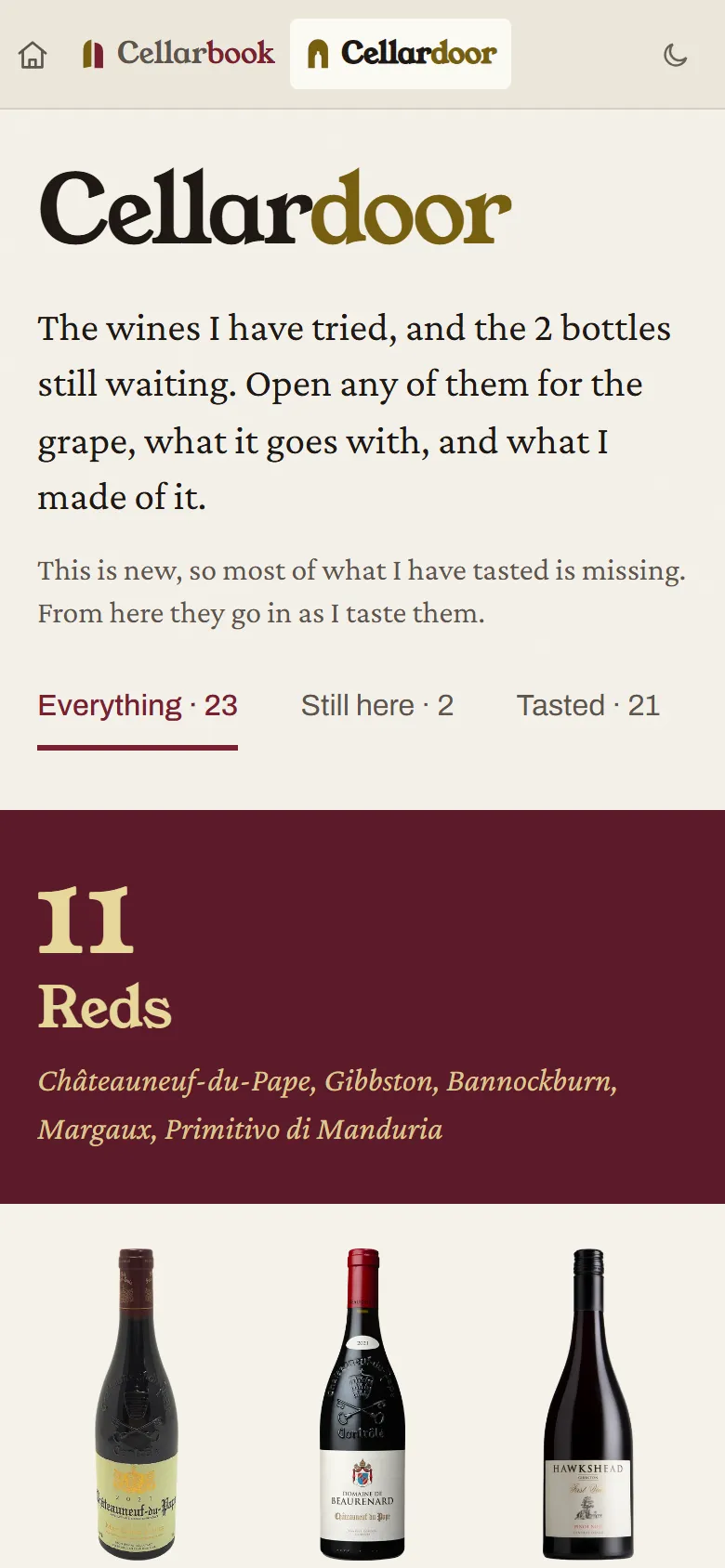
A chapter opens on a field of its place's colour, with its part numeral beside the title. On a phone, Cellardoor's shelf. For friends
A few of us started cooking and trying food from around the world together, and one of us loves collecting stamps.

Food Passport
A stamp for every food you try.
2026
Cloudflare Pages, Workers KV, Web PushYou'll need an invite code to get in.
Read how it worksHide how it works
Every dish we try at our dinners earns a stamp in a passport, even the ones that turn out to be “not for me”, so trying something new never feels like failing. Friends see each other's stamps and photos, every dinner becomes something to look back on, and it keeps us picking the next dish.
Built on Cloudflare Pages: Cloudflare serves the passport and stores everyone's stamps and photos, and Web Push makes your phone buzz when a friend stamps a dish, with no app to download.
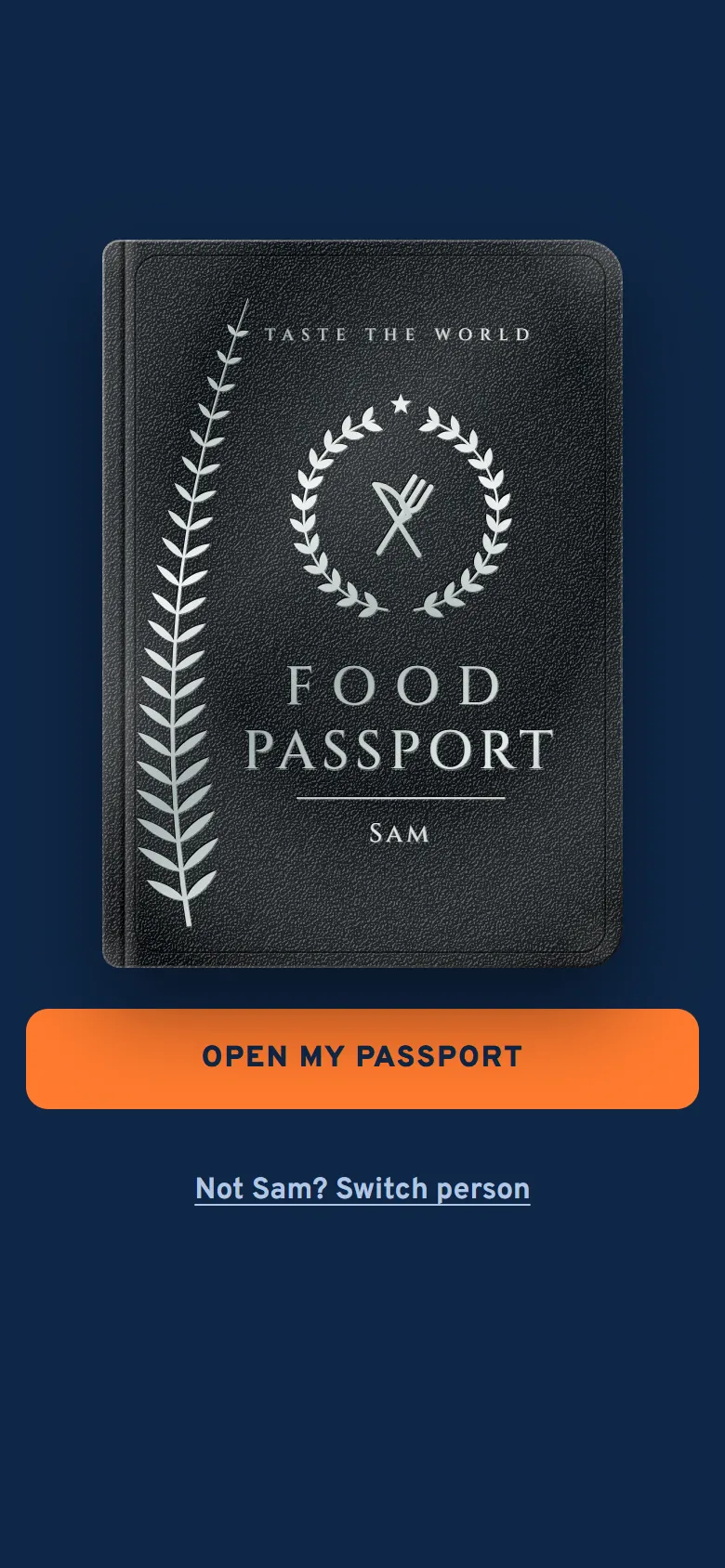
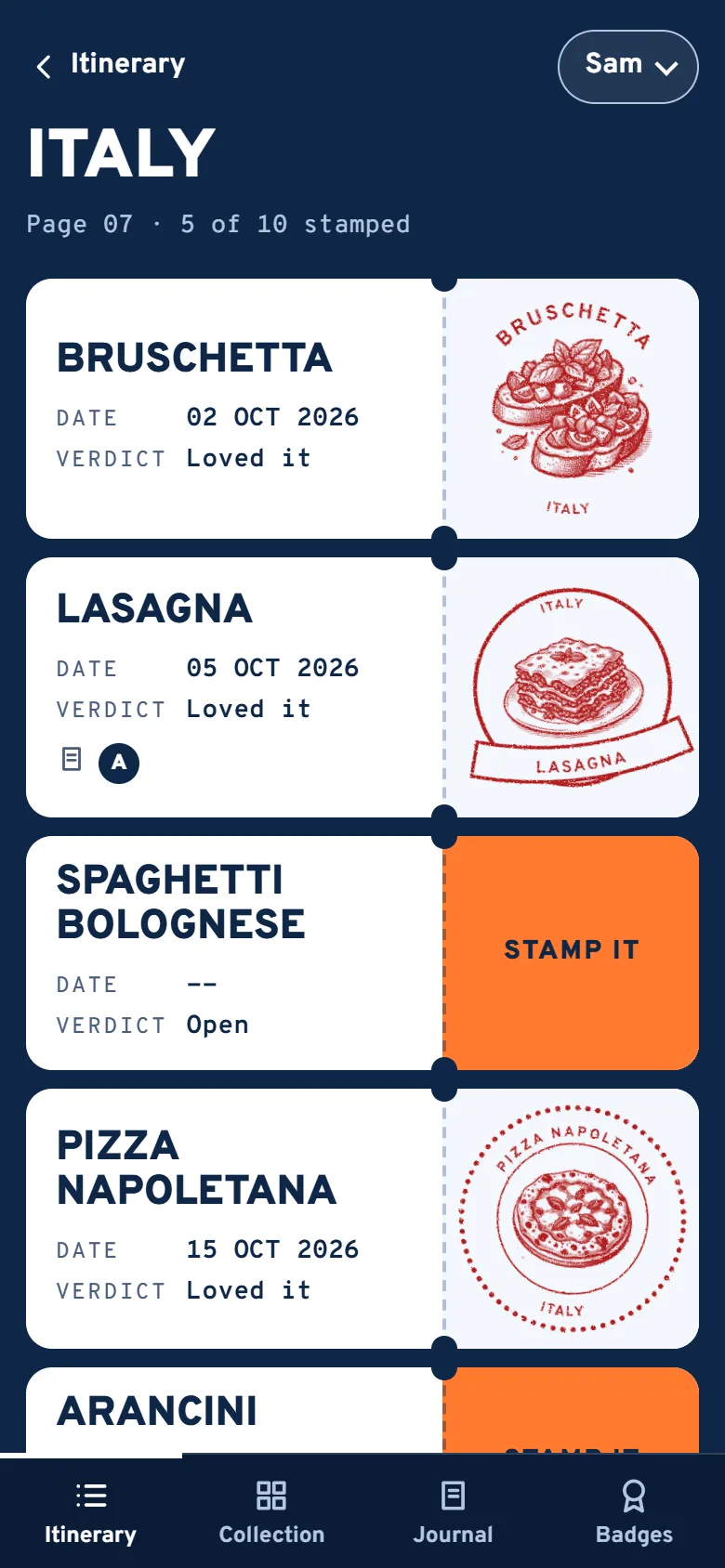
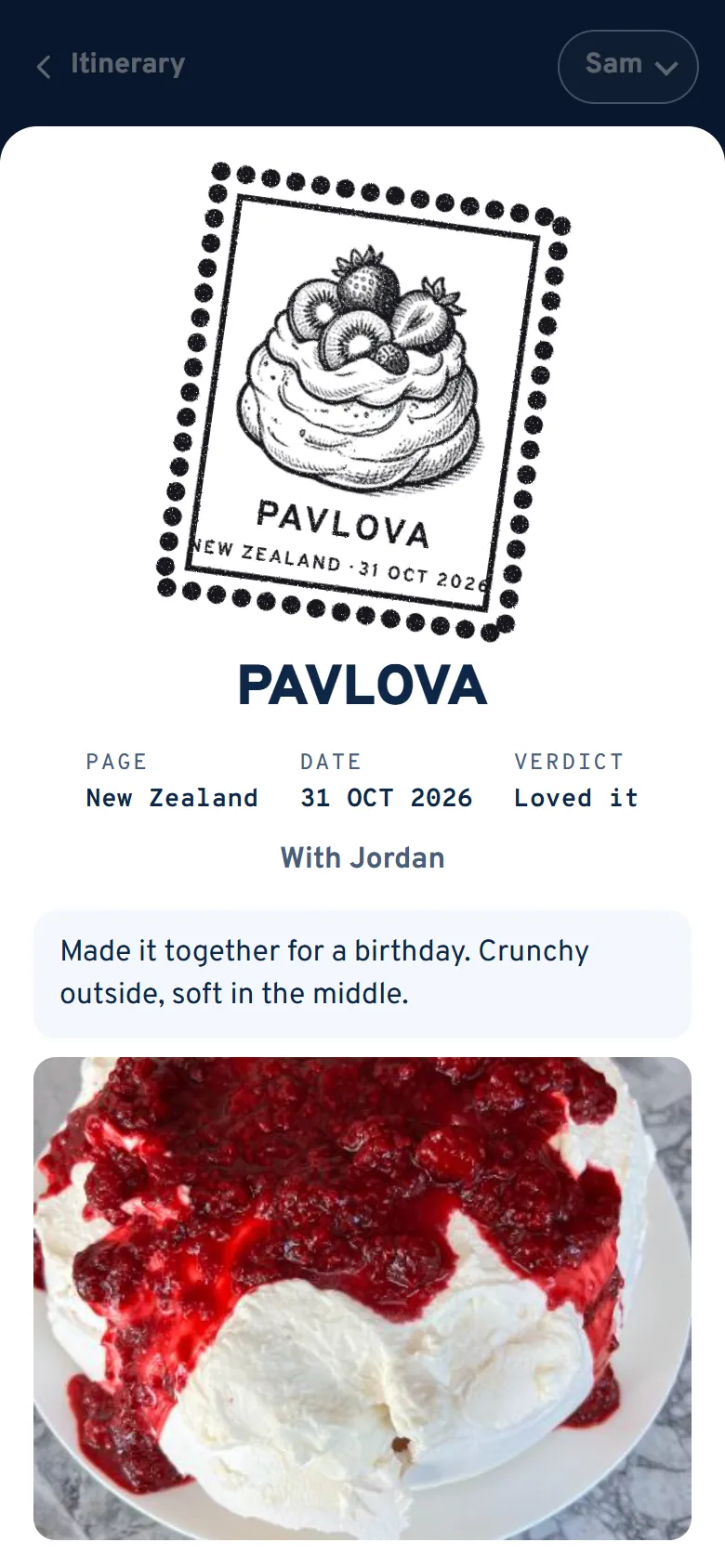
The passport cover, a page half stamped with each dish as a boarding pass, and one stamp opened up. Shown with sample people and made-up dinners. For quiz nights
I was hosting quizzes myself, and doing everything by hand was a pain: the scoring, the totals, keeping the night moving.

QuizConstructor
Build the quiz, then run the night from one screen.
2016 to 2026, in beta
Next.js, TypeScript, FirestoreScreenshots only
Read how it worksHide how it works
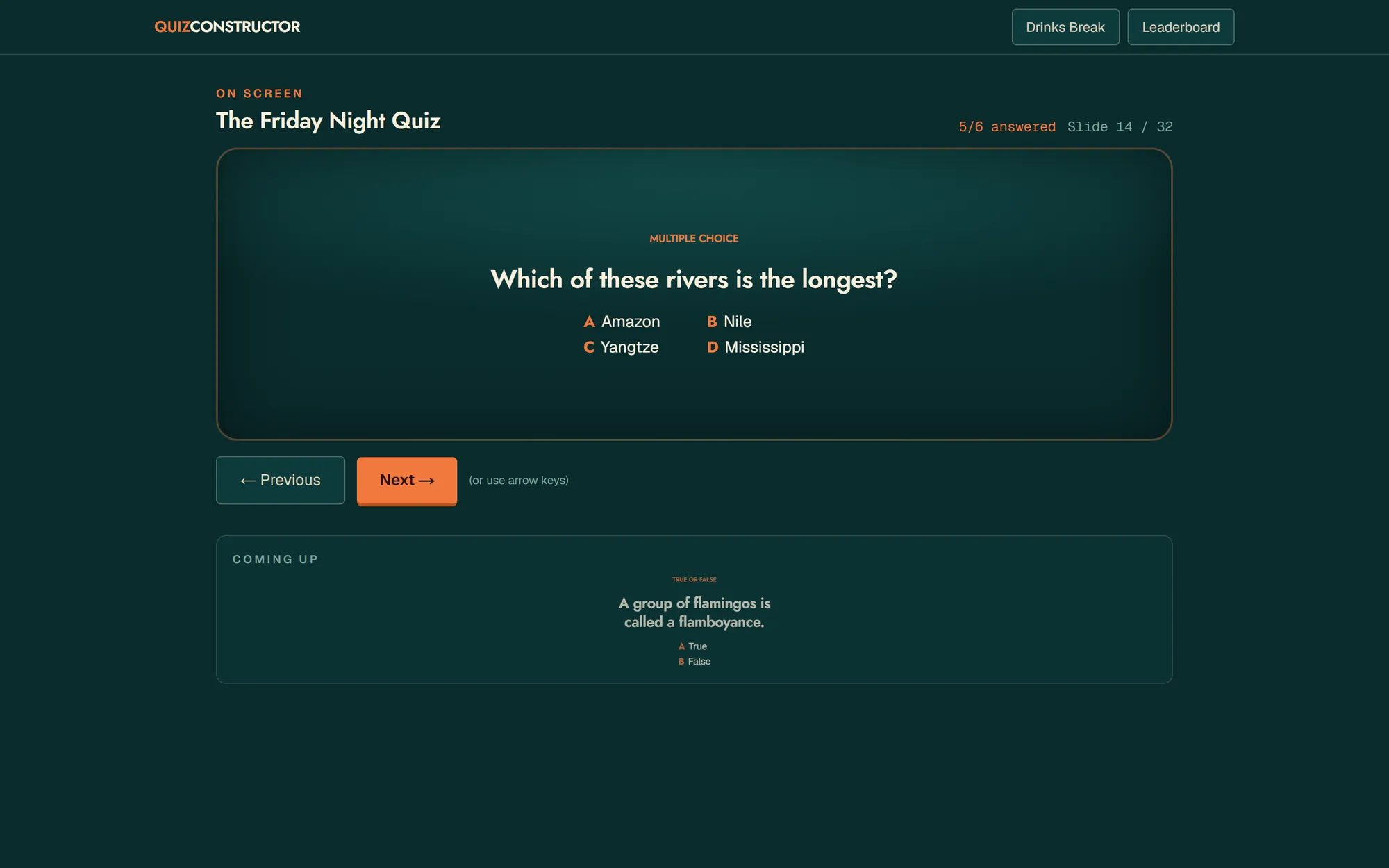
Running a quiz night by hand meant marking every sheet and adding up totals while the room waited. Now the host builds the quiz, then runs the whole night from one screen. Teams can answer on their phones and the scores add themselves up, and it's simple enough that someone who's never run a quiz could step in.
Built with Next.js and Firestore: Next.js runs the host's screen and the teams' phones, and Firestore keeps every phone up to date the moment an answer or a score changes.
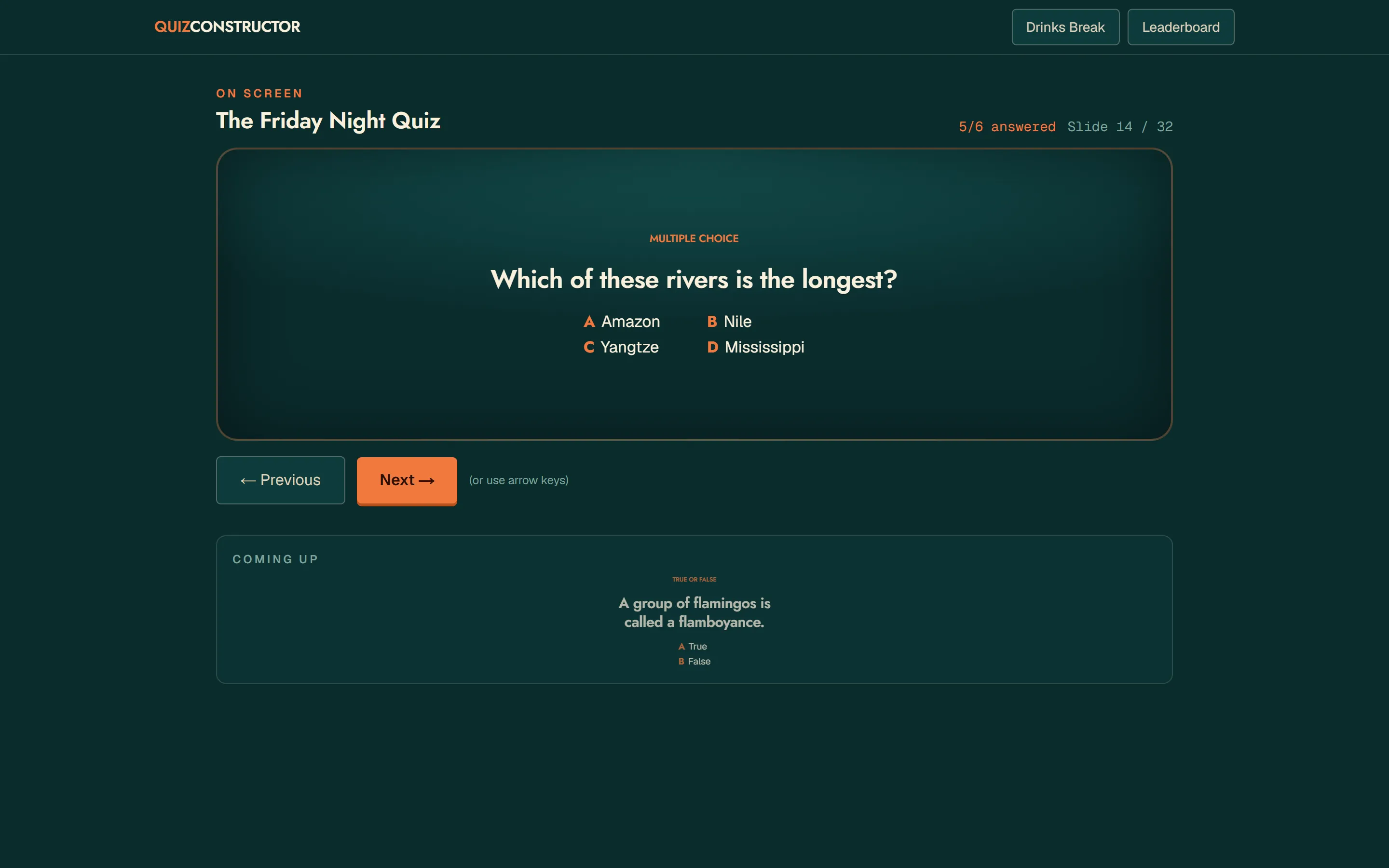
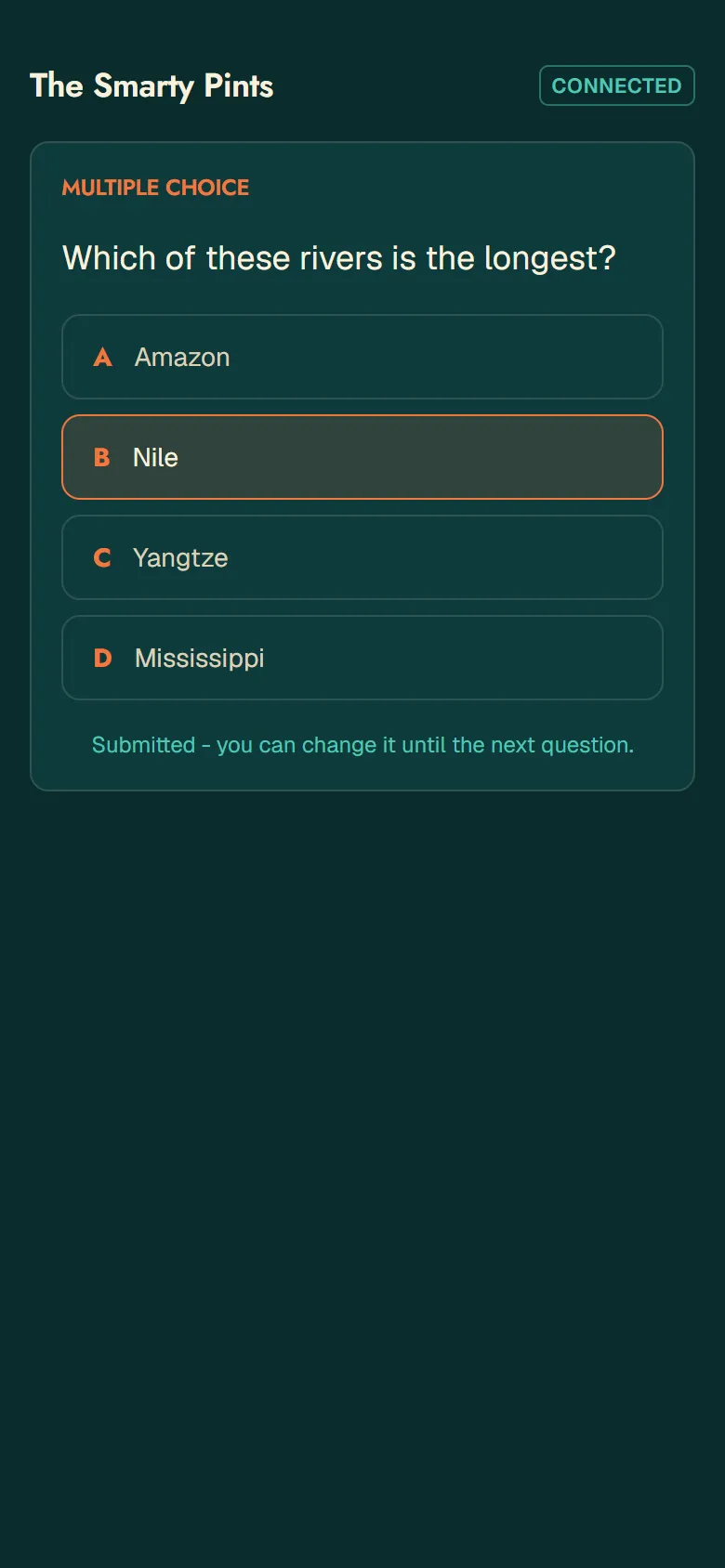
The host's controller: what's on screen now, how many teams have answered, and the next question coming up. On a team's phone, answering a question. Shown with a sample quiz and made-up teams. For me
I wanted my trips back on a map, with the photos and notes from each place, on something nobody could take away from me.

Vignette
Journeys, framed.
2026
Astro, Node.js, sharp, Lightroom ClassicRead how it worksHide how it works
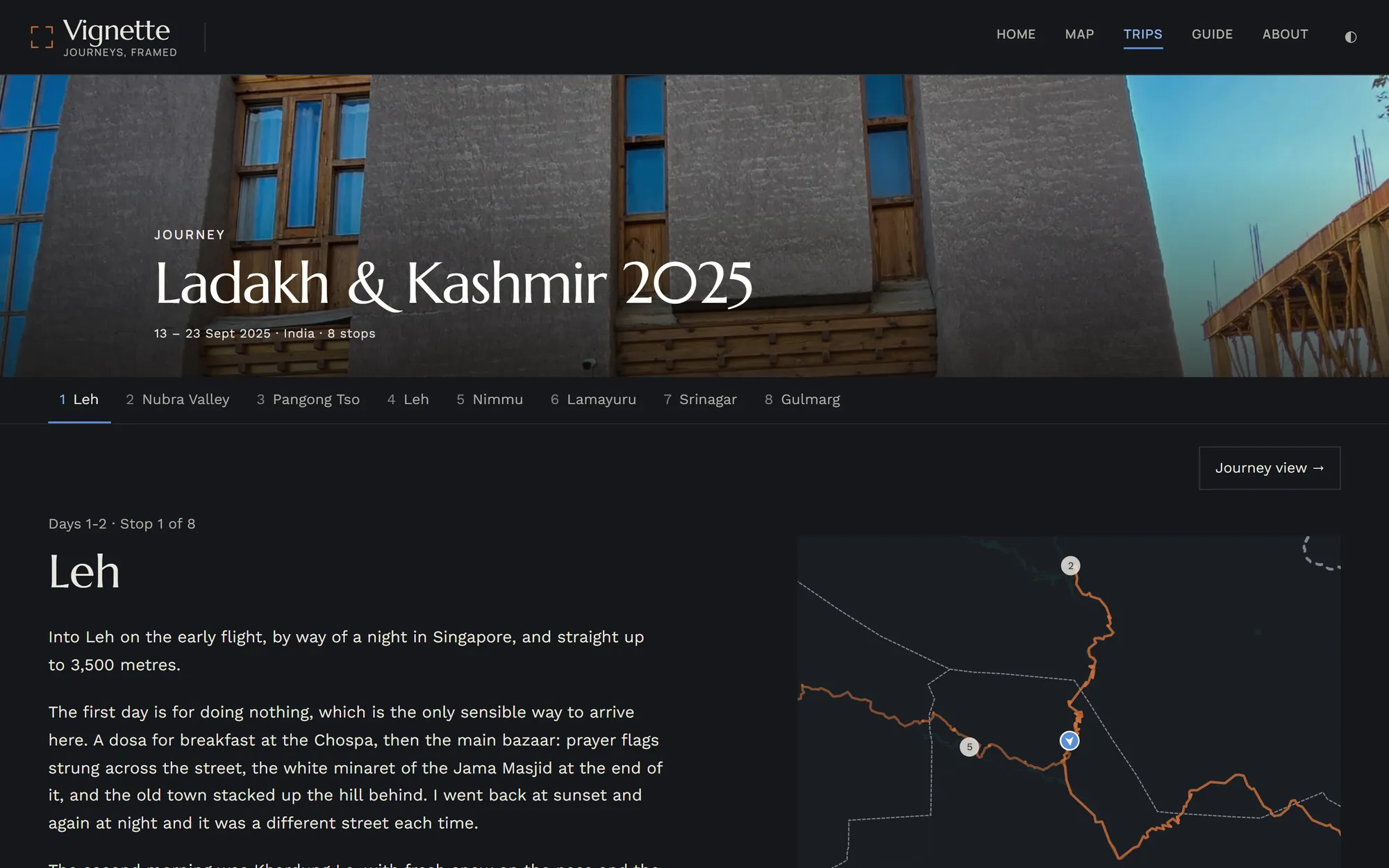
I've got years of travel photos, and I used to show them on a travel map site that stopped working when its themes were pulled. Now my trips are going back on a map, told stop by stop with the photos and notes from each place, on a site I own outright, so it can't vanish again. Only a few trips are up so far, with more on the way.
Built with Astro and Lightroom Classic: I pick a trip's photos in Lightroom, where I already sort them, and Astro turns them into fast, simple pages. A small Node.js script resizes every photo so the pages load quickly.
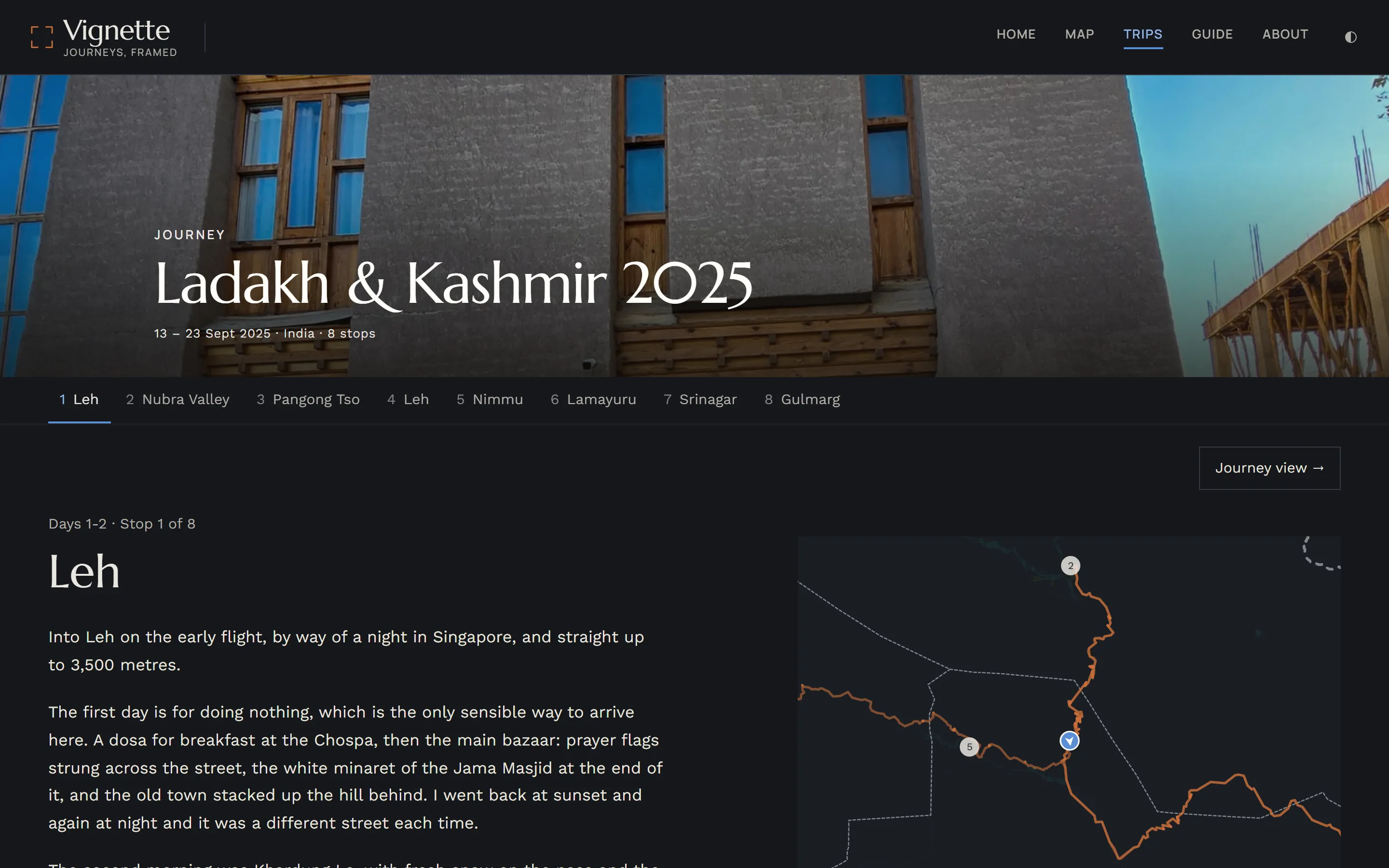
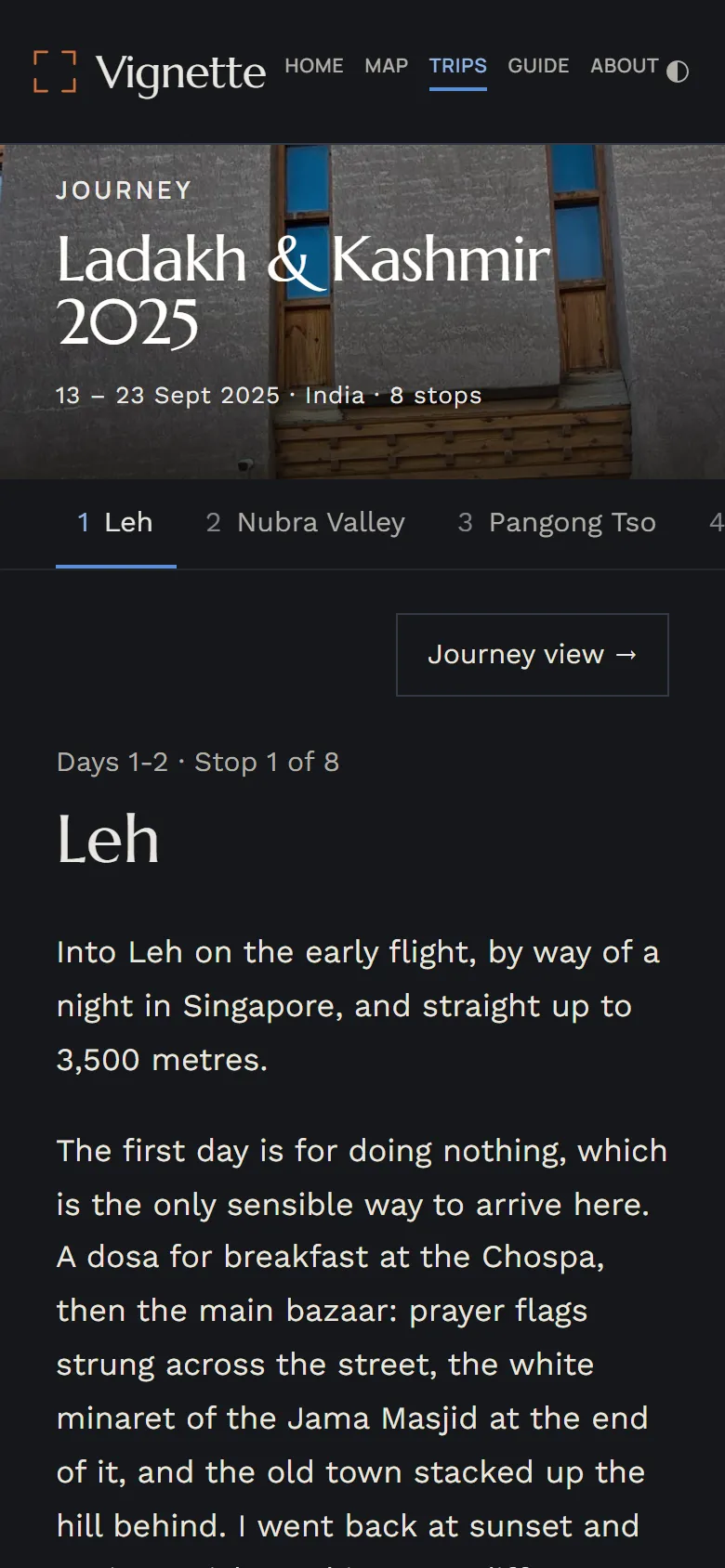
A trip, Ladakh and Kashmir 2025, told stop by stop with the route drawn on the map. On a phone, the first stop of a trip. For me
A bulb, a dishwasher and a television come from different makers on different protocols, each with its own app.

Smart home
A houseful of devices that finally speak the same language.
Ongoing
Home Assistant, Zigbee, MQTTRuns at home
Read how it worksHide how it works
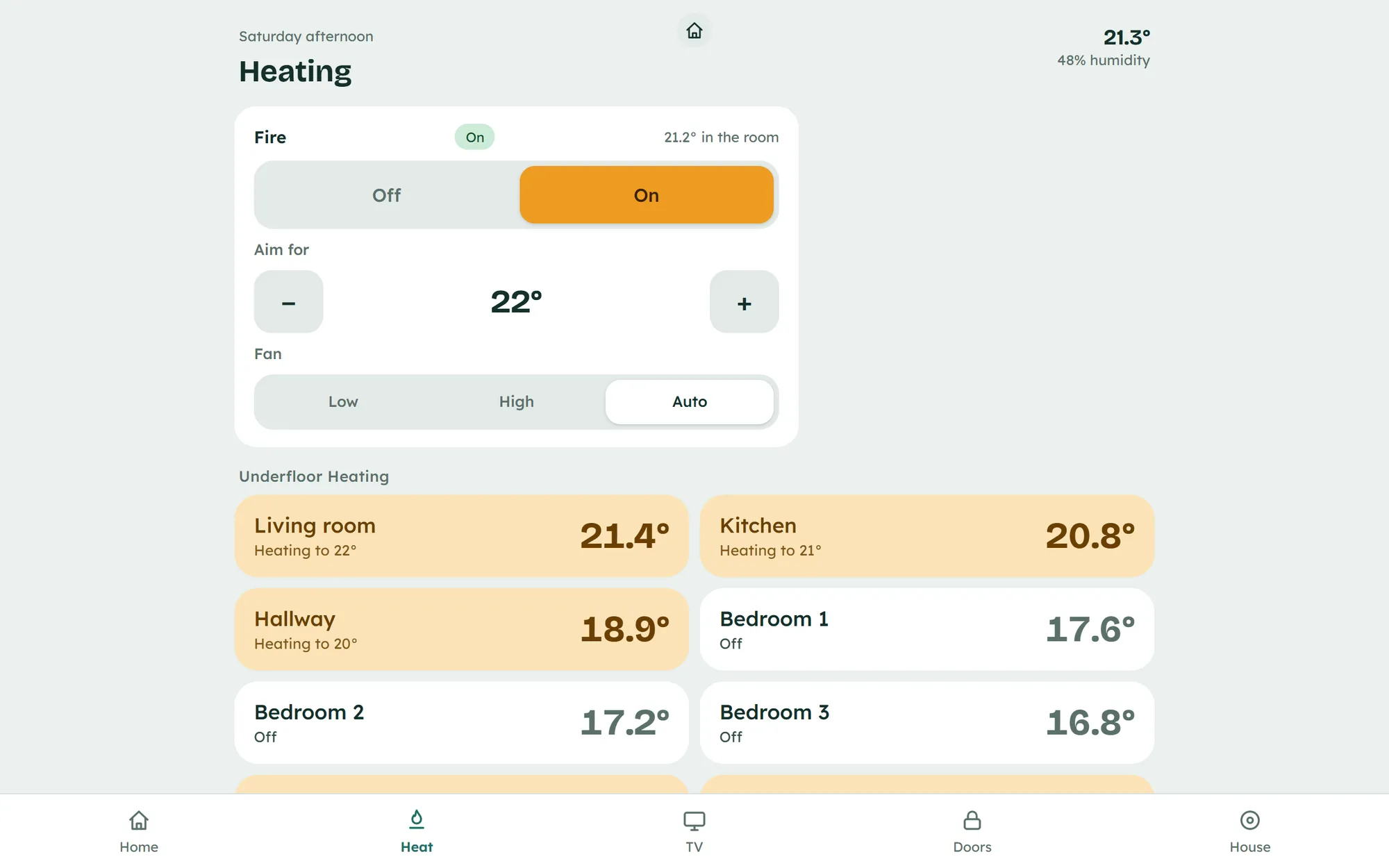
Home is full of devices that each come with their own app, and the screens that control them were made for someone like me. The app for the audio, video and lighting was even pulled from the App Store. So home gets one panel anyone can just use, with a TV remote laid out like the real one and the front door lock behind a confirm step.
Built on Home Assistant: it gathers every device into one place, whoever made it, and Zigbee and MQTT are the ways the devices talk to it. It all runs at home, so the lights still work when the internet's down.
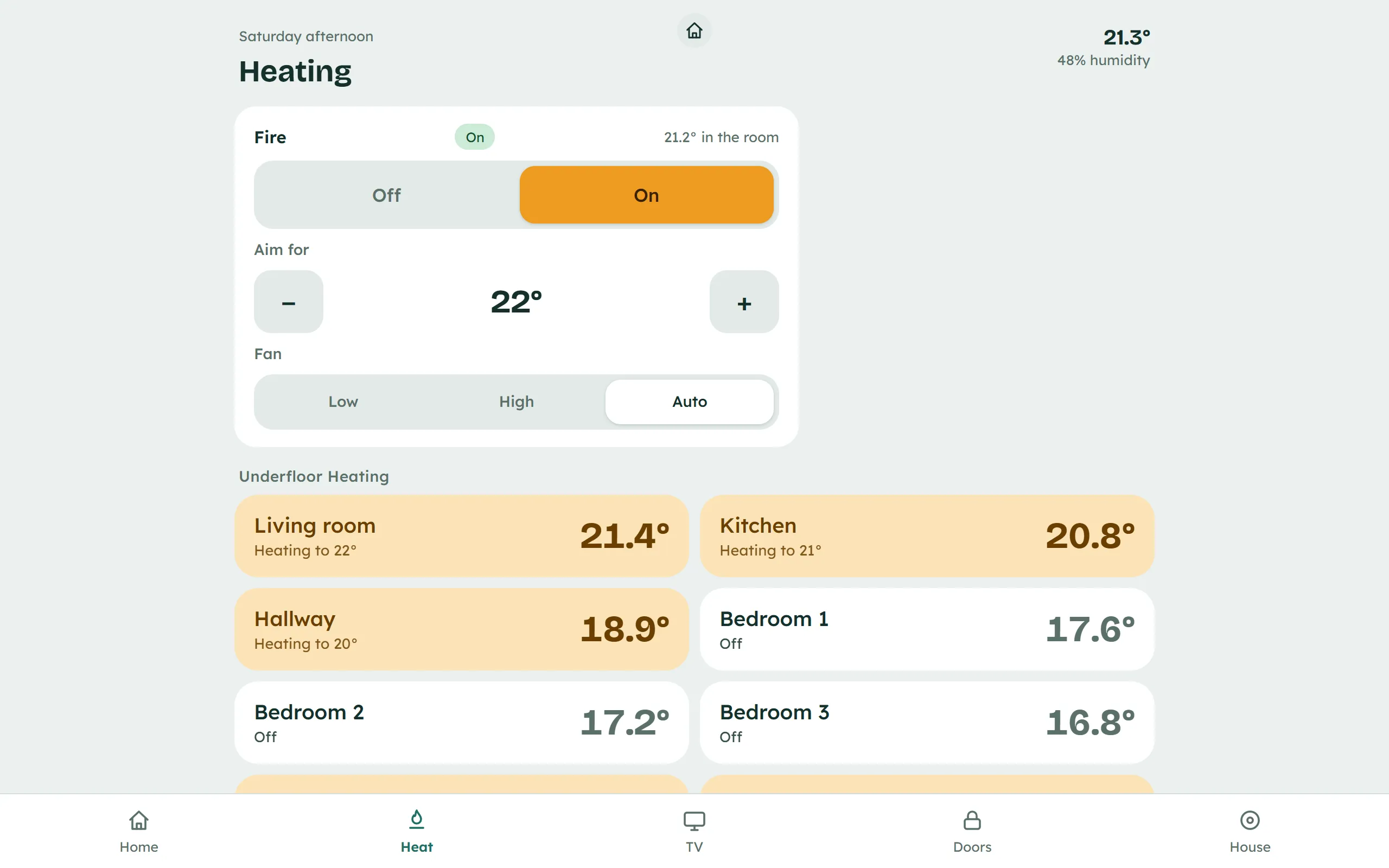
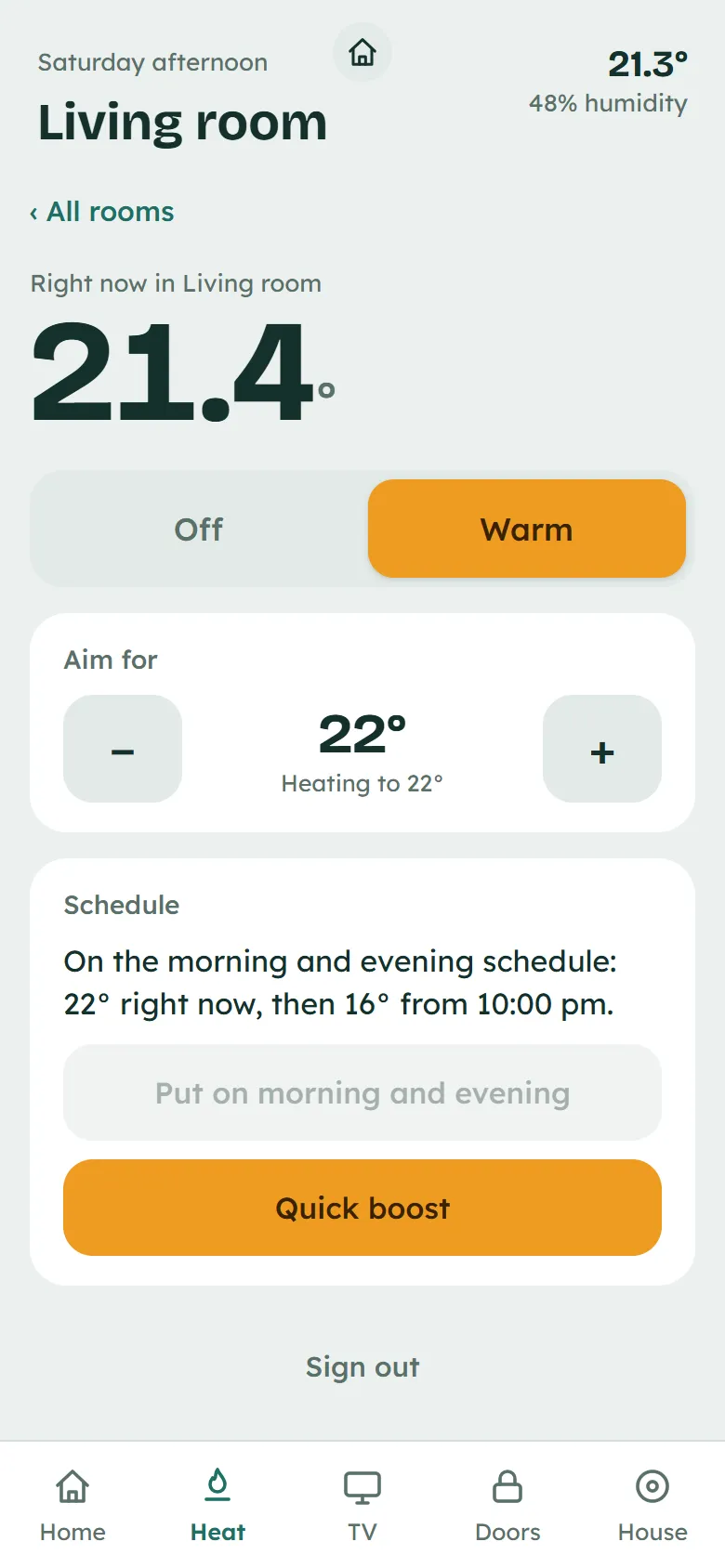
Heating room by room, and one room on a phone with its schedule in plain words. Shown with sample rooms. For me
I wanted my messages as text on my phone again, without handing the recordings to another company.

Voicemail
Voicemail you own, transcribed at home.
2026
Python, Flask, Twilio, faster-whisperRuns at home
Source on GitHubRead how it worksHide how it works
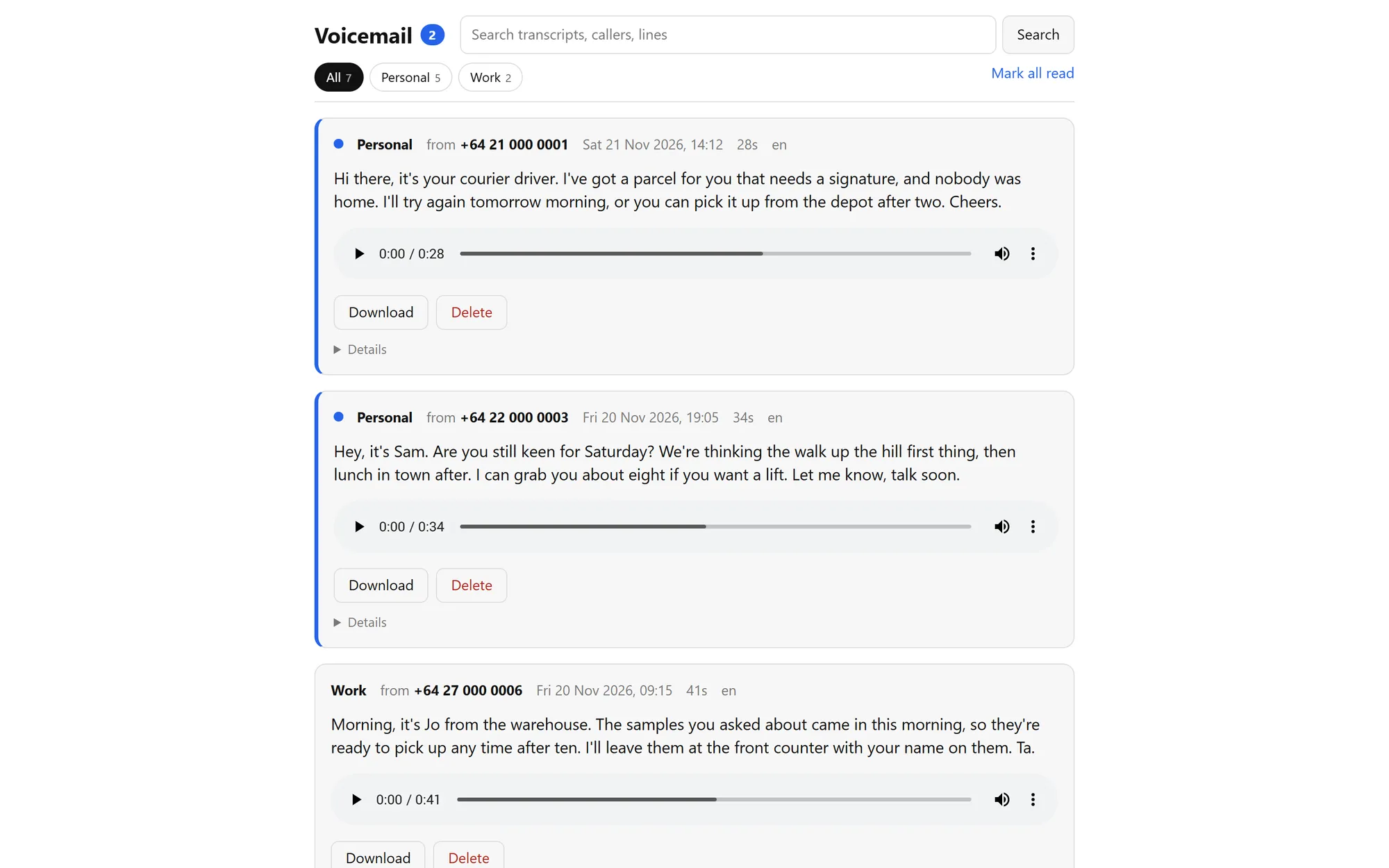
I used to get my voicemails as text, until that service wound down, and neither of my mobile carriers transcribes voicemail at all. I was back to listening to audio. Now a missed call's message turns up on my phone as text again, and nothing gets sent off to a transcription company.
Built with Python and Twilio: Twilio answers the missed call and records the message, and faster-whisper, running on my own computer at home, turns it into text. Then the recording is deleted from Twilio.
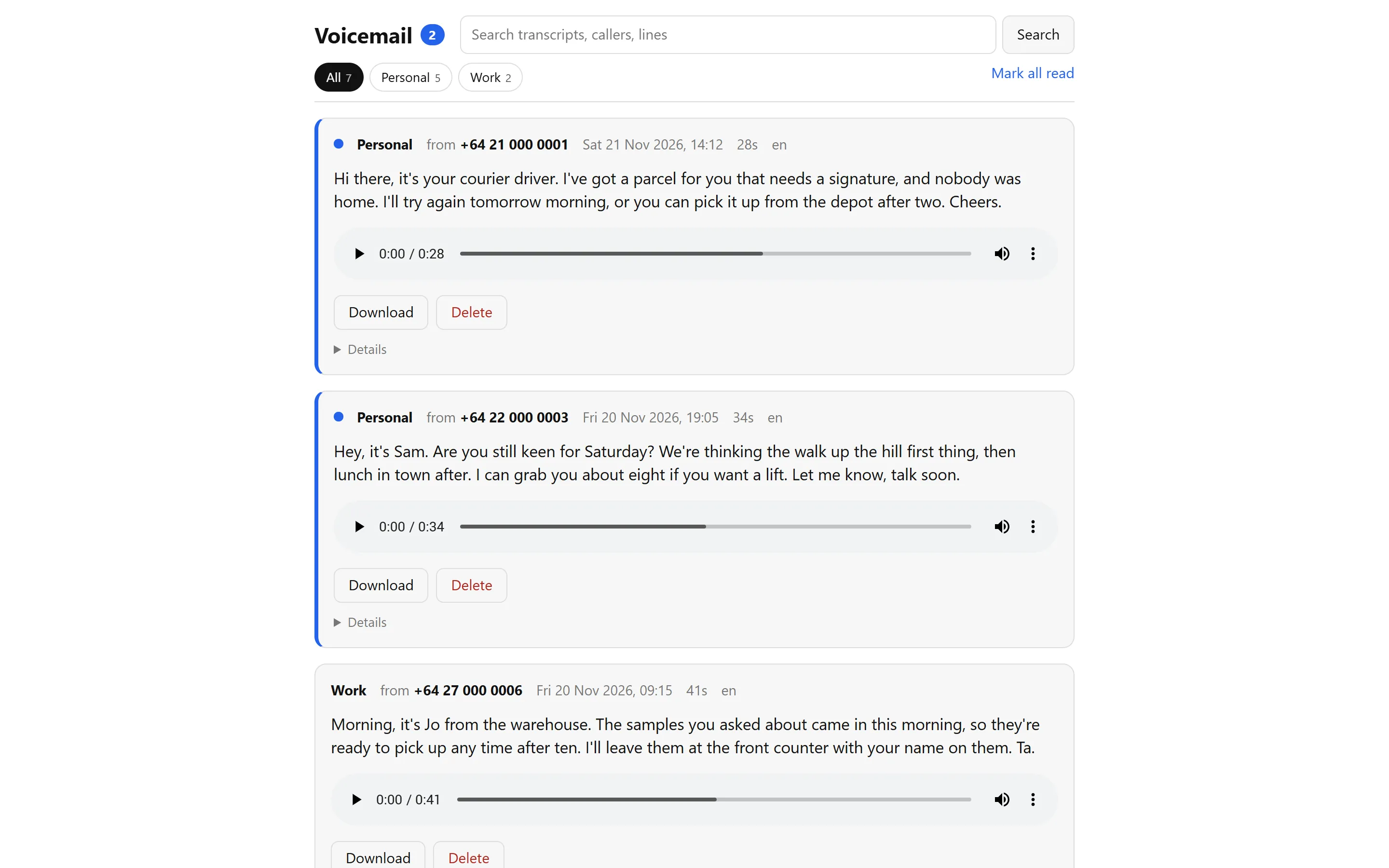
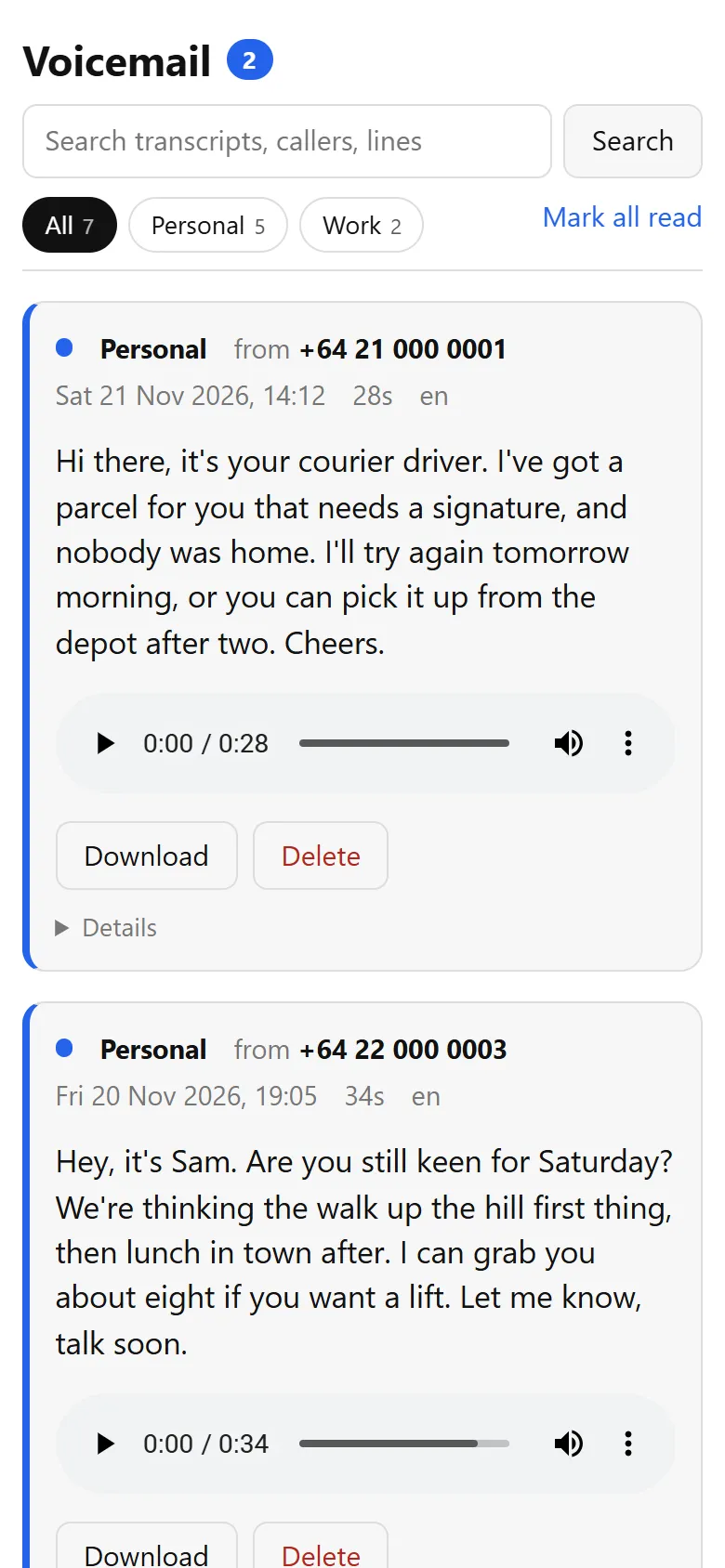
Every message as text, with a play button if I want to hear it. Shown with made-up sample messages. For voters
Plenty of people vote the way they always have, for a leader or a party, without checking whose policies they actually agree with.
VoteSmart
Match your politics to the policy, not the personality.
2017 to 2026
Ionic, Angular, Capacitor, FirebaseNot public yet
Read how it worksHide how it works
It was an election year and I wanted to do something useful with it. VoteSmart shows you real policies one at a time with the party names hidden, so you judge each one on its own. Only at the end do you find out which parties you lined up with.
Built with Ionic, Angular and Firebase: Ionic and Angular make one app that works on the web and on phones, Capacitor turns it into a phone app, and Firebase holds the policies and your answers.
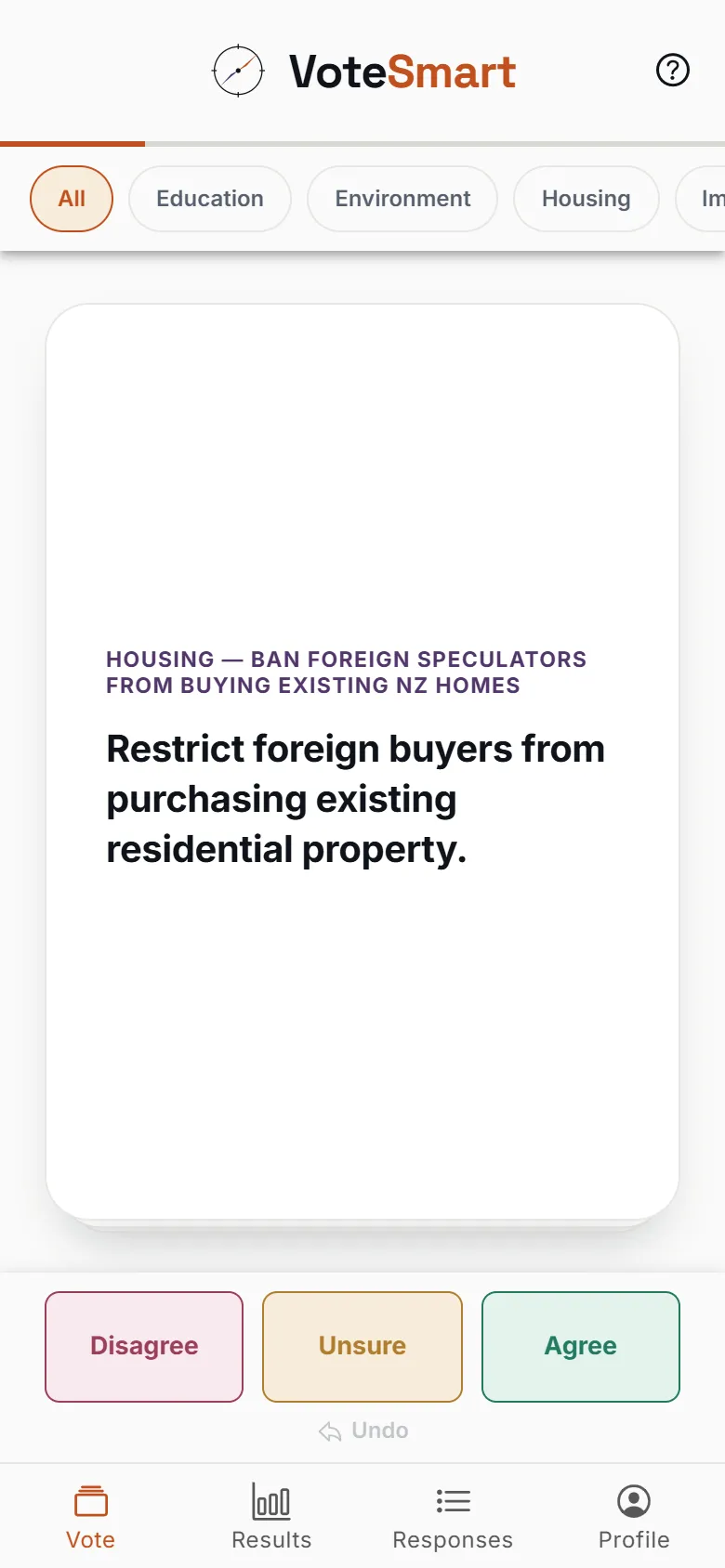
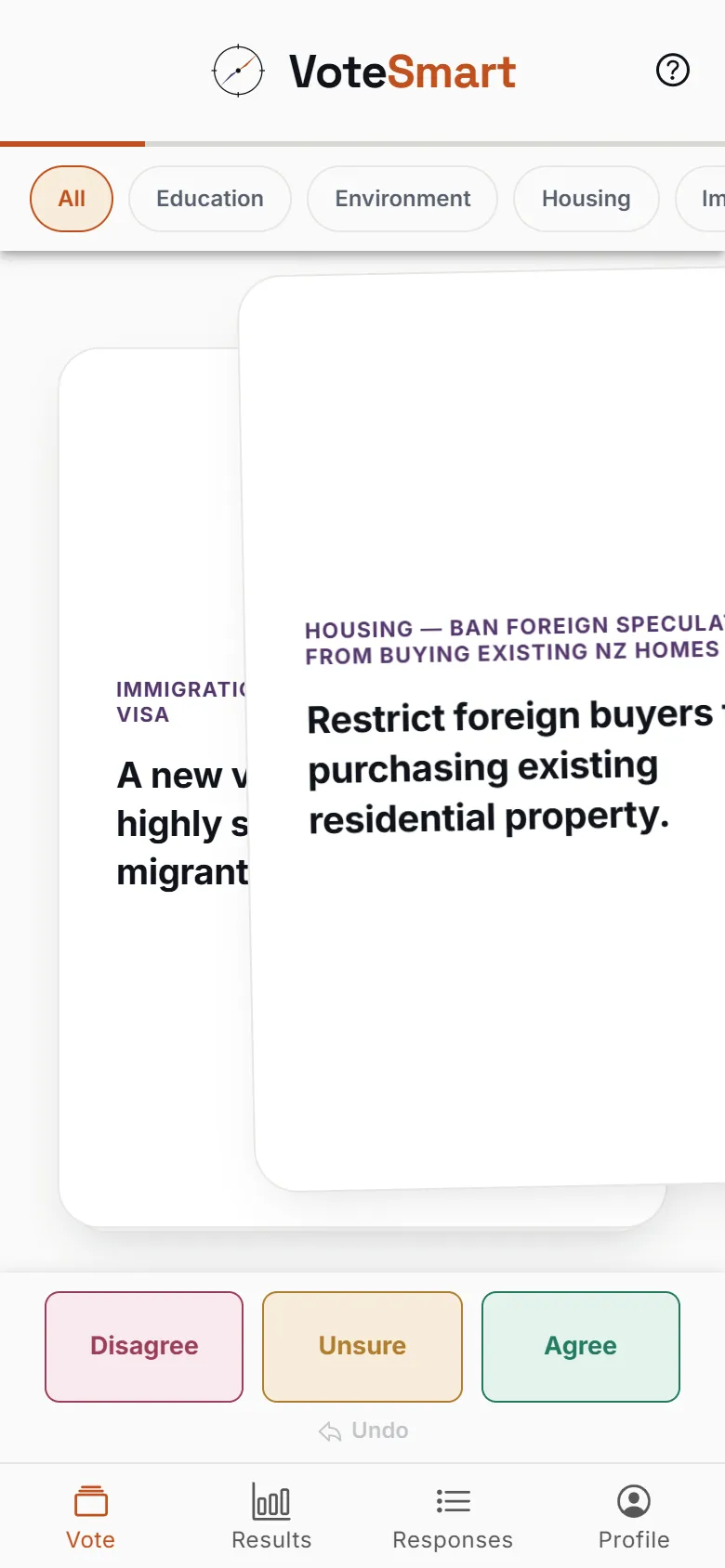
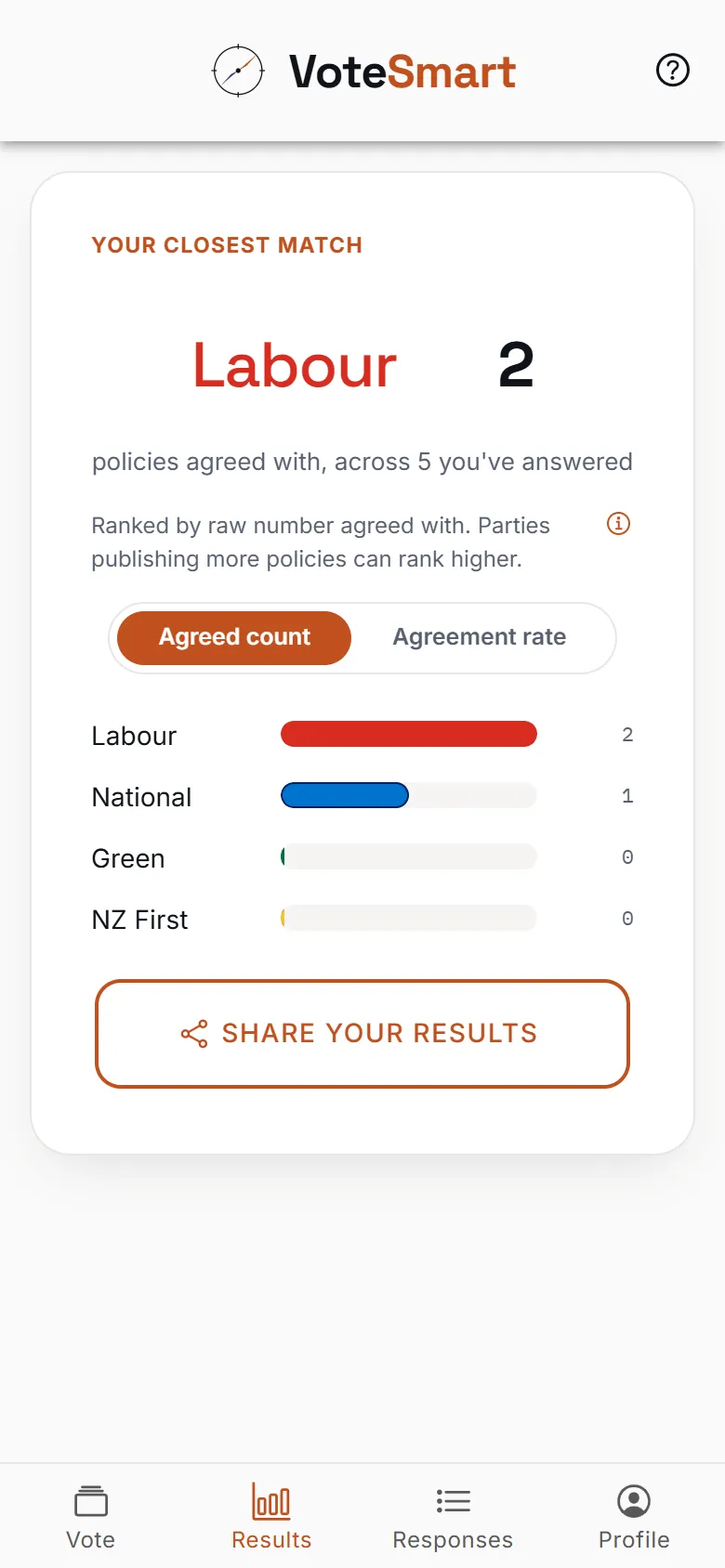
A policy with the party name hidden, a swipe to agree, and the results at the end. Shown with the app's sample policies.

I spent ten years in IT, then moved into hospitality and worked my way up from front of house to general manager. Either way, I'm a problem solver: when something gets in the way of me or the people around me, I fix it. Most of what's here started like that.
Keen to chat?
Hiring, or got something you'd like built? I'd love to hear about it.
akki at pi.co.nzEmail me