
For friends
Food Passport
A stamp for every food you try.
2026
HTML, CSS and JavaScript, Cloudflare Pages, Pages Functions, Workers KV, Web Push
You'll need an invite code to get in.
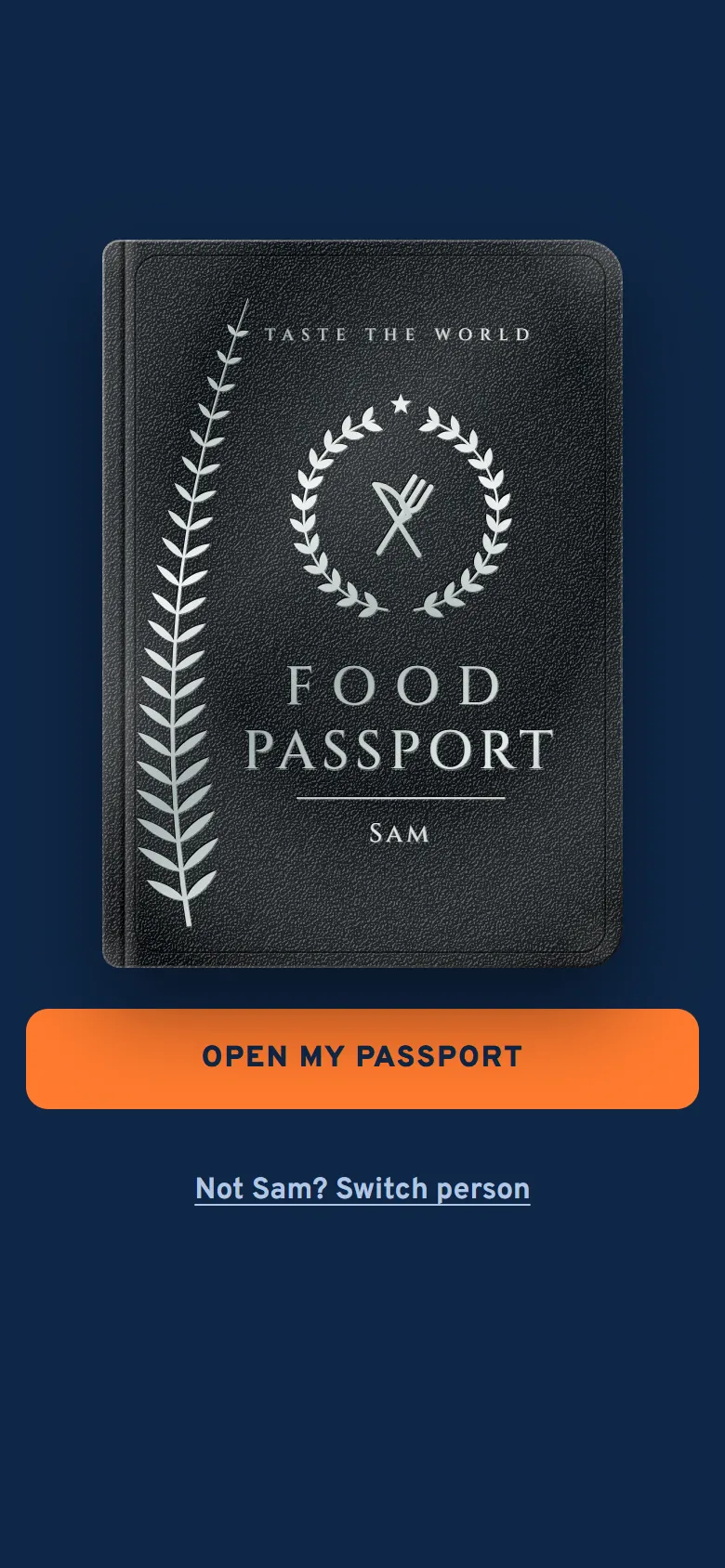
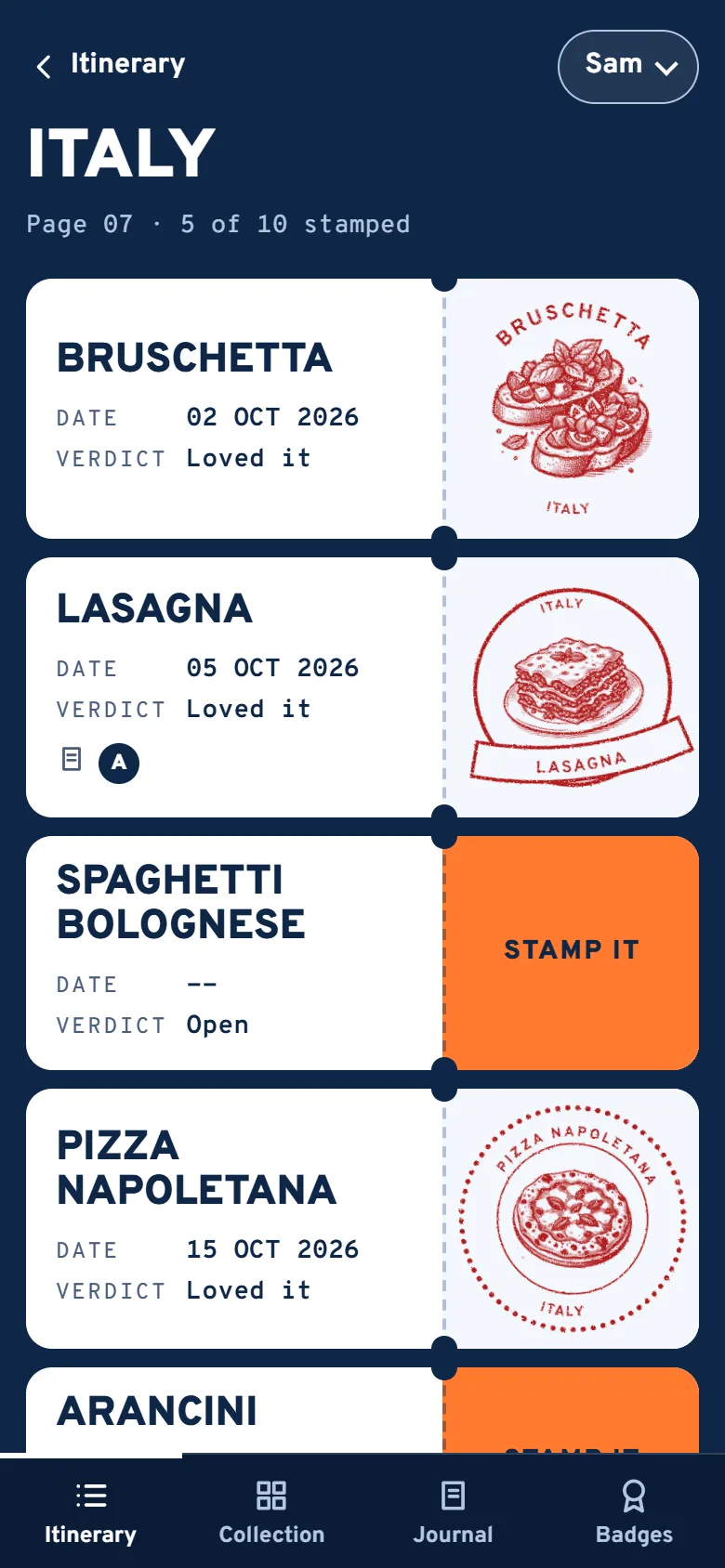
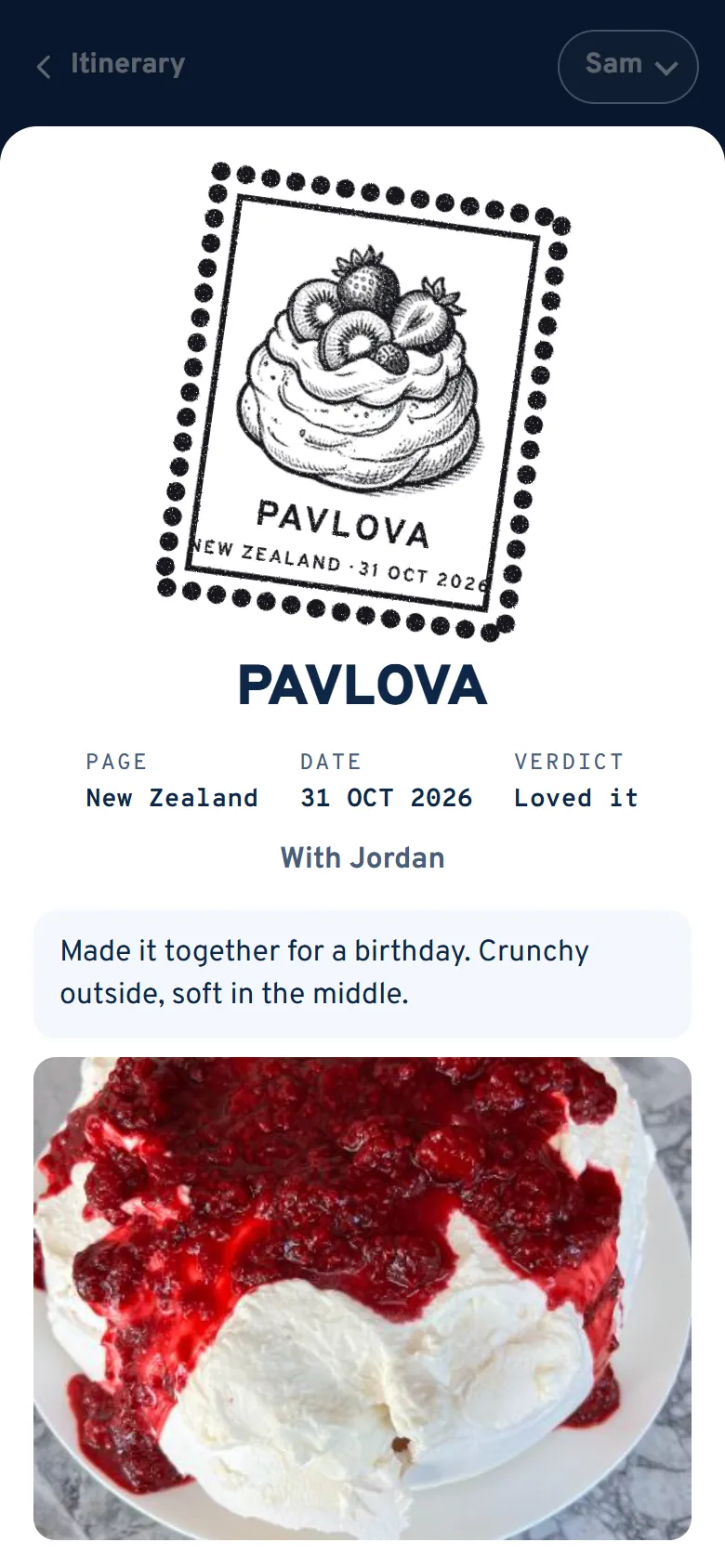
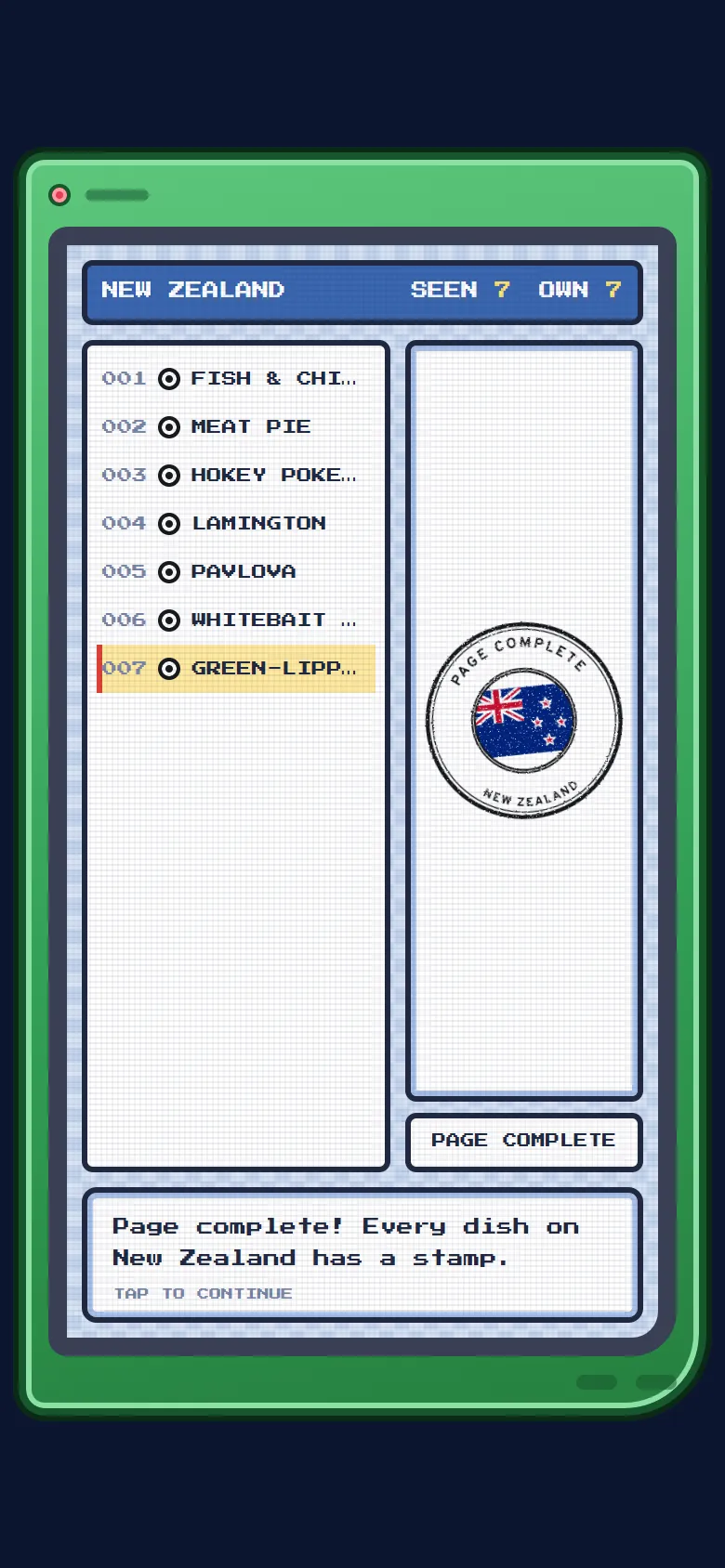
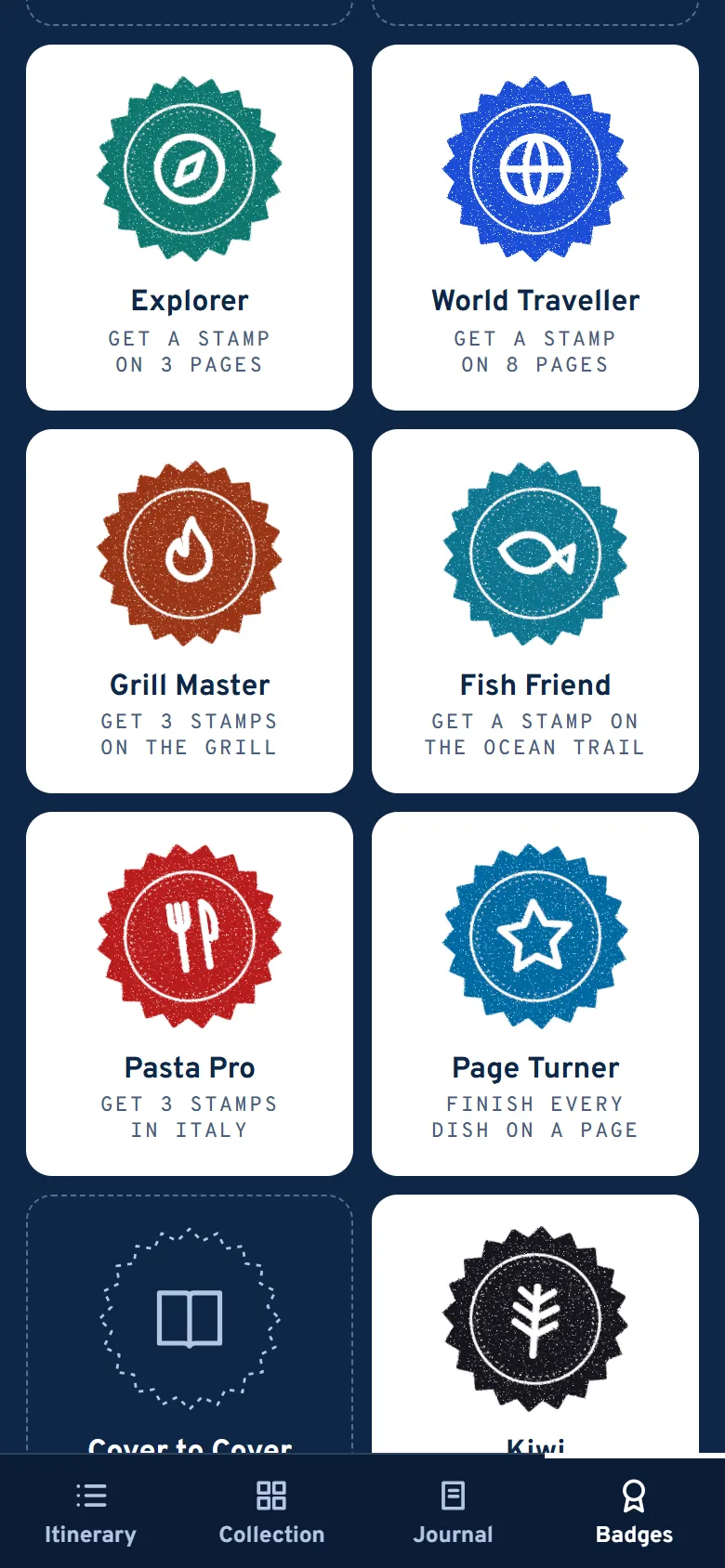
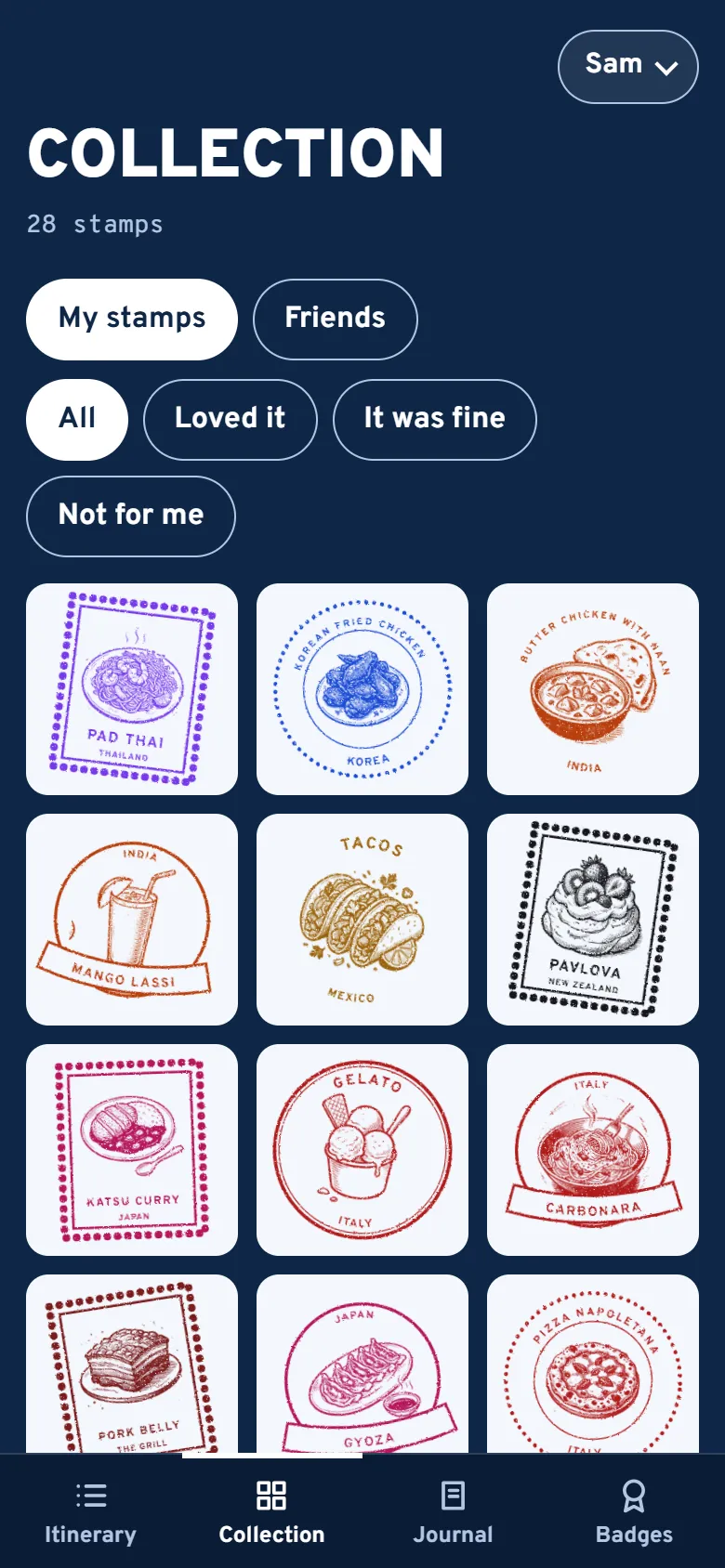
A phone web app for a small group of friends working through foods from around the world. Each dish you try earns a stamp in your passport, laid out like a boarding pass, across 90 dishes on 17 pages. Pages finish with a stamp of their own, friends can tag each other in a photo of the meal, badges mark milestones, and a notification goes out when someone fills a page or a new dish is added. It installs to the home screen like an app, and it's live at passport.pi.co.nz.
The problem
A few of us started cooking and trying food from around the world together, and one of us loves collecting stamps. So I made a passport where every dish you try earns a stamp, even the ones that turn out to be “not for me”, so trying something new never feels like failing. It turns each dinner into something to look back on, and keeps us picking the next dish.
How it works
There are no accounts. Joining takes an invite code, then each person picks a PIN on their own phone, which keeps it simple for a group of friends while still keeping one person’s stamps their own. Everything else lives in a single Cloudflare KV namespace behind a few Pages Functions: stamps, shared photos, and the dish list itself, which an admin screen edits so new pages go live without a deploy.
Notifications were the hard part for a site with no app store behind it. They use the standard Web Push protocol with the site’s own signing keys, sent from the same functions when a friend stamps a dish or a page is finished. Caching was the other: the domain forces a four-hour browser cache that overrides the site’s own headers, so every release carries a version number in its script and style links, or people would keep the old app for an afternoon.