
For friends
Recap
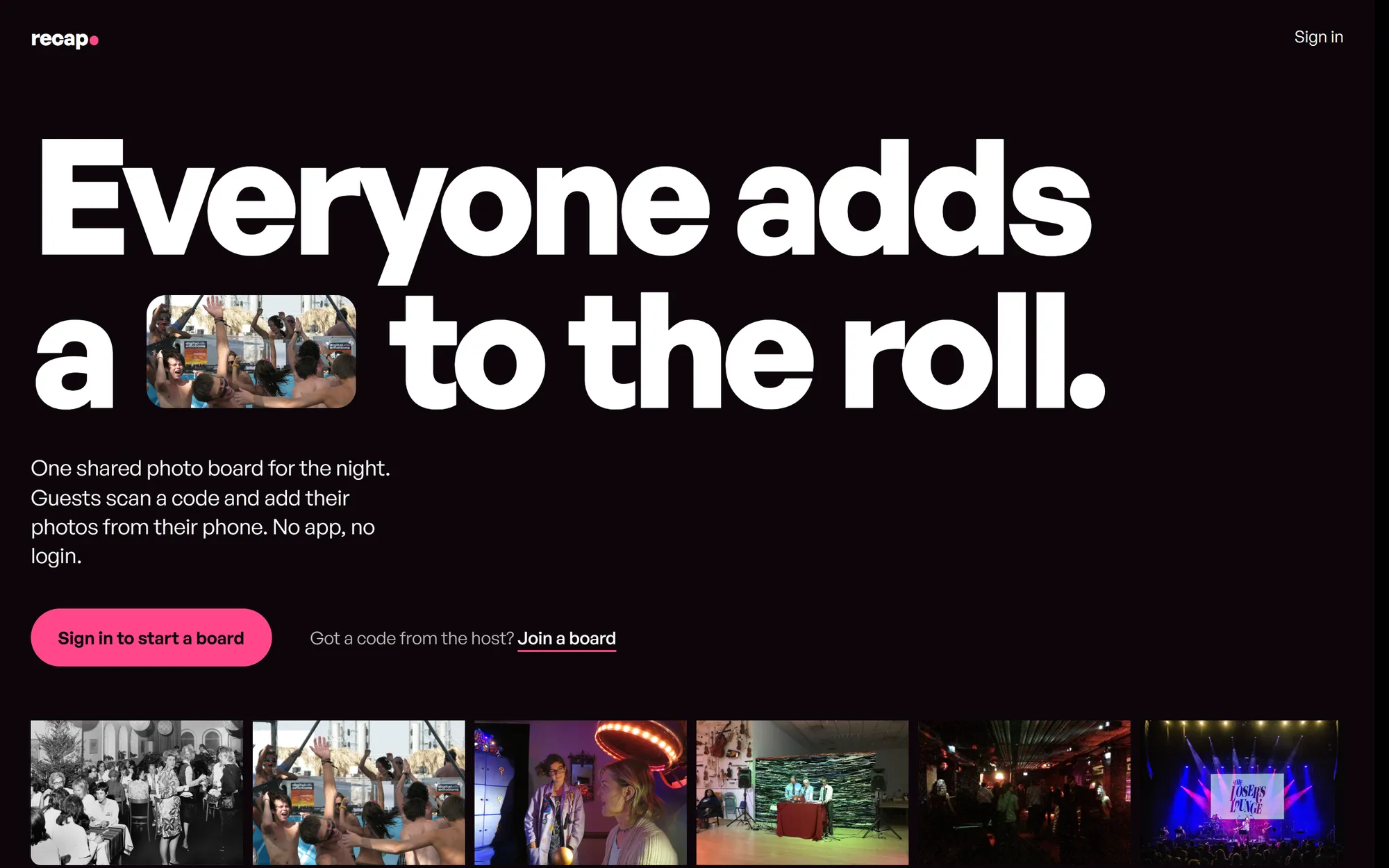
Everyone adds a frame. Everyone gets the roll.
2026
Next.js, TypeScript, Firebase, App Hosting, Google Photos API
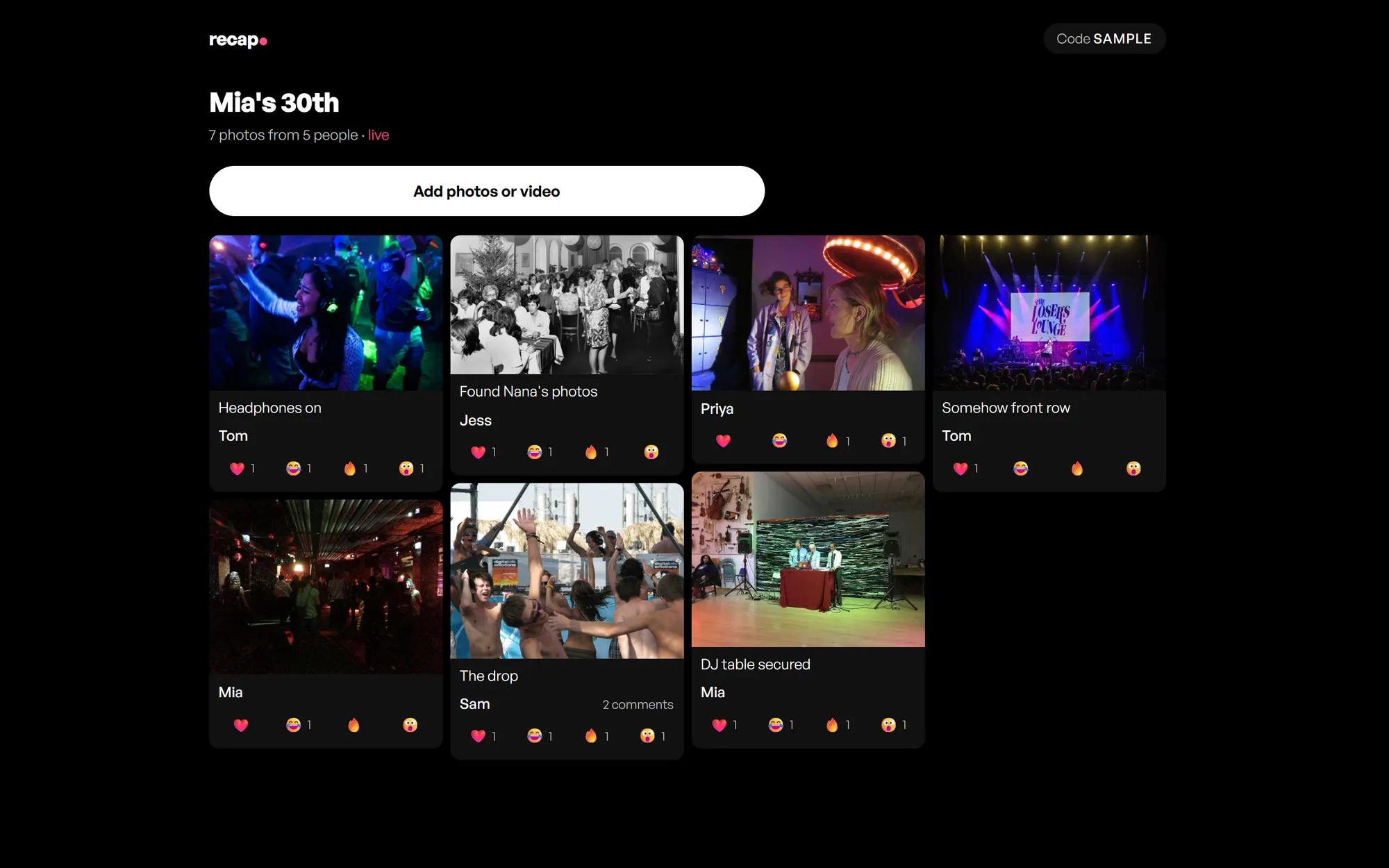
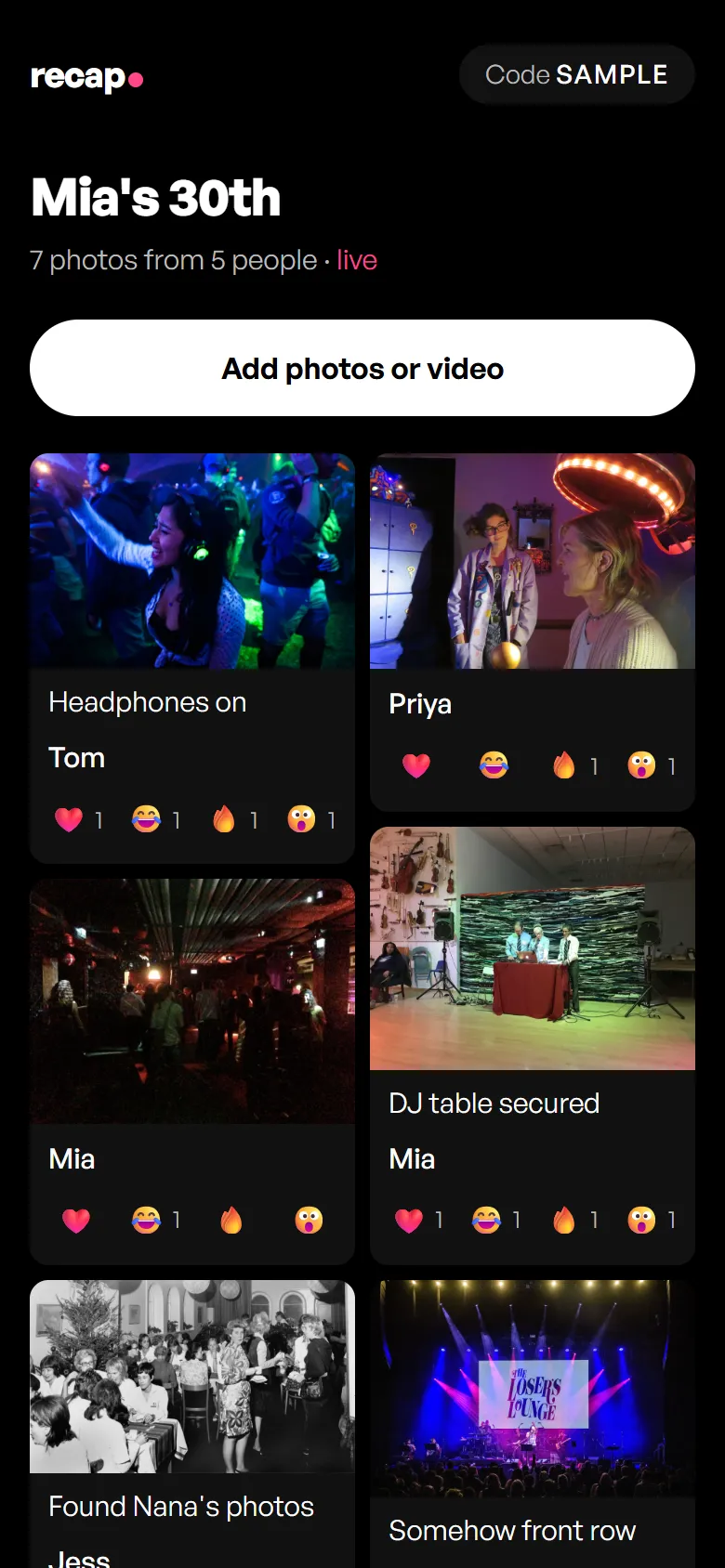
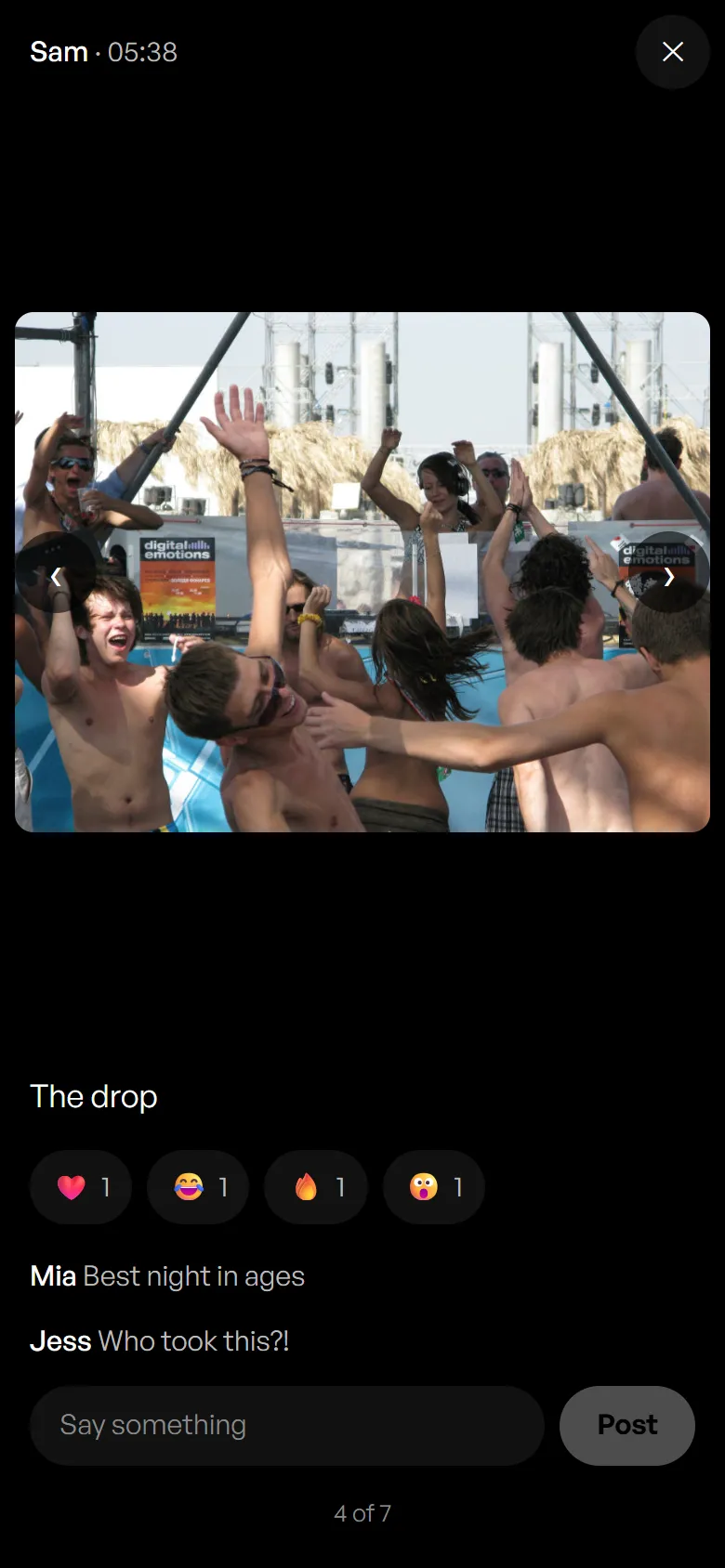
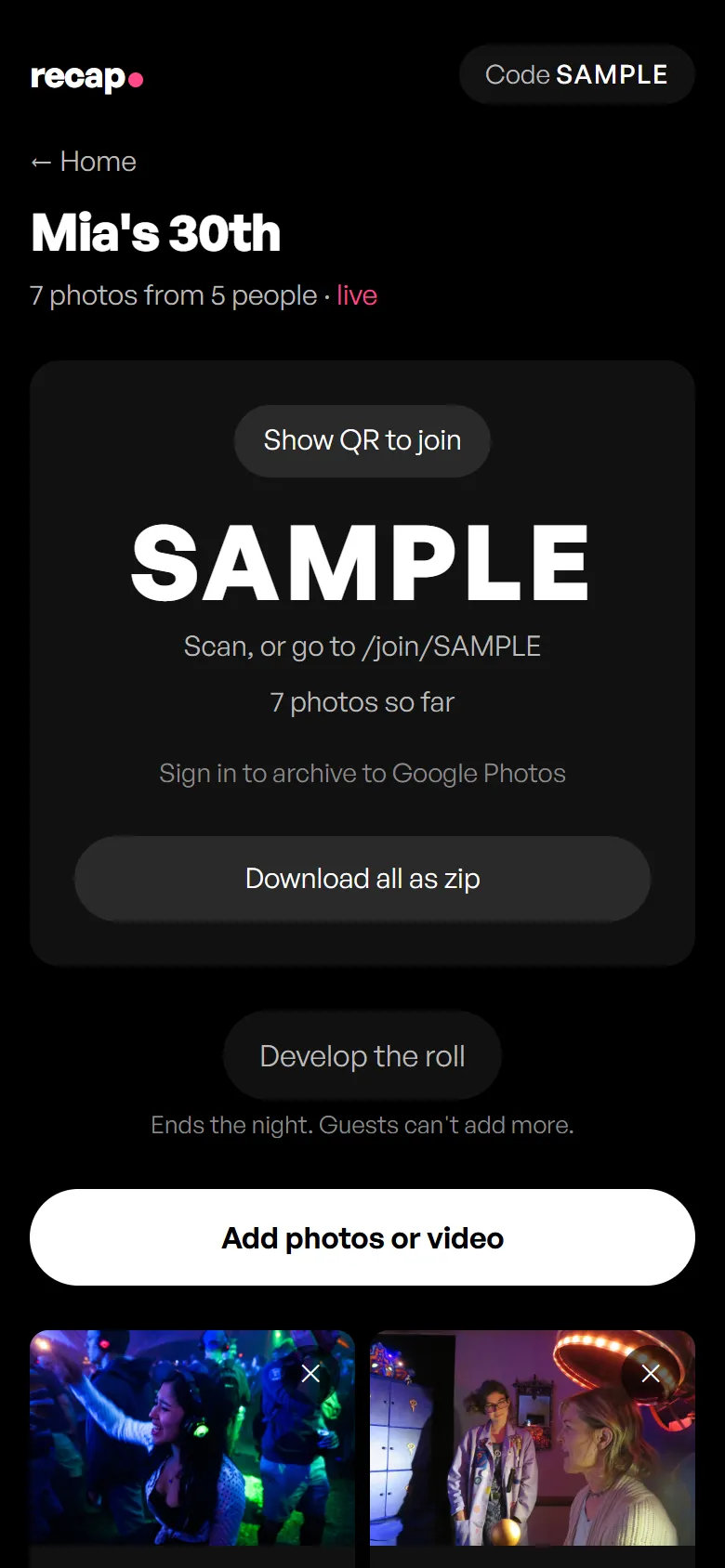
A shared photo board for one night. The host puts up a QR code, guests scan it, type a name and add photos and videos from their phone, with no app and no account. Everything lands on one live wall that everyone can react to, caption and comment on. At the end the host "develops the roll": they review anything removed during the night, then archive the whole board to a Google Photos album or download it as a zip. It's live at recap.pi.co.nz, built on Next.js and Firebase, with true-black screens so the only colour comes from the photos.
The problem
We always go out, we all take photos, and then we forget to share them. The best shots stay on whoever took them, and a week later nobody’s sent anything. Recap gives the night one board that everyone adds to as it happens, so the whole group ends up with the whole night.
How it works
Guests write straight to Firebase from their phones, with no server in between, so the database’s security rules are the only thing guarding the board. At first a guest’s identity was just a random ID their browser made up, which anyone could copy off a photo, so a determined guest could rewrite someone else’s caption. Before going public, every browser now signs in to Firebase anonymously in the background. Guests never see it, and the rules check that signed-in identity, so nobody can post, edit, remove or react as anyone else.
Opening it to the public also needed limits the rules could enforce on their own. A board takes up to 500 photos and stops taking new ones 7 days after it starts. The count is kept on the board, and each upload has to raise it by exactly one in the same write as the new photo, so it can’t be pushed up without real uploads to close someone else’s board early.
The phone does the heavy lifting before anything is sent. It makes its own thumbnail (a 9.6 MB photo becomes a 446 KB preview), pulls a poster frame from videos, and uploads one file at a time with an honest “3 of 10” counter, because parallel uploads stall on crowded party wifi. Every delete is soft, with a short undo, so nothing is lost by a mis-tap. One limit came from Google rather than the code: apps can no longer share the albums they create, so the host pastes the finished album link back into the board for guests.