
For me
Voicemail
Voicemail you own, transcribed at home.
2026
Python, Flask, Twilio, faster-whisper, SQLite, ntfy
Runs at home
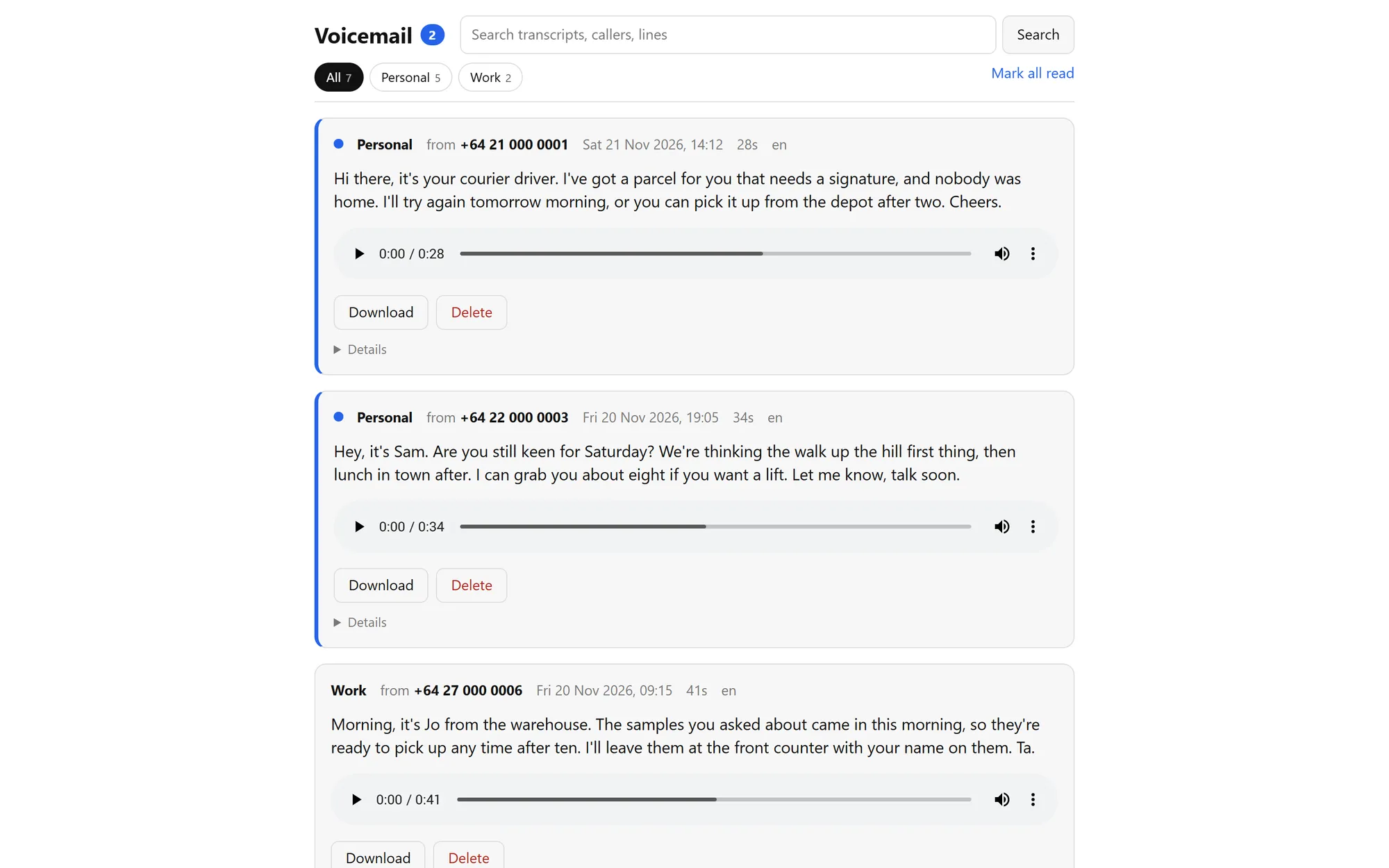
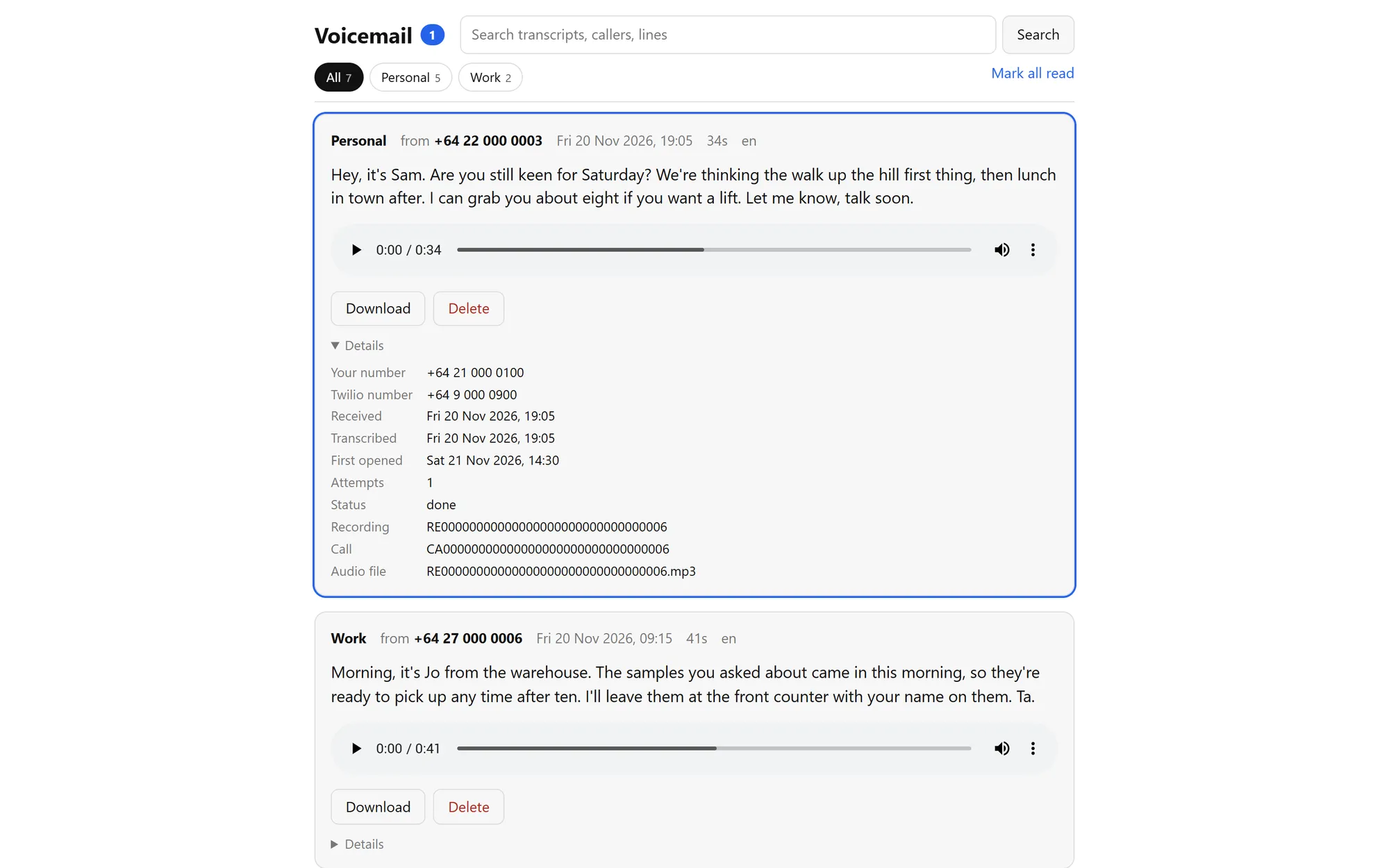
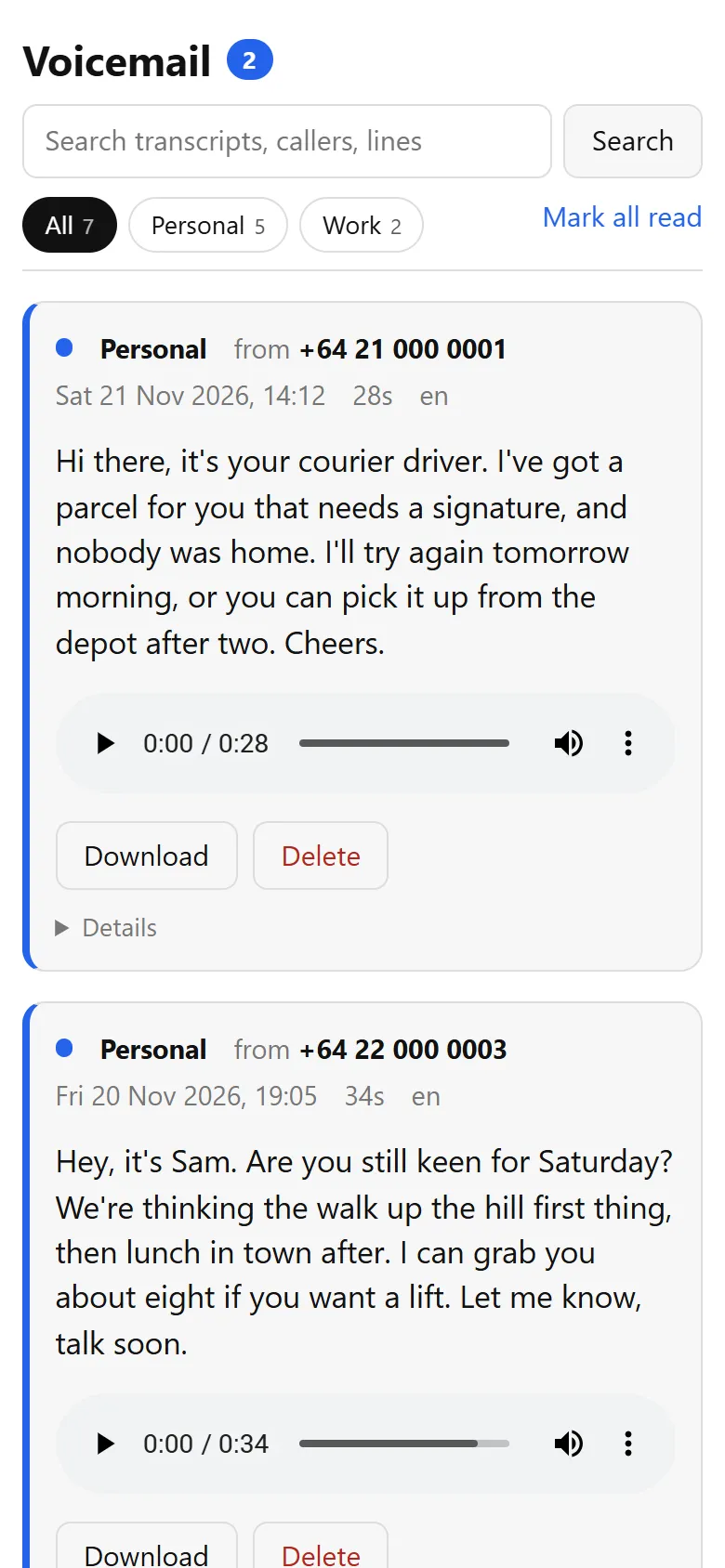
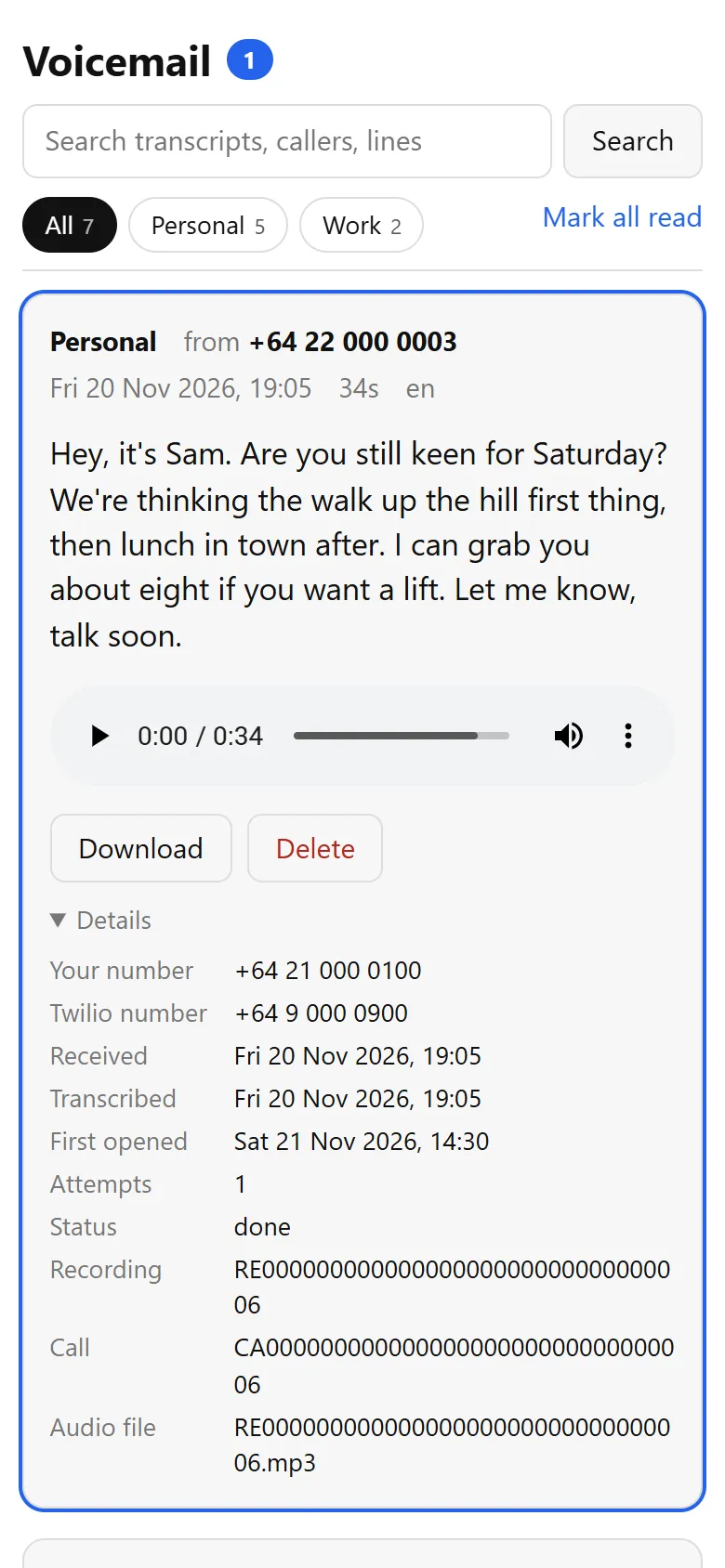
Source on GitHubA replacement for the voicemail a mobile carrier keeps for you, written in Python and Flask. Unanswered calls divert to a Twilio number; the service answers, records the message, transcribes it on the homelab with faster-whisper, stores it in SQLite and pushes the transcript to my phone through ntfy. A small web page lists every message with its text and a play button. Nothing goes to a cloud transcriber, and the recording is deleted from Twilio once it has been transcribed.
The problem
I used to get my voicemails as text through VXT. Then VXT wound down its voicemail service, and neither of my two mobile carriers transcribes voicemail at all, so I was back to listening to plain audio. I wanted my messages as text on my phone again, without handing the recordings to another company.
How it works
The database is the job queue. A voicemail row is written as pending before Twilio is told the call was handled, a worker thread then downloads the recording, transcribes it, sends the notification and deletes the audio from Twilio, and anything unfinished is requeued on startup. A restart mid-transcription doesn’t lose a message, and a failed transcription still notifies, with the audio kept locally.
There’s no telephony stack at all: no SIP server or PBX to run and secure. The phone’s own GSM divert codes point at the Twilio number, Twilio posts to a single webhook, and the signature on that webhook is verified against the configured public URL rather than the incoming Host header, so a reverse proxy in front needs no special headers.